
Senate panel advances bill allowing wrongful-death suits for unborn children after heated debate
Get AI-powered insights, summaries, and transcripts
Sign Up Free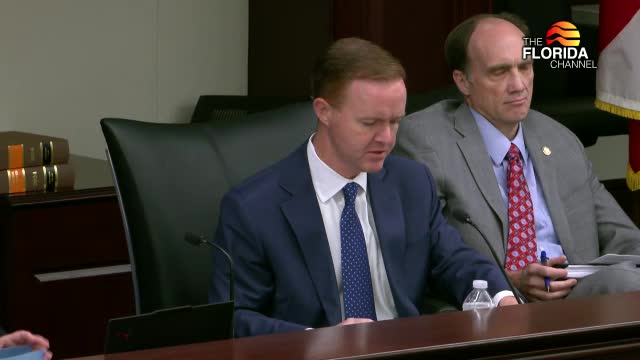
Summary
The Senate Judiciary Committee voted to report favorably CS/SB 12-84, which would allow parents to bring wrongful-death actions for an unborn child; the measure passed out of committee after an amendment and drew extensive questions about scope, medical exemptions and the calculation of damages.
The Senate Judiciary Committee on Tuesday advanced a bill that would let parents bring wrongful-death claims for an unborn child, a measure supporters said brings parity to civil law and opponents said risks broad, unpredictable liability and could chill medical care.
Sen. Ashley Grahl (sponsor) told the committee that Florida does not currently recognize wrongful-death claims for unborn children and that CS/SB 12-84 would allow parents to “recover economic and non-economic damages for such unborn child’s death in the same way that other survivors may generally recover under the [wrongful-death] act.” She added the amendment adopted by the committee defined “unborn child” and specifies the bill “does not authorize a wrongful-death action against the mother of an unborn child for the death of the unborn child or a health care provider for the death of an unborn child, which results from the lawful medical care provided in compliance with these applicable standard of care.”
The bill prompted sustained questioning about the boundaries of the medical exception, how juries would determine an unborn child’s economic value, and whether the statute could be used to pursue claims that are now uncommon or barred. Sen. Lauren Polsky pressed the sponsor on whether the measure would in practice allow fathers to sue doctors after an abortion; Grahl said the language is intended to bar any claim against the mother and to prevent suits against health care providers who followed applicable standards of care.
Opponents at the committee hearing said the measure could be weaponized against survivors of domestic violence and could prompt insurers and physicians to restrict care. Amber Lufstead, a domestic-violence survivor who spoke in opposition, said that “this puts a tool, a weapon, a hatchet in the hands of domestic-violence abusers” and warned of cases elsewhere where abusers sued people who helped loved ones obtain abortions. Jennifer Cordova of the League of Women Voters of Florida said the state already provides civil remedies when negligence causes pregnancy loss and warned this bill “treats embryos and fetuses the same as living children,” with “unintended consequences.”
Medical witnesses and insurers told the committee that expanding civil exposure could drive up malpractice premiums and further reduce the number of OB-GYNs willing to treat high-risk pregnancies. Mark D’Allego of The Doctors Company said the bill “will put additional pressure on medical malpractice insurance premiums” and risked “doctors’ making an economic decision to avoid treating high-risk pregnancies.” Dr. Nancy Stotts, a longtime anesthesiologist, testified about the difficulty of proving causation early in pregnancy and said the bill would have a “chilling effect.”
Supporters framed the bill as a parity measure. Grahl said other states have similar laws; in committee she cited that “43 other states” recognize some form of wrongful-death cause of action for unborn children and said the civil system’s ordinary rules of evidence and proof would limit frivolous claims. She also said the statute would not change existing medical-negligence standards or remove defenses such as the requirement that plaintiffs prove causation.
Amendment and vote: The committee adopted an amendment that spelled out the definition of “unborn child” ("a member of the species homo sapiens at any stage of development who is carried in the womb") and reaffirmed that the act “does not authorize a wrongful-death action against the mother of an unborn child” and that health-care providers are protected when they act in compliance with applicable standards. CS/SB 12-84 was reported favorably by the committee (6 yeas, 4 nays).