Get Full Government Meeting Transcripts, Videos, & Alerts Forever!
Get email alerts on the Energy Siting topic
No spam. Unsubscribe anytime.
Edgar County reviews proposed ordinance for battery storage and large solar projects
Summary
County board members and residents discussed a draft ordinance that would set setbacks, application fees and public‑meeting requirements for solar farms and battery energy storage systems; residents raised concerns about taxes, property values and multiple companies soliciting landowners.
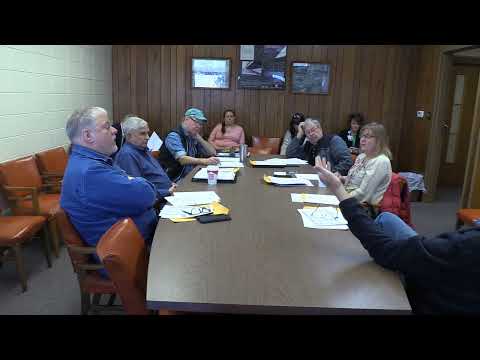
Edgar County board members spent much of their meeting discussing a draft ordinance to regulate large solar projects and lithium battery energy storage systems proposed for parts of the county.
Board members and staff said the ordinance would set siting standards, application fees and penalties and would require in‑person public meetings in the township before the county accepts an application.
The ordinance template discussed at the meeting would apply setbacks of 200 feet from a parcel line and 200 feet from a right of way. The draft also includes a 500‑foot setback from a nonparticipating residence or community building; one board member proposed increasing that distance to 1,000 feet for greater separation from homes. The draft measures would also require a certified check to the county of $40,000 at application plus an additional fee up to a stated maximum of $250,000 (the board calculated those two figures together as $290,000 for the filing). Violations in the draft ordinance would be treated as offenses punishable by a fine of $5,000 per violation, with each day constituting a separate offense.
Board members said the draft is intended to cover projects of substantial scale: presenters described a solar development sized at roughly 200 megawatts and battery storage sized to provide up to 200 megawatts, on parcels the company estimated could use about 1,500 acres. Board members described the storage units as lithium “pods,” each self‑contained to limit the spread of fire to a single module if a problem occurs.
Several county members and residents reported a recent surge in inquiries from multiple companies contacting landowners on the east side of the county. Residents at the meeting asked how solar and battery projects would affect taxable values. Board members noted that state rules provide separate valuation formulas for commercial energy facilities and for farmland, and said increases in the value of one property would not automatically change the statutory farm valuation formula for surrounding farmland.
The draft also would require an in‑person public meeting within the township before the county accepts an application. A county board member said the county must hold that meeting and that staff will provide applicants with the board’s public‑meeting requirement before an application is filed. Board members said one company indicated it plans to file an application and present to the board in April.
Board members asked staff to prepare a clean, corrected draft of the ordinance, and to schedule the required public meeting and a future board hearing. One board member said she would provide a corrected, clean copy of the highlighted draft to staff by the next day.
No formal county action on the ordinance was recorded during the meeting; the item remained under review and staff were directed to finalize the draft for public posting and hearing scheduling.
Meeting adjournment: the board later moved to adjourn and the motion passed by voice vote.