Get Full Government Meeting Transcripts, Videos, & Alerts Forever!
Get email alerts on the Residential Conversion Parking topic
No spam. Unsubscribe anytime.
Board weighs parking as conversion of former school on South Tenth Avenue resurfaces
Summary
A developer seeking to convert a vacant school on South Tenth Avenue into about 20 apartments faced persistent board concern over parking and whether municipal lots could legally serve the project; the hearing was continued while the applicant pursues documented parking commitments.
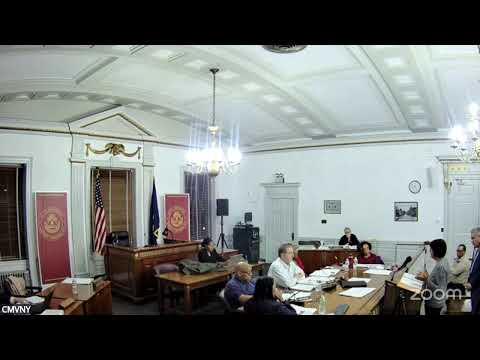
The Zoning Board of Appeals on March 18 continued review of an application to convert a vacant former school on South Tenth Avenue into about 20 apartments, citing unresolved parking arrangements and missing written commitments from municipal parking officials.
Board members said the project—proposed for a long-vacant, nonconforming building—could help preserve an older structure but stressed that lack of on-site parking and reliance on off-site municipal lots created practical and neighborhood concerns. The applicant told the board they had identified roughly 10 spaces in a municipal garage and additional on-street and municipal spots as overflow, but staff and the parking bureau said they had no record of a formal request or written commitment from the city.
The board’s concern centered on distance and usability: members said the municipal lot is several blocks away, requiring a walk that may be 8–10 minutes for residents returning at night. A board member said the arrangement was “a stretch,” noting the potential for increased street hunting for spaces if tenants do not use off-site parking. Board members asked the applicant to secure a formal, written agreement with the municipal parking authority or city council that would allow purchase or use of the number of spaces needed, and to document exactly which lots would be used.
Staff told the board that code allows use of municipal lots as part of a parking solution in limited circumstances but that an arrangement typically requires city council approval or a formal agreement; the board asked staff and the applicant to pursue a formal request to the police/parking bureau and city council and to return with documentation. The board also asked the applicant to clarify weekday and Sunday parking demand (Sunday was specifically requested because of potential church activity nearby) and to confirm whether tenants would be offered or required to take off-site spaces.
Because those pieces were not provided, the board voted to continue the public hearing and take no final action. Members said they were open to enabling the conversion if a reliable parking solution—whether private, municipal, or a combination—could be documented, and they encouraged the applicant to pursue a purchase or lease of sufficient spaces (board discussion referenced needing as many as the unit count or a clearly justified lower number with mitigation).
The board also noted site constraints: multiple lots have been treated as one for zoning analysis although they remain separate parcels in the tax/lot records; the applicant has combined lots operationally for analysis but will need to document any lot consolidations or easements used to support the proposed layout.
The board will reconsider the application when the applicant has provided written confirmation from the parking authority or city council and clarifications on the parking plan and unit-demand assumptions.
Ending: The hearing was continued; applicants were instructed to obtain written confirmation from parking officials and to return with updated materials addressing parking, lot consolidation status, and Sunday/peak-period parking assumptions.