Get Full Government Meeting Transcripts, Videos, & Alerts Forever!
Get email alerts on the Education Staffing topic
No spam. Unsubscribe anytime.
Superintendent says Granite will use conservative fall projections to avoid midyear teacher moves
Summary
Superintendent Orsley told a Kennedy Junior High audience the district will adopt more conservative fall enrollment projections after earlier midterm teacher reassignments and amid tighter state funding and the end of COVID relief funds.
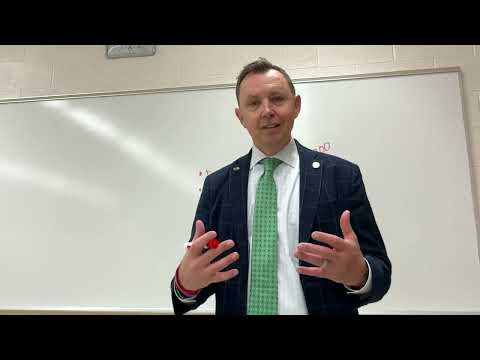
Superintendent Orsley said Granite School District will adopt more conservative fall enrollment projections to avoid fall staffing adjustments that remove teachers from classrooms, speaking at Kennedy Junior High.
Orsley told listeners that early in the school year the district’s staffing projections were off and three teachers had to be reassigned after six weeks because there was no funding to retain smaller class allocations: “3 teachers had to be moved because there was no funding to be able to retain them,” Orsley said, calling the experience painful for students, teachers and communities.
The district faces declining enrollment and tighter budgets that are driving the change. Orsley said Granite projects a decline of about 1,200 students from this school year to the next and a longer-term loss of “5 or 6,000 students” over the next five to six years that could bring enrollment to about 47,000. That projection, he said, prompted a decision to err on the side of caution when setting fall staffing levels so fewer teachers will be reassigned after the school year begins.
Orsley said state funding changes will tighten the district’s budget even if the Weighted Pupil Unit (WPU) rate increases by 4%. He said at least six bills in the legislature and other tax-reform adjustments are altering how public education is funded and two of those bills will have a “very significant” negative impact on Granite School District. He also said the district no longer has ESSER (Elementary and Secondary School Emergency Relief) funds to use as a temporary cushion.
Because of that combination — enrollment decline, state funding changes and the end of federal COVID-relief funding — Orsley said the district will set more conservative projections this fall and plan to add staff in the autumn if actual enrollment proves higher: “In the fall, if numbers are higher, we can simply add additional teachers,” he said.
Orsley framed the approach as intended to reduce disruption: “Fall staffing adjustment is not in the best interest of our students. It is not in the best interest of our staff and is definitely not in the best interest in our communities as a whole,” he said, adding, “I never want to experience that pain again.”
The comments recounted a recent staffing disruption, explained the district’s projection approach, and outlined constraints the district faces from enrollment trends and funding changes. Orsley said the district aims to maintain its staffing ratios while being more conservative in initial forecasts so schools and communities do not face midyear reassignments.
No formal vote or board action was recorded in the presentation; Orsley described an administrative decision about projection methodology rather than a statutory or board resolution.