Get Full Government Meeting Transcripts, Videos, & Alerts Forever!
Get email alerts on the Personnel Policy topic
No spam. Unsubscribe anytime.
Committee approves updated policy 3.13 clarifying employee appointment types
Summary
The committee voted to recommend Council approval of revisions to Policy 3.13 (Types of Appointment) to align internal terminology with new HRIS systems and to replace “casual employees” with clearer categories such as temporary part-time and seasonal employees; a wording typo flagged by a committee member will be corrected before Council review.
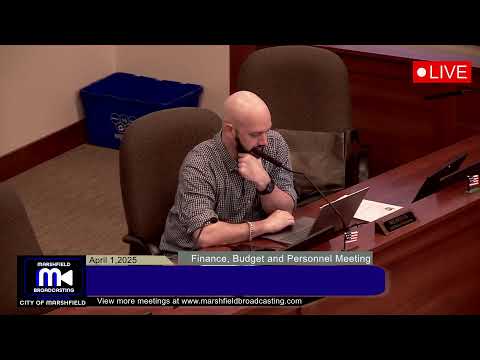
The Finance, Budget and Personnel Committee on April 1 voted to recommend Common Council approval of revisions to Policy 3.13, “Types of Appointment,” updating employee-type terminology to align with the city’s HRIS systems and clarifying categories such as regular full-time, regular part-time, temporary part-time and seasonal employees.
Sarah Dressel, human resources director, told the committee the policy had last been updated in February 2014 and that the city now uses Tyler Munis and UKG/Kronos HRIS systems, which use different terminology. She recommended replacing the previous “casual employees” language with the clearer classifications “temporary part-time” and “seasonal.”
Dressel said regular full-time and regular part-time positions are budgeted and authorized by the Common Council and are tracked on the city’s position control report; the report currently shows 97.9 approved full-time-equivalent (FTE). She explained temporary part-time roles (for example, crossing guards) are hired for specific time frames and seasonal employees are tied to seasons or peak workloads and typically last six months or less.
Committee member Bridal pointed out a likely typo in the draft policy’s first sentence for regular part-time employees (a line that read “less than a yearly average of 30 hours”) and staff agreed the intent was to reference 40 hours; Dressel said she would correct that wording prior to Council submission. Bridal asked whether a person averaging 38 hours weekly would be captured by the definitions; staff explained employees averaging under 40 hours are considered regular part-time for benefits and prorating purposes and that some provisions (for example, health coverage eligibility) apply after specific service thresholds.
A motion to approve the revised policy and forward it to Common Council passed unanimously. Dressel said the corrected language would be included when the item is placed on the Council agenda.