Get Full Government Meeting Transcripts, Videos, & Alerts Forever!
Get email alerts on the Youth Sports Funding topic
No spam. Unsubscribe anytime.
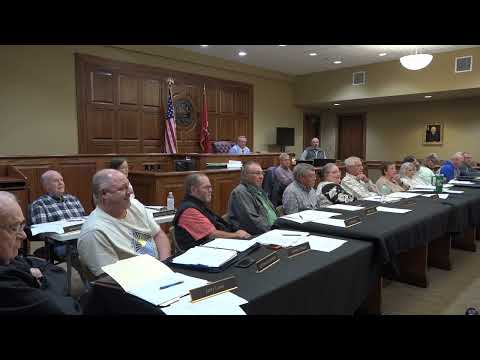
Chester County commissioners debate funding, 501(c)(3) status for Dixie U ballpark group
Summary
Representatives of Dixie U pressed commissioners for a guaranteed $25,000 annual payment and disputed a county requirement that recipients be 501(c)(3) organizations; no formal vote was recorded and the county proposed alternatives including insurance coverage and providing parts for maintenance.
Chester County commissioners heard a lengthy, at-times heated discussion about funding and nonprofit status for Dixie U, a local youth baseball organization, during a session in which Dixie U representatives asked for a guaranteed $25,000 annual payment to maintain the county-owned ballpark.
The matter drew repeated exchanges about whether Dixie U must be a federal 501(c)(3) to receive county funds. A Dixie U representative told the commission that the organization “has never been a 501(c)(3)” and said the group has received county money for more than 40 years. The representative said Dixie U currently receives $10,000 a year and cannot afford the one-time and ongoing costs they were told would be needed to become a federal 501(c)(3).
The dispute included invoices and project costs. The Dixie U representative said the building at the ballpark cost $419,338.97 and that electrical work alone cost about $105,000. The representative also said the county previously provided about $300,000 toward the facility and that the city “may have given $100,000,” a claim made during the public exchange and attributed in the transcript to a commissioner.
Commissioners and staff described differing understandings of earlier paperwork and motions. One commissioner said the way a prior motion had been written and filed in the county office did not state that invoices must be produced, and the commission’s auditor provided an email confirming that interpretation. Commissioners also urged Dixie U to supply invoices and documentation where available; Dixie U representatives said they would provide receipts and paperwork.
No formal vote on a funding increase was recorded in the transcript excerpt. Several commissioners said they were not prepared to guarantee $25,000 a year. One county official proposed alternatives to a straight cash grant: the county could provide parts needed for maintenance and could cover Dixie U under the county insurance policy, paying the premium and saving Dixie U about $6,600 a year in insurance costs, the official said.
Discussion touched on what county policy requires. Dixie U representatives said they had relied on a county policy that they read to mean an organization providing services to the county need not be a 501(c)(3); others said Tennessee Code Annotated language should be consulted. Commissioners directed staff to continue the conversation and to follow up on documentation and insurance details rather than taking immediate binding action.
The exchange was both practical and personal: speakers repeatedly referenced the organization’s decades-long ties to the county, the county-owned property, and community perceptions. Commissioners acknowledged the group’s work for local youth but emphasized limited county resources and competing funding requests.
With no final decision recorded in the provided transcript, the discussion closed with the county offering to explore providing parts, increasing insurance coverage for the facility, and seeking additional documentation from Dixie U. Commissioners said they would continue to consider support for lights and maintenance but did not commit to the requested $25,000 annual payment.