Get Full Government Meeting Transcripts, Videos, & Alerts Forever!
Get email alerts on the County Funding Policy topic
No spam. Unsubscribe anytime.
Commission discussion stalls on $25,000 annual payment to Dixie Youth amid legal and policy concerns
Summary
Chester County commissioners brought back a motion to authorize $25,000 annually to Dixie Youth, then paused the item after staff warned county policy and state law limit when the county may grant funds to organizations that are not registered federal tax-exempt entities.
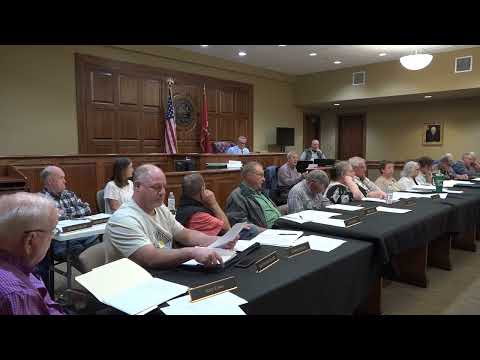
Chester County commissioners brought a previously tabled motion back to the floor on Thursday to consider paying Dixie Youth $25,000 a year, but discussion shifted to legal limits on county contributions and whether the county’s contribution policy should be changed before approving the payment.
The motion under consideration would authorize an annual $25,000 payment to Dixie Youth with the funds to come from the county fund balance if budgeted. Commissioner Bubba Hedgeon originally moved the measure and Commissioner Al McKinnon seconded it when the item was taken from the table; the commission voted at roll call to take the item up (18 yes votes reported).
The motion to authorize the recurring payment drew questions about the county’s legal authority to provide money to organizations that are not registered as certain types of federal tax-exempt entities. An unidentified commissioner asked, “Is it legal for us to give money to a for profit entity?” prompting a longer explanation from county staff about state law and the county’s existing contribution policy.
A staff member summarized that Tennessee Code Annotated and the commission’s current contribution policy create constraints on county payments to outside organizations. The staff member said the county’s policy (adopted in 2022 and later modified) narrows eligible recipients by specifying certain 501(c) classifications and that auditors could cite the county if it makes payments inconsistent with the policy. The staff member said the commission can change the policy but must decide deliberately because inconsistent treatment of organizations can produce audit findings.
Heather Yelverton was identified in discussion as the person who drafted a proposed revision to the county’s contribution policy; county staff also said the audit committee had advised that the county could accept a wider set of 501(c) classifications than the current policy requires, but the committee questioned why an organization would not file the federal paperwork that establishes tax-exempt status.
Before completing a decision on the $25,000 payment, a commissioner moved to postpone the substantive funding motion indefinitely. The transcript records the motion to postpone but does not record a completed vote on that postponement during the provided excerpt.
Votes at a glance: the commission approved minutes from the Jan. 27 meeting (voice vote); approved a set of budget amendments that had passed through the budget committee (voice vote); approved a highway department budget amendment (voice vote); voted 18–0 in roll-call fashion to take the Dixie Youth item off the table so the commission could consider it; a motion to authorize $25,000 annually to Dixie Youth was placed on the floor for discussion; a motion to postpone that funding measure indefinitely was made later in the discussion (vote outcome for the postponement is not recorded in the provided transcript).
Why it matters: The commission may be asked to commit recurring county funds for a local youth organization. If the county approves the payment without changing its contribution policy or securing the recipient’s federal tax-exempt documentation, county staff warned that auditors could issue findings, which the commission would have to address.
Commissioners and staff discussed next steps: amending the county contribution policy to clarify which 501(c) classifications qualify for county grants or payments and then returning to the funding request. One staff member recommended voting on a policy change at the next meeting so any future payments would follow a clarified rule.
The transcript excerpts provided do not show a final decision on authorizing the $25,000 annual payment; they do show the commission deciding to take the item from the table, extended discussion of the legal constraints, and a motion to postpone the funding measure.