Get Full Government Meeting Transcripts, Videos, & Alerts Forever!
Get email alerts on the Municipal Procedures topic
No spam. Unsubscribe anytime.
Officials outline logistics for annual and special town meetings, electronic voting and May election deadlines
Summary
Town staff and volunteers reviewed plans for the upcoming annual town meeting, a larger special town meeting planned at Algonquin Regional High School, the town election and expanded use of electronic clicker voting; officials emphasized a staged check‑in process, child‑care arrangements and ballot mailing deadlines.
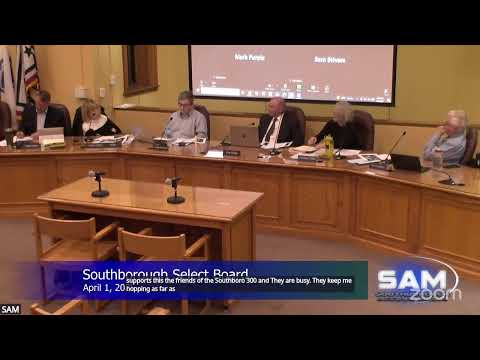
Town officials and staff used the Select Board meeting on April 1 to review logistics for the upcoming annual town meeting, a separate large special town meeting at Algonquin Regional High School, and the town election in May.
Jim (staff member overseeing town meetings) briefed the board on the annual meeting’s check‑in and voter accommodations and then described plans for a larger special town meeting to be held at Algonquin because Algonquin offers substantially more parking than Trottier. Jim told the board the special meeting will open at 9:00 a.m. with check‑in starting at 7:30 a.m., and that the town will stage check‑in with separate tables for ID scanning, wristbands and clicker distribution to speed ingress. He said the town expects a large turnout and has arranged for custodial support, on‑site vans to ferry attendees from remote lots, additional police traffic detail, and an audio‑visual vendor to run livestreaming and projection. Jim said Algonquin has roughly 695 legal parking spaces and that additional overflow locations and shuttle vans are planned if needed.
Paul Cimino and Jim reviewed the electronic voting (clicker) system the town will use. The vendor will program separate receivers so clickers issued for the cafeteria (orange lanyards) work only in that room; that prevents signals from bleeding between spaces, Jim said. Paul emphasized the distinction between having the technology available and choosing to use it every time: “it is not something that is we are defaulting to,” he said, adding that the town plans to trial the system at the upcoming meeting and will use it selectively where it adds value.
John (staff member handling elections) reviewed ballots and mail‑ballot procedures for the May election. He said anyone can request a vote‑by‑mail ballot; the application deadline for a mailed ballot is five business days before the election (he cited May 6 for the May 13 election). He said the town cannot print ballots until the deadline for candidates to withdraw passes (he cited 5:01 p.m. on April 11 as the moment he will release print instructions to the vendor) and that he expects the town to mail ballots around April 22 after printing and testing. Mailed ballots must be received by the town by 8:00 a.m. on election day; John urged voters to return ballots early because last‑minute dropoffs can delay poll closing procedures.
Officials also confirmed a simplified approach to child care at the special meeting: a parent may bring a child and must remain with that child in a supervised room or sit with the child in the cafeteria; preregistration is not required. The town’s IT and A/V vendors will livestream both meetings on the town website and on government channels. Officials said they will continue to publish updates on the town blog and social media and encouraged carpooling to ease parking pressures for the special meeting.