Get Full Government Meeting Transcripts, Videos, & Alerts Forever!
Get email alerts on the Zoning And Planning topic
No spam. Unsubscribe anytime.
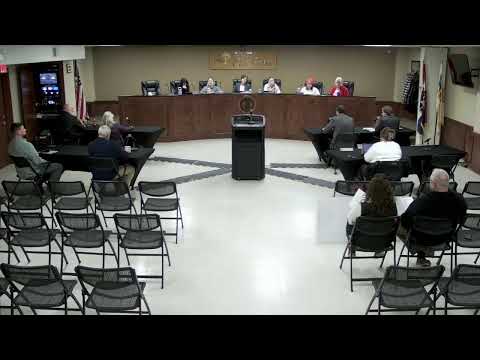
Oak Grove alderwomen begin review of parking rules, lot sizes and consider accessory dwelling units
Summary
Alderwoman Pam Pope urged the board to review business parking requirements, minimum lot sizes and to consider permitting accessory dwelling units (ADUs). The board agreed to pursue a review and to invite City Attorney Chris Williams to brief members on statutory authorities.
Alderwoman Pam Pope used the board's January 2025 meeting to reopen discussions about Oak Grove's development standards, asking the board to review business parking requirements, minimum lot sizes in single-family districts, and whether to allow accessory dwelling units.
Pam Pope said the current parking table is outdated and can deter businesses from locating in Oak Grove. "I'd like to look into having our business parking change so we don't have to have as much of it, and then that would encourage businesses to come to Oak Grove," she said. She argued that many parking formulas were adopted in the early 2000s and do not reflect post‑COVID changes in retail and employee patterns.
City staff and board members noted the city's current zoning and subdivision rules were adopted in February 2003 and that R-1 district standards were last updated in February 2006. Staff reported the current R-1 minimum lot size is 9,000 square feet with a minimum width of 75 feet, a front setback of 25 feet and a rear setback of 30 feet. Those figures were presented as the existing code values for board consideration.
Pope also proposed examining accessory dwelling units (ADUs) — detached or attached secondary dwelling units that normally include a kitchen and bathroom. Staff pointed out that Oak Grove's current accessory-use code (adopted February 2003) permits a guest house without kitchen facilities but does not permit a full ADU. Board members discussed practical limits, including homeowner association restrictions and insurance implications.
Multiple members agreed the next step should be an informational presentation by City Attorney Chris Williams on the city's statutory planning and zoning authorities, after which the board could place a formal zoning review on a future agenda. No ordinance or zoning change was adopted at the meeting; the item was discussed for direction and potential follow-up.