Get Full Government Meeting Transcripts, Videos, & Alerts Forever!
Get email alerts on the Employee Benefits topic
No spam. Unsubscribe anytime.
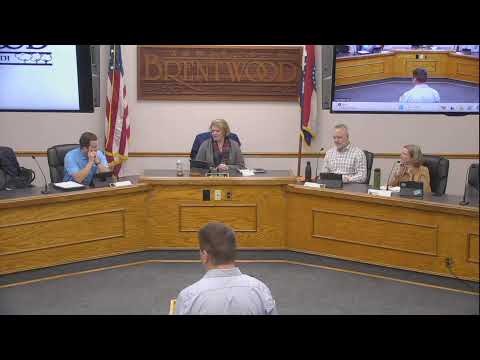
Brentwood committee reviews employee benefits, asks staff for tuition-reimbursement recommendation
Summary
City staff presented a broad review of Brentwood's employee benefits — including health reimbursement accounts, paid time off, flexible schedules, tuition reimbursement and retirement (Loggers) options — and was asked to return with a formal recommendation on increasing tuition reimbursement.
Brentwood city staff presented a multi-part review of employee benefits during the Ways and Means Committee's February meeting, outlining current usage and costs for the health reimbursement account, paid time off and voluntary benefits, and asking the committee to consider changes including a possible increase to the tuition-reimbursement cap.
The presentation, led by Tangela, covered the Health Reimbursement Account (HRA) liability and utilization, supplemental voluntary benefits (hospital indemnity, dental, short-term disability and others), paid time-off policies and carryover rules, options for flexible work schedules and telework, wellness programming, and retirement-plan (Loggers) contribution scenarios. Committee members voted to ask staff to return with a recommendation on tuition reimbursement at a future meeting but did not take formal action on other items.
Why it matters: the discussion touched on several employee-facing benefits that affect compensation costs, budgeted liabilities and workforce recruitment and retention. Several proposals would change ongoing costs (for example, larger tuition reimbursement or modified carryover/payout rules for vacation), so the committee requested more detailed financial modeling before making policy changes.
Staff said the HRA is a recurring liability the city carries and reported that employees' use of the HRA has increased as awareness rises. Tangela told the committee that the annual HRA liability is roughly $250,000 while the year-to-date expense reported in the memo was about $40,000'$45,000 (2024 still open). Tangela described ongoing outreach to employees to increase awareness and reimbursement submissions.
On tuition reimbursement, the city currently offers $3,000 per year for up to three credit hours. Tangela showed a UMSL tuition benchmark of $3,726 for three undergraduate credit hours and said Brentwood's current cap sits near the middle of peer cities. A committee member moved that staff look at increasing the tuition reimbursement amount and present a recommendation at the next meeting; the motion was seconded but the committee did not take a vote that night and instead asked staff to return with the proposal.
Committee members and staff discussed paid time off and carryover rules. Tangela said the handbook limits vacation carryover to 40 hours for most employees and that public safety employees use an accrual schedule tied to their work calendars; she explained that increasing carryover caps would raise the city's accrued liability and could create overtime or staffing challenges when many employees take leave in the same period. She said current rules require carryover hours to be used within the first quarter after accrual for police and fire and on the employee anniversary date for other staff.
The discussion also covered flexible work schedules and telework. Tangela said Brentwood does not have a formal handbook section defining a four-day workweek or regular remote-work policy; current flexible arrangements are handled by directors case-by-case. Committee members raised concerns about service coverage, holiday scheduling and employee equity if a formal four-day option were adopted, and generally asked staff to keep the policy situational and department-specific.
On retirement and Loggers contributions, Tangela presented projections based on the February 2024 payroll snapshot. She said the current employer contribution rate used in the city's budget was 5.4% and reported an illustrative estimated city cost tied to that rate. Staff also presented scenarios in which employees contribute to Loggers and how that could change employer rates; Tangela emphasized that the numbers shown were preliminary estimates using older payroll data and would need updating with current salaries for final modeling.
The city described several ongoing education and wellness efforts: quarterly benefits orientation sessions for new hires and current employees, on-site voluntary-benefit presentations, recorded sessions for staff who cannot attend live, a wellness committee that runs employee challenges, and periodic "lunch-and-learn" trainings that use EAP and community partners. Tangela said many voluntary plans now have at least one enrollee.
Public comment included Brentwood Fire Department representative Darren Chavez, who thanked staff for the analysis and asked the committee to consider aligning firefighter sick-leave accrual to 24-hour shifts and to revisit family premium costs. Chavez also said tuition reimbursement would have been helpful for recently completed coursework in his department.
What comes next: the committee asked staff to prepare a formal recommendation on increasing tuition reimbursement and to provide updated financial projections (current payroll and liabilities) for any items that would change budgeted costs. No formal policy changes were adopted at the meeting.