Get Full Government Meeting Transcripts, Videos, & Alerts Forever!
Get email alerts on the Traffic Calming topic
No spam. Unsubscribe anytime.
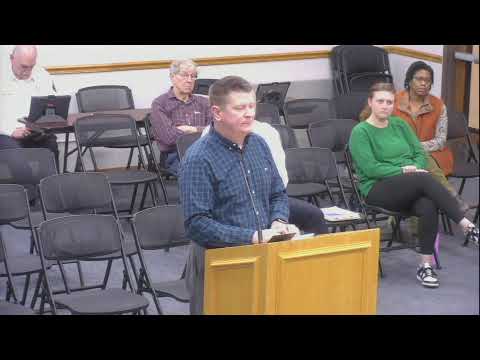
Board approves speed cushion on Rosalie after petition and data; residents press changes to flashing crosswalk sign
Summary
Following a petition and data collection showing a portion of vehicles exceeding 30 mph, the Board authorized installation of a single speed cushion on Rosalie (east of Swim Club) and discussed removing a flashing pedestrian sign and adding MUTCD‑compliant markers.
The Board voted to install one speed cushion on Rosalie east of Swim Club Lane after staff presented petition results and traffic data showing a measurable fraction of vehicles traveling at 30 mph or greater.
Public Works staff said a data collector was placed from Jan. 24 through Feb. 6 and recorded 11,508 vehicles on the block; the report summarized a median speed near 20 mph, an average speed of about 24.9 mph, and that approximately 13.2% of vehicles were traveling 30 mph or greater during the collection period. Staff reported a maximum recorded speed of 59 mph for a vehicle whose recorded length suggested it might have been an emergency apparatus. Public Works also said it had received a petition that met the block‑signature threshold (at least 25 of 38 signatures) required under the city’s traffic calming toolkit.
Dan (Public Works) recommended starting with a single cushion placed east of Swim Club, noting the cushions already installed in nearby blocks and observing similar traffic volumes and behavior to previous installations. He advised utility locates would be required before installation. A motion to place the speed cushion “wherever Dan sees fit” on the 2600 block was moved and seconded; no mover/second names were recorded in the transcript. The Board recorded a roll‑call vote of three yes votes and the motion carried 3–0. Staff said locate calls and installation would occur in the coming weeks and installation could be followed by a repeat data collection to measure effect.
Residents who gathered petition signatures said their survey responses favored non‑flashing vertical pedestrian signage under stop signs and expressed concerns about the bright solar‑powered flashing sign east of the intersection. Public Works staff noted federal guidance in the Manual on Uniform Traffic Control Devices (MUTCD) constrains signage below stop signs and recommended alternative, compliant fixes: removing the flashing sign, installing standard pedestrian warning signs upstream, and adding reflectorized post strips or supplemental plaques to make the stop sign more visible.
Staff said the speed cushion will affect parking near the installation, snow‑plow operations and emergency response (cushions are wheel‑gapped for pumper trucks but may affect ambulances). The fire representative said cushions slow emergency vehicles but expressed conditional support for placement “as far west as possible” so apparatus approach from a stopped position and climb the hill, which reduces top speed at that location.
Following installation staff will re‑run the data collector to confirm changes in speed distribution; the Board also authorized removal or relocation of pedestrian signs if the community prefers to use them elsewhere.