Get Full Government Meeting Transcripts, Videos, & Alerts Forever!
Get email alerts on the Permitting Streamlining topic
No spam. Unsubscribe anytime.
Bill would direct WSDOT to convene permitting work group to streamline transportation approvals
Summary
Engrossed Substitute House Bill 19-02 would require WSDOT, with Ecology, to convene a broad work group of agencies, labor, industry, tribes and other stakeholders to recommend ways to streamline federal, state and local permitting for transportation projects while maintaining environmental protections.
Engrossed Substitute House Bill 19-02 would require the Washington State Department of Transportation, in consultation with the Department of Ecology, to convene a work group of government, industry, labor and tribal representatives to develop recommendations to streamline permitting for transportation projects while maintaining environmental and regulatory protections.
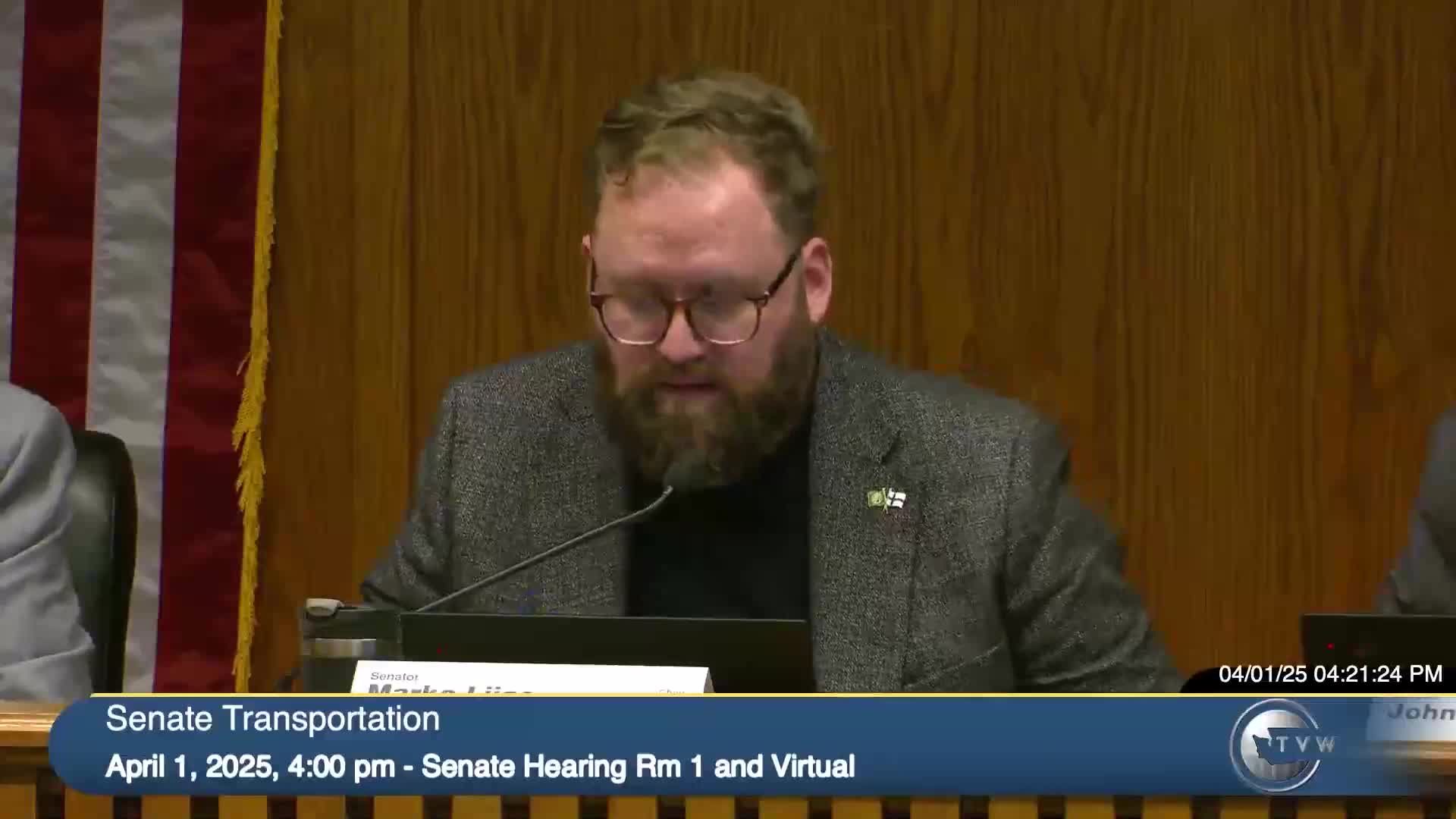
Danny Masterson, committee staff, told the Senate Transportation Committee the work group would begin meeting by Oct. 1, 2025, and submit a final report to the legislature by Nov. 1, 2026. The group’s scope would include reviews under NEPA and SEPA, the Shoreline Management Act, hydraulic project approvals, and state and federal water-pollution regulations; the bill lists 14 agency and stakeholder categories to be included in membership. WSDOT would provide staff support and fiscal estimates indicated a one-time WSDOT cost of about $288,000 (largest item: a contracted facilitator) and minor costs to Commerce and Ecology.
Representative Addison Richards, prime sponsor, said the measure responds to layers of permitting requirements that can slow transportation projects — citing a hazardous intersection on the Key Peninsula and the need to coordinate multiple agencies and approvals. Richards emphasized the bill’s stated requirement that environmental and regulatory protections be maintained while priorities, timelines and processing are aligned.
Why it matters: sponsors and staff described the bill as a structured way to identify bottlenecks and recommend statutory or administrative changes so projects can proceed more predictably and cost-effectively; work-group recommendations would be subject to legislative review and possible follow-up legislation.
Public testimony forms showed a preponderance of pro signers and little formal opposition in the hearing record. The committee recorded the required membership list and the timeline for the work group's report; no committee vote was captured in the transcript.
Ending: The bill establishes a near-term convening process and report timeline to the legislature with concrete agency participation and a modest one-time cost for WSDOT to administer the work group.