Get Full Government Meeting Transcripts, Videos, & Alerts Forever!
Get email alerts on the Rhc Closure topic
No spam. Unsubscribe anytime.
Committee backs bill to close two residential habilitation centers while preserving crisis and respite beds
Summary
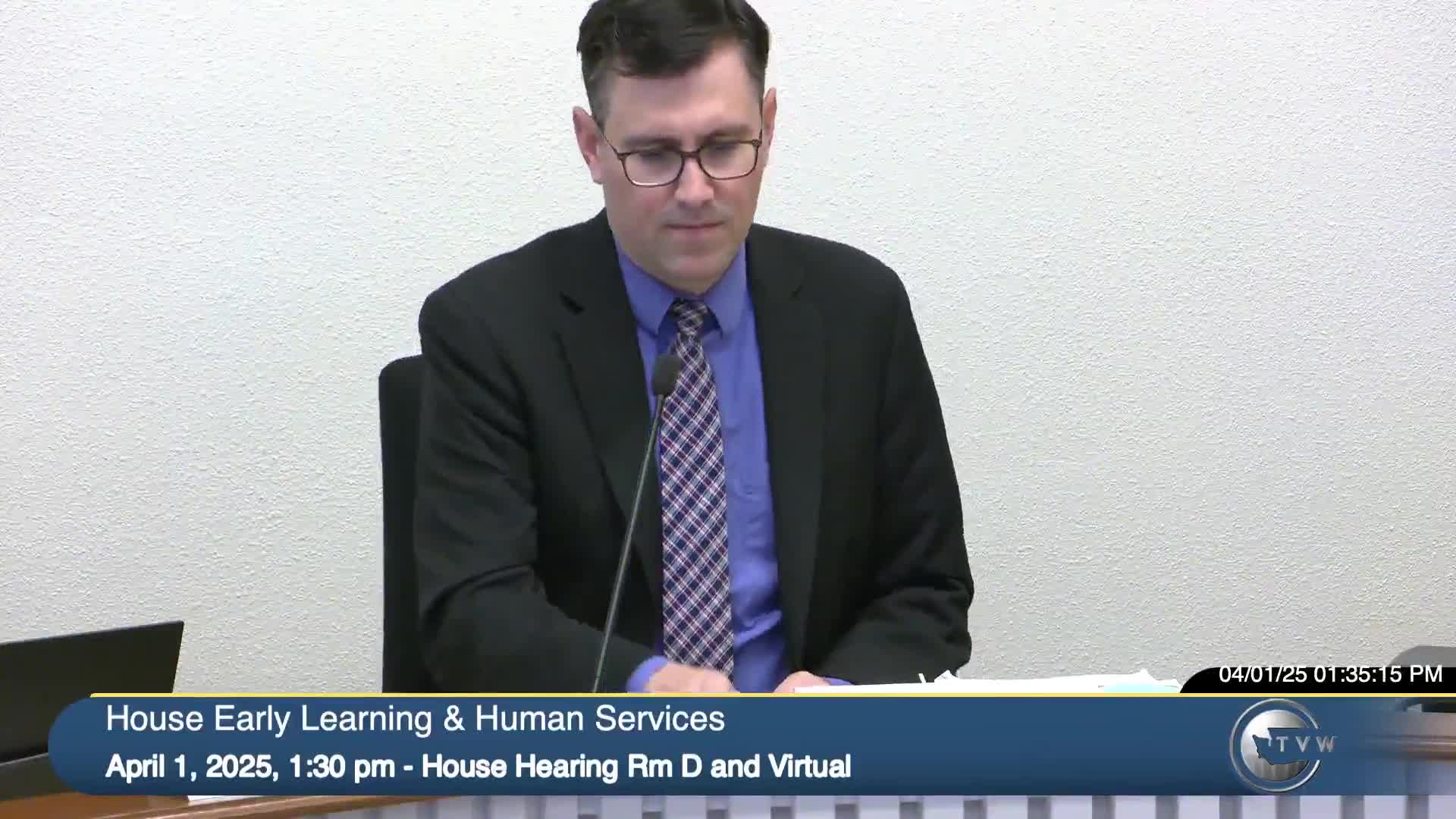
At an executive session of the Human Services, Youth, & Early Learning Committee, members voted to report out House Bill 14 72 with a "do pass" recommendation.
At an executive session of the Human Services, Youth, & Early Learning Committee, members voted to report out House Bill 14 72 with a "do pass" recommendation. The bill would require the Department of Social and Health Services to close Rainier School and Yakima Valley School as residential habilitation centers by June 30, 2027, and bar new admissions except for short-term respite or crisis stabilization.
The measure matters because it directs closure of two long-standing state institutions while aiming to preserve crisis and respite capacity for people with developmental disabilities. Representative Taylor said the move relates to the U.S. Supreme Court's 1999 Olmstead decision, which the committee heard requires state-funded services be made available in the community rather than in institutions. Representative Taylor said, "These RHCs were always meant to be temporary placements for folks with developmental disabilities in crisis and those who need skilled nursing." Representative Penner warned against rushing the change, saying "doing this without a plan is a recipe for disaster."
Staff described the bill's key provisions: the closures are set for June 30, 2027; no new admissions would be allowed except for short-term respite or crisis stabilization; and the bill incorporates an amendment (Harr o 7 16/Harrington 7 16) that reinstates a requirement to operate crisis stabilization and respite service beds at Yakima Valley School following closure, subject to appropriated funding. Committee staff noted Yakima Valley's closure plan calls for the facility to close once its census falls to eight residents. Witnesses and members also said the temporary budgeted capacity for crisis/respite beds has been 12 beds in prior budgeting.
Acting Vice Chair Representative Hill moved adoption of the Harr o 7 16 amendment to clarify that crisis stabilization and respite beds are to remain aligned with current budgetary intent. The amendment was adopted on voice vote. Representative Hill then moved that the committee report the bill out with a due-pass recommendation. The roll call showed six members voting aye (Representative Bergquist, Representative Cortez, Representative Goodman, Representative Hill, Representative Ortiz Self and Representative Taylor), two voting nay, do not pass (Representative Eslic and Representative Burnett), and three voting nay without recommendation (Representative Birnbaum, Representative Dent and Representative Penner). The clerk recorded the committee as reporting the bill out with a due-pass recommendation.
Members speaking in favor pointed to community placement capacity such as Lakeland, Fircrest, adult family homes and supported living options, and budget set-asides the Legislature has previously designated for supported living conversions. Members opposed or urging caution said they remain unconvinced a comprehensive operational plan exists to safely transition residents into community settings within the bill's time frame.
The committee's action reports the bill out of committee; it will proceed through the legislative process with the committee's due-pass recommendation.