Get Full Government Meeting Transcripts, Videos, & Alerts Forever!
‘College in the High School’ enrollment surges while reimbursement rules strain colleges
Summary
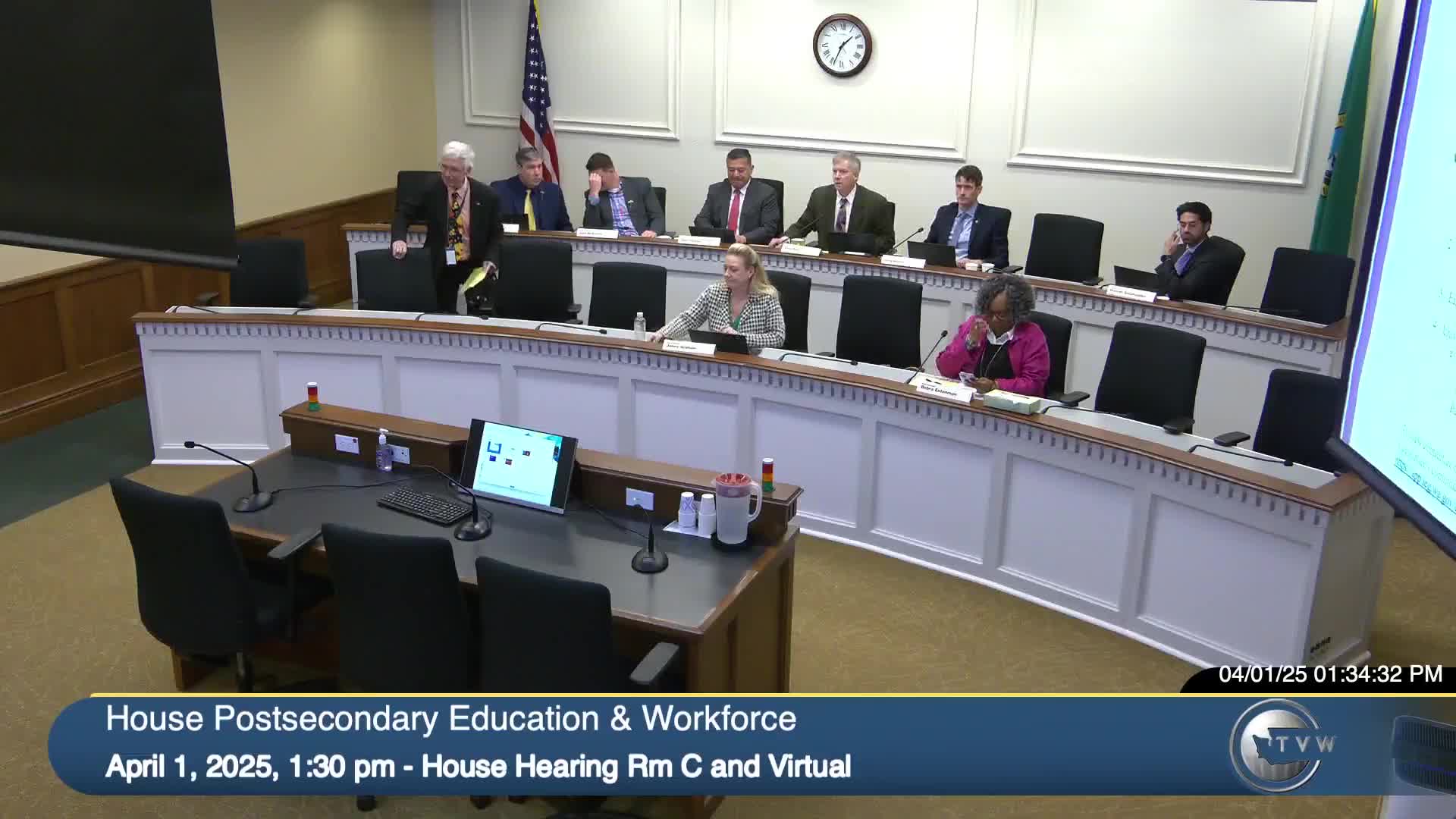
At a work session of the Postsecondary Education & Workforce Committee on April 1, state and university officials said enrollment in the state’s college-in-the-high-school dual-credit programs has increased sharply since the Legislature eliminated student fees, but the reimbursement model created by that law is not covering program costs for many colleges.
At a work session of the Postsecondary Education & Workforce Committee on April 1, state and university officials said enrollment in the state’s college-in-the-high-school dual-credit programs has increased sharply since the Legislature eliminated student fees, but the reimbursement model created by that law is not covering program costs for many colleges.
Jamie Trogot, director of student services and K‑12 alignment at the State Board for Community and Technical Colleges, told the committee that the Legislature’s change in 2023 made college-in-the-high-school “free for students” and that participation has risen roughly 53% since 2018. “Our success rates right now for college in the high school is 96%,” Trogot said, adding that students of color now represent about 47% of participants.
The growth has not eliminated financial pressure on providers. Trogot described the program’s reimbursement process: colleges submit course information and are paid afterward, typically in the fall. For community and technical colleges the system currently reimburses “$3,500 per course, or it could be $300 per student per course,” she said. That latter per‑student figure applies when section size is small and has reduced the effective revenue some institutions receive.
Officials from multiple institutions described the consequences. Dr. Patrick Blaine, dean for humanities, arts and social sciences at Whatcom Community College, said Whatcom decided in January to pause…
Already have an account? Log in
Subscribe to keep reading
Unlock the rest of this article — and every article on Citizen Portal.
- Unlimited articles
- AI-powered breakdowns of topics, speakers, decisions, and budgets
- Instant alerts when your location has a new meeting
- Follow topics and more locations
- 1,000 AI Insights / month, plus AI Chat