Get Full Government Meeting Transcripts, Videos, & Alerts Forever!
Get email alerts on the Education topic
No spam. Unsubscribe anytime.
House Education Committee outlines interim plan constraints and member priorities including science-of-reading, alternative learning and behavioral health
Summary
At an interim planning meeting in Olympia, members of the Washington State House Education Committee reviewed limits on interim travel and meetings and described topics they intend to study over the summer and fall, including the science of reading, nontraditional and work-integrated learning, school behavioral health and food security.
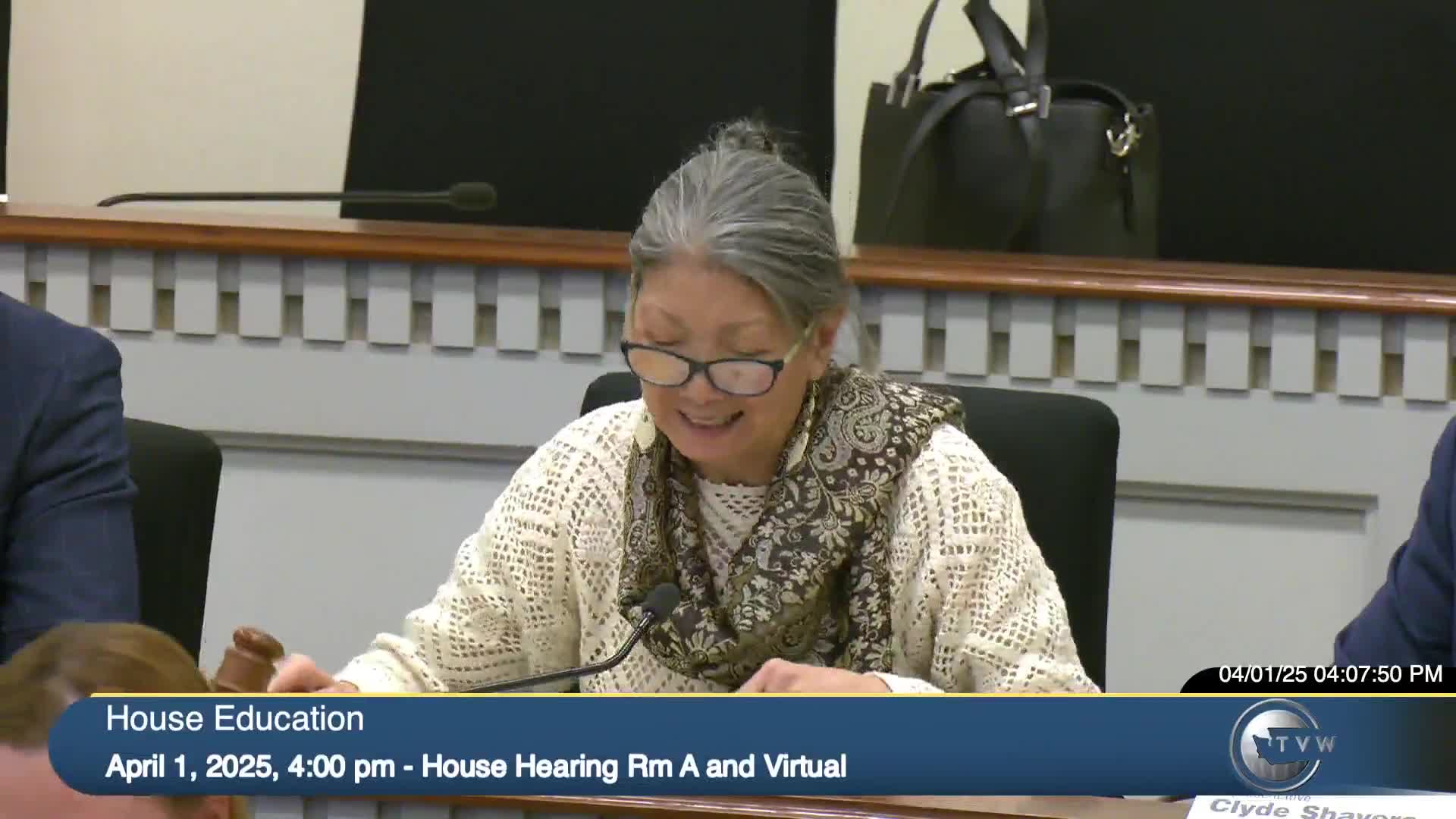
The Washington State House Education Committee met in Olympia for interim planning and set parameters for its summer and fall activities while members described the issues they plan to study before the next legislative session. Chair Representative Tera Santos opened the meeting by reading guidance that limits overnight travel for staff and asks committees to "plan no more than 3 meetings," submit interim plans about three weeks after sine die, and avoid scheduling meetings in May, between Aug. 1 and Sept. 15, and after Dec. 17.
Why it matters: Committee members said the interim is the time to gather evidence, visit local programs and work across party lines to shape bills for the next session. Members proposed tours, research and stakeholder meetings intended to inform future legislation on reading instruction, alternative learning pathways, behavioral health in schools, school food programs and other operational issues.
Committee logistics and limits: Chair Representative Tera Santos read the planning directions the committee received, stressing constraints on overnight travel and the need to limit committee meetings and avoid certain date ranges to reduce staff overtime. She told members off-site meetings "will be considered on a case by case basis if they do not require overnight stays," and noted the committee may schedule meetings fully virtual, hybrid or in person in Olympia.
Member priorities identified: Several members described topics they will pursue during the interim.
- Science of reading: Representative Ethan McIntyre said he wants to partner with Representative Paulette to study the "science of reading," citing Mississippi’s recent gains as a motivating example and arguing early reading is fundamental to later learning. McIntyre said, "Without reading, you're like a car with no wheels." Representative Paulette suggested visiting Puyallup-area schools and Heritage University programs that screen K–2 students for reading difficulties.
- Nontraditional and work-integrated learning: Multiple members, including Representatives Marshall, Bergquist, Steele, Shavers and Chair Santos, emphasized visits to nontraditional learning sites—outdoor schools, skill centers, charters and project-based sites—to examine how hands-on and mastery-based approaches operate. Vice Chair Joel Shavers and Chair Santos referenced ongoing work on Core Plus and work-integrated learning and said the committee may use one interim meeting to hear from the Core Plus/work-integrated learning group.
- Behavioral health, isolation and restraint, and residential care: Representatives Kallen, Stonyard and Shavers highlighted the committee’s continuing interest in student behavioral health, including work on isolation and restraint pilot sites and a new residential behavioral health program in southwest Washington that keeps students closer to home. Kallen said she plans site visits to pilot districts and long-term rehabilitation centers to validate findings and learn what next steps in policy might look like.
- School-based health services: Representative Marshall said he has not toured school-based medical or mental-health clinics and would like to see how they operate in practice versus how they are described in reports.
- Food security and school meals: Representative Reeves and Representative Rood (former member Senator Richeli referenced by members) raised school food security after federal USDA funding changes. Reeves said the legislature should consider a statewide food-security strategy and integration with urban agriculture and school-based food education.
- Artificial intelligence and technology in classrooms: Representative Reeves and Representative Keaton said they will study how K–12 systems use artificial intelligence and what cost-benefit and academic effects might follow.
- Civics education and student voice: Representative Scott urged more emphasis on civics and American history in K–12 programs. Representative Bergquist and Representative Stonyard described student engagement activities—young students debating in House Hearing Room C and competency-based practices—used to bring student voice into policymaking.
- Small districts and unfunded mandates: Representative Keaton and others noted differences between large and small districts and said the committee should examine unfunded mandates, reporting burdens and the financial impacts on small districts. Representative Roode suggested tours of small districts to see administrative burdens firsthand.
Operational and cross-agency considerations: Members repeatedly urged cross-agency collaboration—education, health and human services, corrections and local partners—to address behavioral health, early learning integration and transitions to kindergarten. Chair Santos and several members referenced prior statewide efforts (for example, the Washington Learns work and a Student-Centered Learning Commission) as background the committee will build on.
Next steps and staff role: The chair said committee leadership and staff will collate members’ interests and try to mesh priorities into the limited interim schedule. Santos thanked committee and caucus staff by name for ongoing support; several staff members and their roles were acknowledged during the meeting. No formal motions or votes were taken during the session.
The committee left the meeting with a tentative plan to pursue member-led site visits and to use staff research to prepare options for legislation next session, while keeping interim meetings within the guidance on dates and travel that the committee reviewed.