Get Full Government Meeting Transcripts, Videos, & Alerts Forever!
Nonprofits tell committee reimbursement grants and delayed contracts hamper BIPOC-led groups; Commerce outlines limits and pilots
Summary
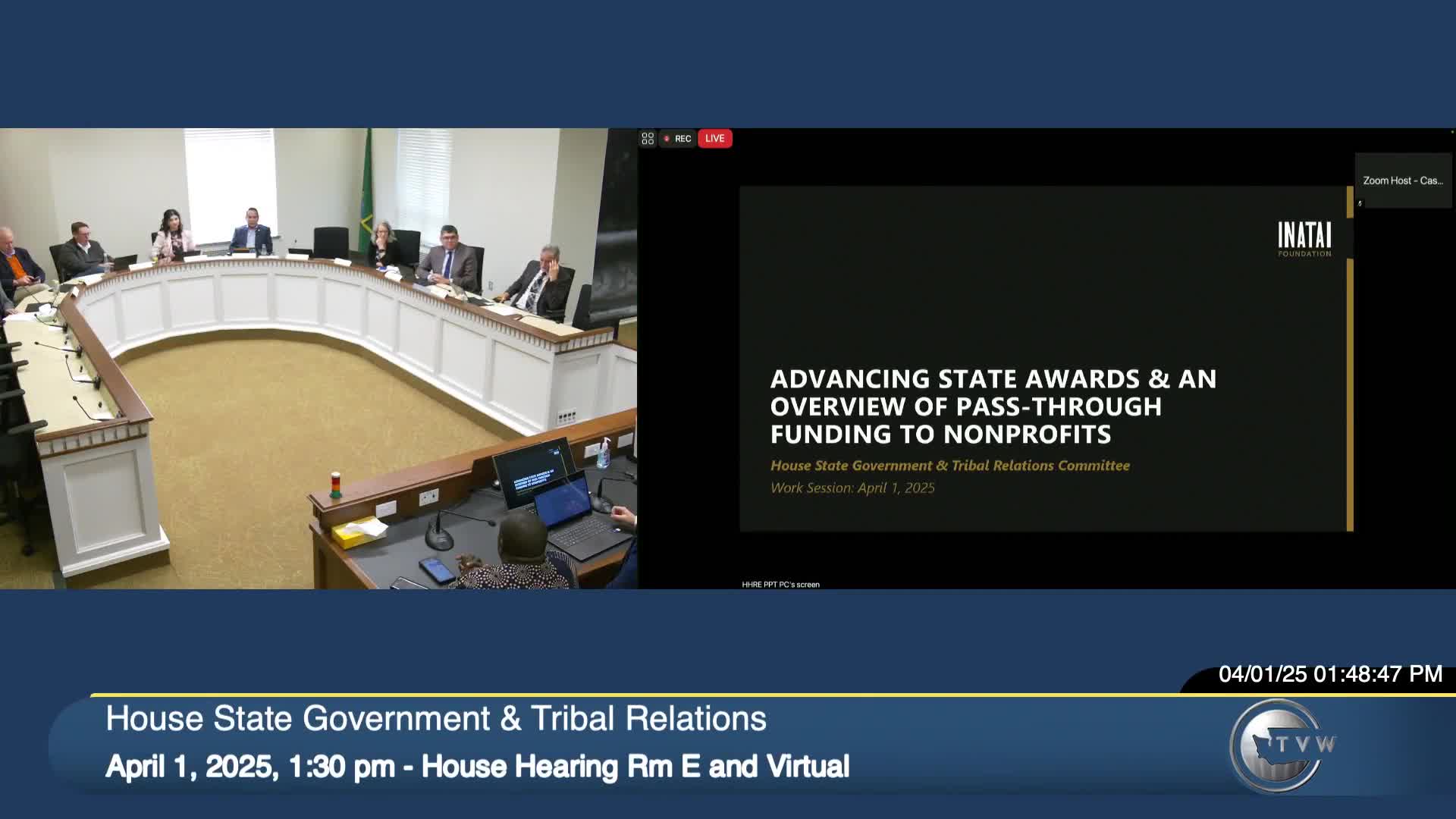
Nonprofit leaders told the House State Government & Tribal Relations Committee that the state’s reimbursement-based grants, delayed contract signatures and tight allowable-cost rules create cash‑flow and implementation barriers—problems that particularly harm small, BIPOC-led organizations.
Nonprofit leaders and funders told the House State Government & Tribal Relations Committee that Washington’s reimbursement-based grants and delayed state contracts create structural barriers for small and culturally specific organizations, limiting their ability to deliver services.
Pausman Jouf, founder and executive director of the Washington West African Center, said many start-up and BIPOC-led groups rely on private philanthropic seed money to implement state-funded projects because Commerce’s grants are often reimbursement-based and restricted. "The reimbursement based grants making system is definitely something that we are concerned about," Jouf said, describing a Sub-Saharan Africa project where large portions of the award remained unspent near the fiscal-year end because allowable costs were too restricted for community needs.
Shavona McKeown, executive director of the Southwest Washington Equity Coalition, said reimbursement contracting forces nonprofits to take on loans or build reserves before applying. "One of the organizations we work with had to take out a…
Already have an account? Log in
Subscribe to keep reading
Unlock the rest of this article — and every article on Citizen Portal.
- Unlimited articles
- AI-powered breakdowns of topics, speakers, decisions, and budgets
- Instant alerts when your location has a new meeting
- Follow topics and more locations
- 1,000 AI Insights / month, plus AI Chat