Get Full Government Meeting Transcripts, Videos, & Alerts Forever!
Get email alerts on the Critical Communications Destruction topic
No spam. Unsubscribe anytime.
Telecoms, utilities and law enforcement urge tougher penalties after wave of fiber cuts and metal thefts
Summary
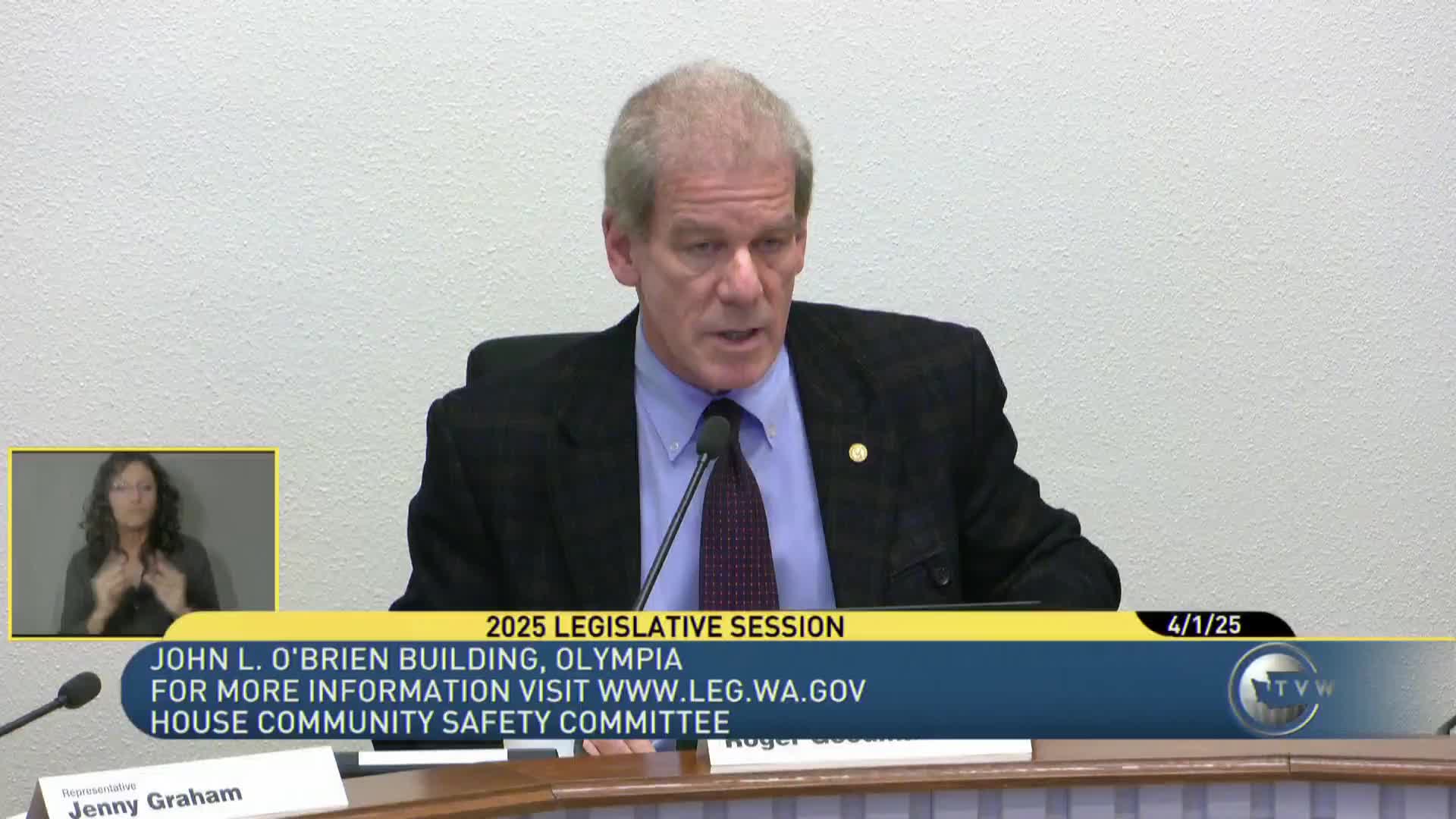
Chairman Goodman on Tuesday convened the House Community Safety Committee for a work session on theft and vandalism of telecommunications infrastructure, where industry and law‑enforcement witnesses described repeated, often brazen cuts to fiber and copper lines and called for legal and operational changes to reduce outages and the cost of repairs.
Chairman Goodman on Tuesday convened the House Community Safety Committee for a work session on theft and vandalism of telecommunications infrastructure, where industry and law‑enforcement witnesses described repeated, often brazen cuts to fiber and copper lines and called for legal and operational changes to reduce outages and the cost of repairs.
The testimony focused on the scale of the problem and why witnesses say existing laws and enforcement practices have not stopped the incidents. "Deliberate destruction of communications infrastructure is far more than just simple vandalism," said Mark Vasconi, who identified himself as a former director at the Washington Utilities and Transportation Commission and the State Broadband Office. "Increasing the classification of these crimes to a class C felony is justified as it is commensurate with the impacts to Washingtonians and the state's public interest."
Why it matters: Witnesses said cuts to aerial fiber and stolen copper have interrupted 911 and other critical services at hospitals, military facilities and first responders; they said repeated outages also divert money from network expansion and force utilities and providers to increase maintenance budgets. Kitsap Public Utility District reported weekly attacks in some months and repair bills that required doubling its maintenance and repair budget.
Industry and public‑utility witnesses described how thieves and vandals operate. "They're reaching up to at least 18 feet with a hook and either cutting wires or pulling them down," Vasconi said. Angela Bennick, general manager of Kitsap Public Utility District, said the PUD has nearly 1,000 miles of fiber across Kitsap County, about 70% of it aerial, and that vandals often attack in rural, dark locations where repairs take longer.
Kitsap's costs and tactics: Bennick testified a single fiber cut "is between $700 and $3,500 just to repair," and that the utility had a month with more than $35,000 in repair vouchers. The district has increased surveillance, installed cameras and sirens at some sites, built redundant rings where feasible and engaged law enforcement, but Bennick said those measures have not stopped the crimes. "We build redundant fiber rings whenever feasible," she said. "We have engaged law enforcement in attempting to catch the criminals. We have a media campaign to get the public to speak up."
Recyclers and law enforcement described limitations of current controls. Sean Daoud of PNW Metal Recycling outlined industry checks — photo and video of sellers, vehicle recording and three‑day holds on payments over a stated cash limit — and said thieves who cut copper often avoid licensed yards because those yards follow the rules. But he and others said fiber cuts present a different enforcement problem because fiber has no resale value: "When fiber lines are cut, that's not coming to our facilities," he said.
Prosecutors and police cited resource limits and statutory gaps. Russell Brown of the Washington Association of Prosecuting Attorneys told lawmakers that some counties do not have resources to prosecute lower‑level property offenses aggressively and that prosecution priorities vary by jurisdiction. James McMahon of the Association of Sheriffs and Police Chiefs told the committee the problem is cyclical and correlates with nonprecious metal commodity prices and enforcement attention; he said staffing constraints limit proactive investigations.
Statutes referenced: witnesses identified two criminal provisions put forward during the discussion. Angela Bennick cited RCW 9A.48.070 (malicious mischief in the first degree) and a metal‑theft provision described in testimony as RCW 9.56.040 that sets felony thresholds tied to the value of nonferrous metal taken. Witnesses also pointed to a 2013 legislative package they said had tightened metal‑theft reporting and sales practices (described in testimony as Engrossed Substitute House Bill 1552). Panelists said those laws reduce resale but do not deter vandalism of fiber that produces no merchantable material.
What lawmakers said they'd do next: Committee members signaled intent to continue work over the interim with industry, recyclers and law enforcement. Chair Goodman said she would convene stakeholders to explore statutory amendments and other responses ahead of the 2026 legislative session. Several members asked staff to consider technical options to make infrastructure less attractive or more traceable and to review enforcement funding and investigative tools.
Ending note: Panelists emphasized that the switch from copper to fiber requires policy updates because the criminal and regulatory responses developed for metal theft do not capture the new pattern of vandalism that severs communications but leaves nothing to sell.