Get Full Government Meeting Transcripts, Videos, & Alerts Forever!
Get email alerts on the Committee Hearing Organizational Introductions topic
No spam. Unsubscribe anytime.
Financial Services committee opens session with stakeholder introductions; regulators flag implementation, insurance and housing concerns
Summary
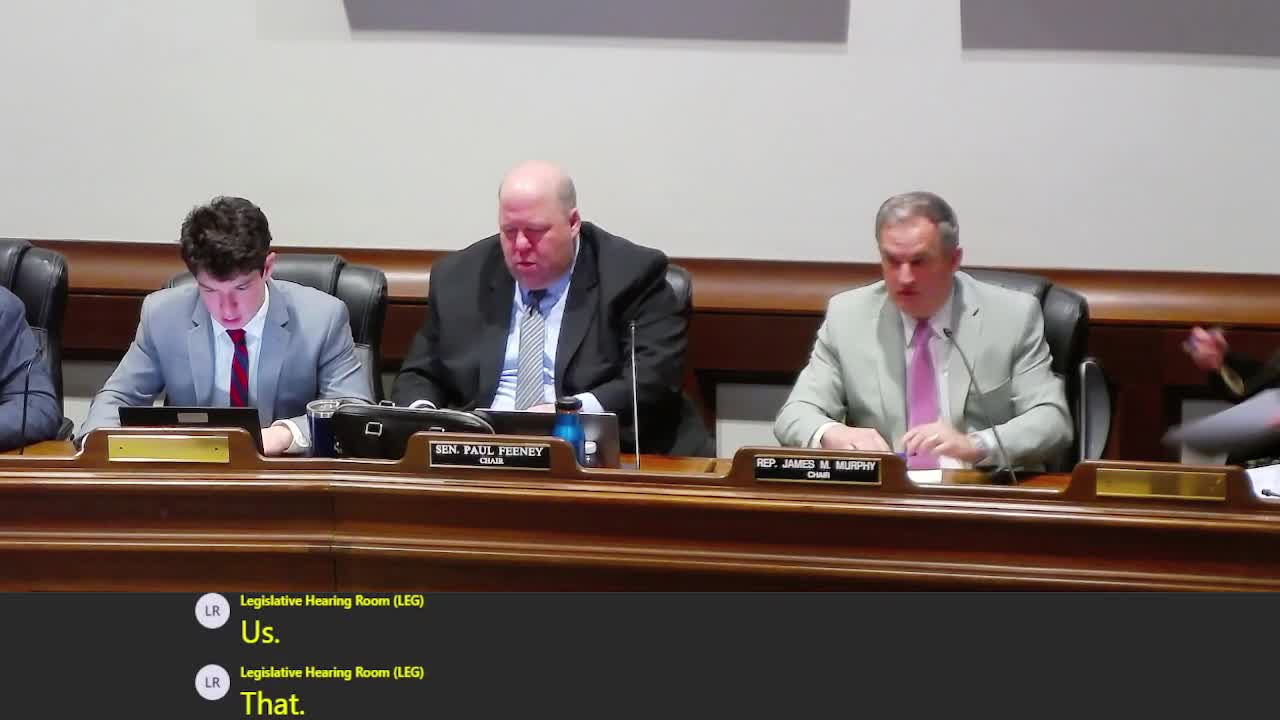
The Joint Committee on Financial Services convened April 1 for an informational hearing in which committee leaders and more than three dozen state and industry witnesses introduced themselves and flagged legislative priorities for the 2025 session.
The Joint Committee on Financial Services convened April 1 for an informational hearing in which committee leaders and more than three dozen state and industry witnesses introduced themselves and flagged legislative priorities for the 2025 session. The committee did not take votes; the hearing was a chance for staff and members to identify areas where they expect legislation or regulatory attention.
The hearing opened with committee co-chairs introducing members and explaining the session’s format. Witnesses from state regulators and trade associations described implementation work already underway and policy areas the committee is likely to consider, including money-transmission rulemaking, pharmacy benefit manager (PBM) oversight, mortgage and foreclosure trends, insurer market pressures and health-care affordability.
Why it matters: committee members and a wide range of stakeholders framed 2025 as a year in which state action will matter amid federal uncertainty. Presenters warned that federal developments — from potential Medicaid changes to tariff actions affecting construction and auto parts — could affect costs and access in Massachusetts, increasing the demand for state-level solutions.
Top items raised
- Money-transmission implementation: Mary Gallagher, commissioner of the Massachusetts Division of Banks, thanked the committee for moving last session’s money-transmission modernization and said the Division is now working to promulgate implementing regulations. Commissioner Gallagher told the committee, “the theme of the week is we are living in interesting times,” and said the Division stands ready as a technical resource as the committee examines related proposals.
- Pharmacy benefit managers and independent pharmacies: Dennis Lyons of the Massachusetts Independent Pharmacists Association described ongoing pressure on independent pharmacies from PBM practices despite a 2024 requirement that PBMs register with the Division of Insurance. He called for further reforms to protect pharmacy access in underserved neighborhoods.
- Mortgage market and foreclosure metrics: Debbie Souza of the Massachusetts Mortgage Bankers Association said 267 bills affecting the mortgage industry had been filed this session, with about 48 expected in the committee. Daryl Pepe (Webster) reported a Massachusetts mortgage delinquency rate of roughly 1.68%, noting the Northeast’s relative strength but warning that affordability remains a concern.
- Insurance-market pressures and homeowner costs: Industry groups, including the Mass Insurance Federation and the American Property Casualty Insurance Association, outlined cost drivers for auto and homeowners insurance (labor, supply and climate-related claims) and warned of upward pressure on premiums; they urged collaboration on resilience and affordability measures.
- Health data, mandates and oversight: Lauren Peters of the Center for Health Information and Analysis (CHIA) summarized CHIA’s expanded data role under recent laws and said the agency will publish a comprehensive four‑year retrospective review of mandated health benefits later in the year. Health plans and provider groups urged attention to prior authorization, behavioral health access and the continuing fiscal impacts of mandates.
- Behavioral health and community health centers: David Matioto of the Mass Association of Behavioral Health Systems described inpatient capacity, boarding and staffing shortages across the state’s roughly 3,100 behavioral health beds (he said about 2,700 are typically occupied). Michael Curry of the Massachusetts League of Community Health Centers said those centers provide care to more than 1,000,000 patients statewide and warned that prospective federal Medicaid cuts would seriously affect their finances and services.
- Earned Wage Access and payroll modernization: Ben LaRocco of Earnin summarized the product and user statistics (he said nearly 25,000 Massachusetts residents used Earnin last year, and over 2,000,000 people nationally have used earned-wage-access platforms) and urged lawmakers to consider a balanced regulatory framework as bills are filed.
- Public banking and community finance: Presenters from the Mass Public Banking coalition, including professors and CDFI representatives, argued a state public bank could leverage modest capital appropriations into substantially larger lending capacity for underserved communities. One witness gave an illustrative example that a public bank might be able to extend about $1.4 billion in credit against a $200 million capital appropriation; presenters noted detailed design and risk-management work would be required.
Other topics flagged for future committee work included: dental/oral health coverage for cancer survivors; retirement-savings access and proposed automated workplace savings; independent adjusters’ licensing and anti‑public‑adjuster policy endorsements in surplus-line contracts; midwifery, birth‑center and maternal health expansion; PBM and drug-pricing reforms; and concerns about third‑party litigation funding transparency for insurers.
What the hearing did not do: the committee did not debate or vote on bills at this informational session. Multiple presenters said they will return later in the session to testify on specific bills; committee leadership signaled a preference for using staff resources to schedule topic‑specific hearings as legislation is filed.
What to watch next: committee members and witnesses repeatedly asked for technical briefings and for regulators (Division of Banks, Division of Insurance, CHIA and MassHealth-related staff) to be available for bill drafting and oversight as the session progresses. Several speakers tied potential state actions to federal developments — for example, Medicaid funding and national regulatory changes — meaning the committee’s agenda may shift with federal decisions.
Ending: Chairs Murphy and Feeney closed by thanking witnesses; both chairs signaled that the committee will reconvene for bill‑specific hearings and invited stakeholders to follow up with staff and legislative sponsors as bills are filed.