Get Full Government Meeting Transcripts, Videos, & Alerts Forever!
Get email alerts on the Child Labor Amendment topic
No spam. Unsubscribe anytime.
Advocates urge Massachusetts to ratify long‑pending federal child‑labor amendment
Summary
A small coalition of advocates asked the Joint Committee to approve a resolution supporting the Child Labor Amendment (S5‑21 and companion bills), citing recent state and national legislative moves they say risk rolling back protections for minors and arguing ratification would reaffirm Massachusetts policy to protect child welfare and education.
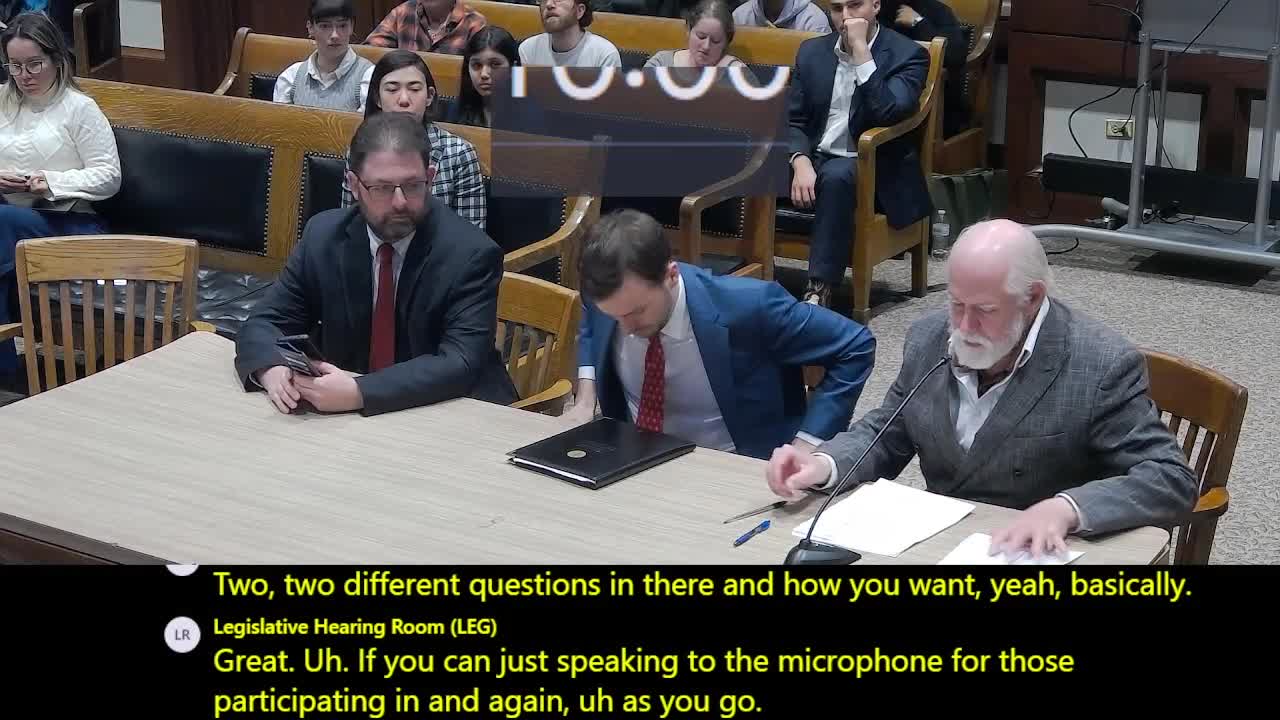
Three witnesses told the committee Massachusetts should finally ratify the federal Child Labor Amendment — a proposal Congress sent to the states in 1924 and which supporters said remains available for ratification today.
Vincent Lawrence Dixon, a historian and longtime activist, urged lawmakers to consider renewed action after recent developments he described in other states. Alexander Jablon, a Newton resident and coalition organizer, said new bills in Iowa and Florida that loosen work‑hour limits for teenagers illustrate a national trend that could expose young workers to hazardous conditions. "When states begin to roll back child labor protections, it signals a disturbing trend," Jablon told the committee.
Samuel Fieldman, who testified on constitutional procedure and precedent, said the amendment can still be ratified because Congress placed no time limit on it and pointed to earlier examples — including the twenty‑seventh Amendment — where ratification occurred long after initial congressional approval. The witnesses filed and referenced several state proposals (including S5‑21, H3‑845 and H18‑1986) that would send ratification language or a resolve to the legislature as a vehicle for Massachusetts to act.
Proponents framed ratification as a preventive measure: by enshrining protections in the U.S. Constitution, they argued, Massachusetts would send a clear message against exploitation of minors in hazardous jobs and avoid the need for reactive state law changes in each election cycle. Committee members did not vote on the resolutions during the hearing; sponsors said they were prepared to work with staff on precise language and procedural options.