Get Full Government Meeting Transcripts, Videos, & Alerts Forever!
Get email alerts on the State Budget Transportation topic
No spam. Unsubscribe anytime.
Spokane County staff brief commissioners on state budget, North–South Corridor funding and key bills as legislative deadlines near
Summary
County legislative staff updated commissioners on operating and capital budgets, potential impacts for local projects including the North–South Corridor, and several bills affecting public health, criminal justice and local government authority as policy and fiscal committee cutoffs approach.
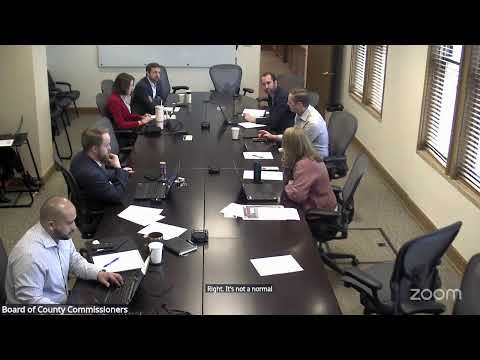
Mike Burgess, the county’s legislative liaison, told the Spokane County Board of County Commissioners on April 1 that the state Legislature is approaching policy and fiscal cutoffs and that both operating and capital budgets contain items that affect Spokane County.
Burgess said the Senate and House have produced competing transportation funding proposals and that "I will be surprised if the legislature passes a new transportation revenue package," but that the Senate’s plan relies on new revenue such as a gas tax and license-fee changes to complete projects including the North–South Corridor. He said the House carries forward funding for the corridor without new revenue assumptions.
The nut graf: the county could see both opportunities and risks depending on which budget provisions survive negotiations this month. Burgess highlighted a longstanding diversion proviso for people who would otherwise be at Eastern State Hospital as included in both the House and Senate proposals, and he said some criminal-justice related state funding "remained pretty whole" despite budget pressures.
Commissioners and staff also discussed the capital budget, which Burgess said includes the county’s crisis stabilization center (about $3,000,050 in the Senate proposal), historic courthouse funding (about $500,000) and a $7.5 million House allocation for PFAS work on the West Plains. Burgess said he will produce a fuller list of capital items for commissioners.
On policy bills, Burgess warned commissioners about several measures: one (described as Representative Hill’s bill) that would change membership on local health boards to add representatives from recognized tribes or urban Indian organizations; a bill affecting 911 funding where a pending amendment did not include language some counties and stakeholders had sought (for example to apportion revenues when a jurisdiction operates its own primary PSAP); and an aviation bill for law-enforcement helicopters that had passed one house but was not scheduled in the Senate committee before policy cutoff.
Burgess also said an environmental-crimes bill remains of concern to the county because of possible effects on water-quality permit holders, and that a GMA timelines bill was in a favorable procedural position but still needed to get off the House floor by mid-April.
Ending: Burgess asked commissioners to notify him if they wanted individual outreach to delegation members on any specific bills; the board agreed to change its previously stated position on the first two bills discussed during the briefing (the board directed staff to record a neutral position instead of oppose on those items).