Get Full Government Meeting Transcripts, Videos, & Alerts Forever!
Get email alerts on the Board Of Health Governance topic
No spam. Unsubscribe anytime.
County councilors and FACC debate Board of Health structure under recent state law; FACC will review options
Summary
Council members and Public Health Advisory Council representatives discussed House Bill changes that allow non-elected board structures, the local exception enabled by the county's FACC, and next steps including asking WESALFO or a state public-health association for guidance and having FACC return recommendations to the Board of Health.
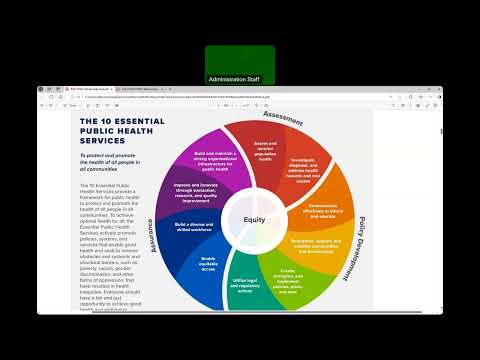
Members of Clark County's Board of Health (the county council acting in that capacity) and the Public Health Advisory Council (FACC) spent a substantial portion of a retreat discussing governance options created by recent state legislation and the county's existing advisory structure.
Public Health Director Alan Milnick reviewed the statutory context and cited the relevant provision (RCW 70.46.014) and the House Bill that changed local boards' structures. He explained the state option that requires boards to include an equal number of non-elected members and a tribal representative unless a community health advisory board (such as FACC) already meets the statutory exception.
Milnick described Clark County's history: the county dissolved a multi-county health district in 2003 and established FACC to preserve broader representation. FACC currently has 21 members who represent hospitals, cities, regulated industries (restaurants, septic professionals), consumers and other stakeholders; many FACC seats are recommended by the organizations they represent and approved by the Board of Health.
Councilors and FACC members said they want to minimize politicization of public health decision-making while preserving a robust, representative advisory role. Milnick and others noted differences between the two governance models: under a non-elected-member board model, non-elected members may vote on policy but not on the county's overall budget; the Board of Health retains authority over fees and certain ordinances. Participants discussed whether to change structure, how appointments are processed, and the potential for more frequent joint meetings.
Next steps agreed at the retreat: FACC will review the governance question and deliver a recommendation to the Board of Health; the county may invite the statewide association of local public health officials (WESOLFO) or other experts to brief the Board and FACC; and the Board of Health will consider scheduling more joint, facilitated discussions to improve communication and priority-setting.