Get Full Government Meeting Transcripts, Videos, & Alerts Forever!
Get email alerts on the Campaign Disclosure topic
No spam. Unsubscribe anytime.
Campaign disclosure overhaul stalls after extensive testimony; committee holds bill to study concerns about donor privacy and enforcement
Summary
Senate Bill 1186, which would expand disclosure requirements to trace large donors behind nonprofits and PACs, received hours of testimony from supporters and opponents and was ultimately held in committee. Supporters said the bill would expose "dark money"; opponents warned of chilling effects on charitable giving and constitutional challenges.
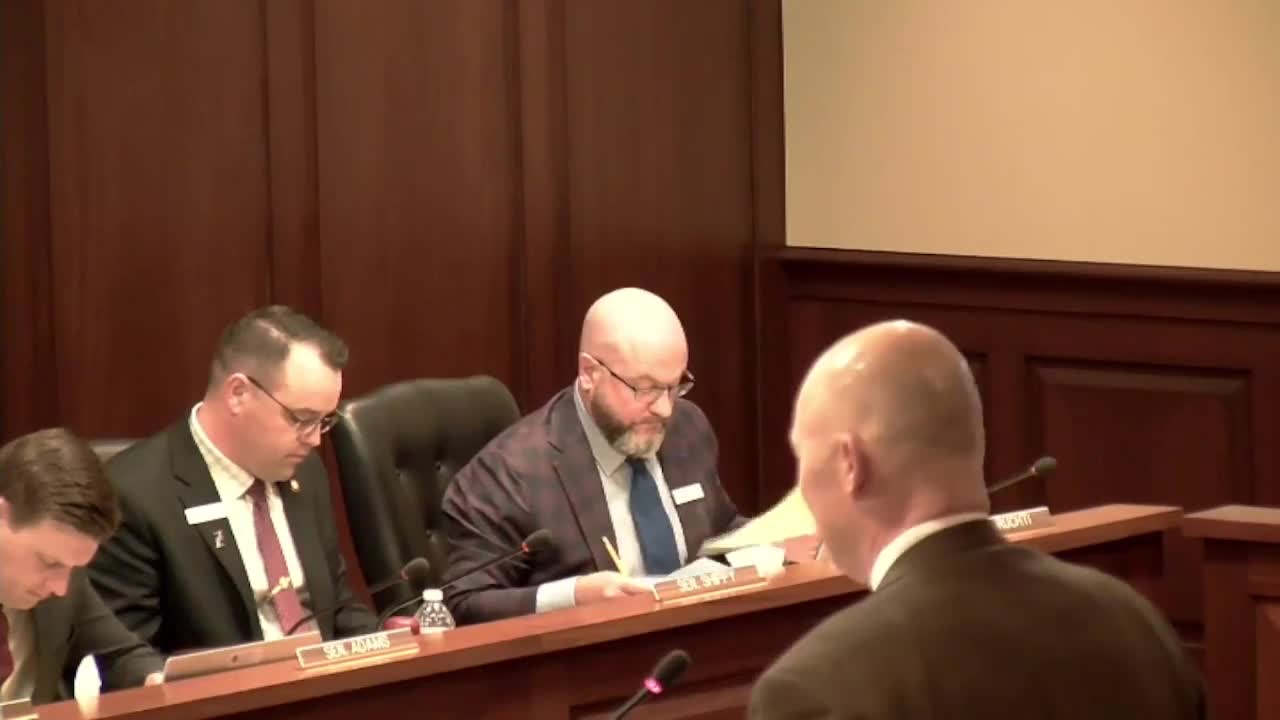
After several hours of testimony from sponsors, outside groups and state officials, the Senate State Affairs Committee voted to hold Senate Bill 1186 in committee amid concerns about donor privacy, enforceability, and potential First Amendment challenges.
Sponsor Senator Doug O'Connell (District 3) said the bill focuses on disclosing large contributors behind entities that spend on Idaho elections, with the goal of preventing wealthy donors from remaining anonymous when their funds are used for political purposes. “The simple question for us is whether or not anonymity for wealthy political spenders is more important than the public's ability to evaluate potential corruption?” O'Connell asked, referencing court standards that allow disclosure aimed at addressing quid pro quo corruption.
O'Connell described mechanics in the bill that would require a spending entity in Idaho to disclose contributors of $1,000 or more to the extent those funds were used for election spending; he said an upstream nonprofit could refuse to provide donor lists, but that would prevent the in-state spending committee from using those funds for Idaho elections.
Witnesses opposing the bill argued it would chill issue advocacy and charitable giving, misattribute donors and invite costly litigation. Heather Andrews of Americans for Prosperity Idaho testified that the bill “has the unintended consequence of stifling issue advocacy under the guise of campaign finance transparency,” and warned it could mislead the public about donors’ intentions. Heather Lauer of People United for Privacy Foundation and Ron Nate of the Idaho Freedom Foundation said the bill threatens donor privacy and could have a chilling effect on speech, citing examples of harassment and intimidation that make donors fearful.
Megan Schmidt, representing a philanthropic roundtable of private community and family foundations, warned the bill would become “an administrative nightmare” and argued donor confidentiality is protected by federal law and Supreme Court precedents. John Hughes of the Idaho State AFL-CIO said his organization supported the concept but warned the bill could chill in‑state donations and advantage out‑of‑state spenders who may accept civil penalties rather than comply.
Secretary of State Phil McGrane testified on practical enforcement issues, noting other campaign finance bills and reporting improvements are under consideration and that some transparency gaps can be addressed through improved reporting and registration of out‑of‑state entities. McGrane called for careful balancing of transparency goals and First Amendment considerations.
Committee action: Senator Dan Hartog moved to hold SB 1186 in committee; Senator Adams seconded. The motion carried. Senator Anthony was recorded as voting no.
Points of contention recorded in testimony included (1) the scope of entities covered (nonprofits, PACs, out‑of‑state groups), (2) whether donors to nonprofits would be required to be disclosed even when their donations were not given for political purposes, (3) the potential for chilling speech and charitable giving, (4) statutory enforceability and adequacy of civil penalties, and (5) the likelihood of constitutional litigation. Sponsors indicated some provisions (business disclosure, initiative/signature-gathering language) were left in as “feelers” and the sponsor said he was open to removing or revising those provisions after hearing testimony.
Next steps: The committee vote to hold the bill means SB 1186 will not advance at this time and may be revised or held for further study.