Get Full Government Meeting Transcripts, Videos, & Alerts Forever!
Get email alerts on the Ethics Transparency topic
No spam. Unsubscribe anytime.
Senate committee advances bill to recodify Idaho "sunshine" lobbying rules, expand disclosure
Summary
The Senate State Affairs Committee voted to send House Bill 398 to the floor with a due-pass recommendation. The bill reorganizes Idaho’s 1974 sunshine laws to separate lobbying rules from campaign finance, expands indirect-lobbying definitions and reporting, and brings public universities under the same lobbyist reporting requirements.
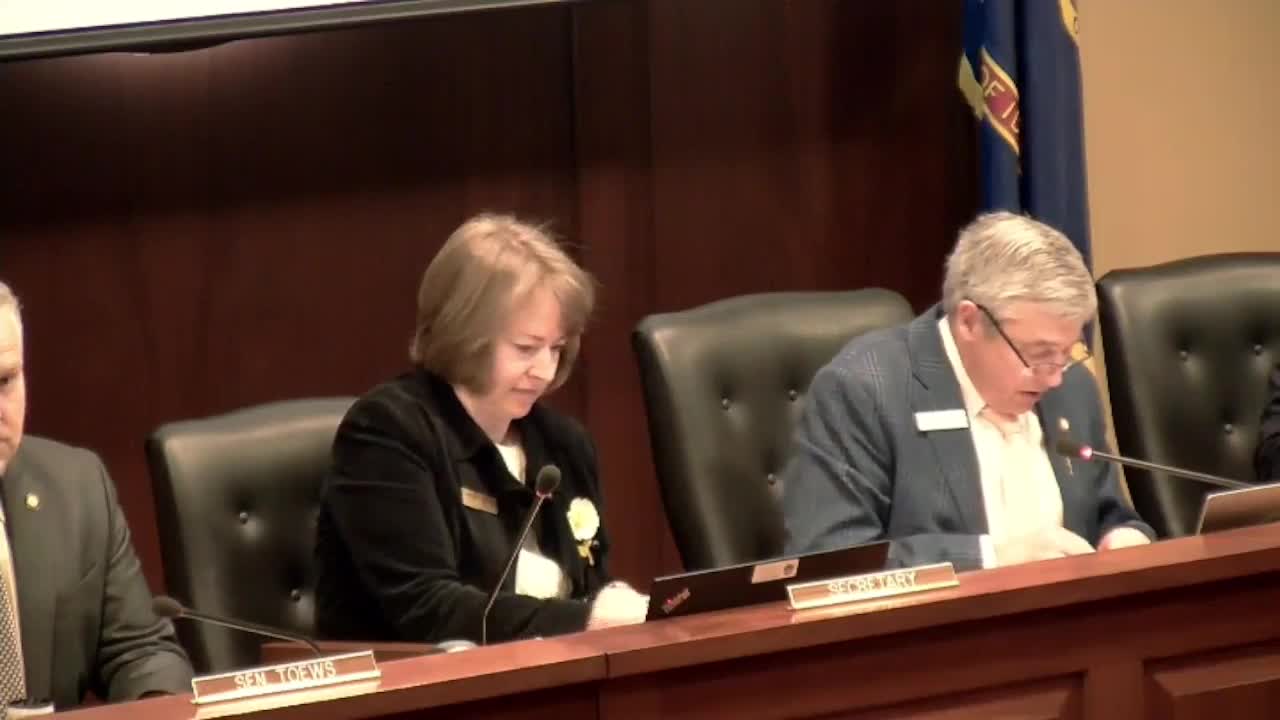
The Senate State Affairs Committee voted to send House Bill 398 to the Senate floor with a due-pass recommendation after sponsors and the secretary of state described the measure as a modernization and reorganization of Idaho's sunshine laws.
Representative Bruce Skogg (R-10) told the committee the legislation “reorganizes the Sunshine laws” and separates lobbying requirements from campaign finance. He said the bill seeks to add clarity and transparency rather than make wholesale policy changes. “First, indirect lobbying. It adds a clear definition in what constitutes indirect lobbying,” Skogg said, listing examples including email, text messaging, billboards, door-to-door, TV, radio, online ads and social media.
Skogg said the bill would require year-round monthly reporting by registered lobbyists, require lobbyists to disclose the subject matter of their lobbying activities, and require paid-for disclaimers on public communications sent by lobbyists or organizations with registered lobbyists. He also said the bill would include public universities under the lobbyist-reporting requirements.
Phil McGrane, Idaho secretary of state, testified in support and described the measure as part of a two-part effort to modernize and separate lobbying rules from campaign finance in state law. McGrane said the office has seen increased out-of-state spending in early-session reports and that greater disclosure of indirect lobbying would add transparency. “Of the top 10 spenders, six of those top 10 spenders are groups based outside of Idaho,” McGrane said, noting several groups had spent more than $100,000 in January and February.
Committee questioning touched on enforcement language and penalties. McGrane told senators most of the bill is recodification of existing law and that the penalties and fines largely track current statute. The bill text, Skogg said, sets monthly reporting and retains the current due dates for reports during session, with reports due the 15th of the following month for the monthly filings mentioned in the bill.
Committee action: Senator Dan Hartog moved that House Bill 398 be sent to the floor with a due-pass recommendation; Senator Berndt seconded. The motion carried on a voice vote.
What the bill would do: according to sponsors’ descriptions in committee, HB 398 would (1) create an explicit definition of indirect lobbying that includes communications intended to influence public opinion and encourage actions related to legislation; (2) require additional disclosure by those who engage in indirect lobbying (examples given include mail, digital ads and social media); (3) require lobbyists and organizations that employ registered lobbyists to include paid-for disclaimers on public communications; (4) extend certain lobbyist-reporting duties to public universities; and (5) keep the established enforcement language and fines currently in statute while recodifying lobbying rules into Title 74 (ethics and transparent government).
Clarifying details from the record: Representative Skogg told the committee the bill requires monthly reporting year-round and described a threshold for additional reporting; he said the bill would require “40 hour reporting for indirect lobbying expenditures over $100 or more.” Secretary McGrane described the bill as implementing monthly reporting and referenced a 48-hour reporting requirement for certain indirect-lobbying disclosures in related legislative proposals. The record therefore contains both a sponsor statement referencing “40 hour” and a later agency reference to “48 hour” timing; the bill text should be consulted for the exact timing requirement.
Next steps: With the committee’s due-pass recommendation, HB 398 moves to the Senate floor for further consideration.