Get Full Government Meeting Transcripts, Videos, & Alerts Forever!
Get email alerts on the Child Welfare Childcare topic
No spam. Unsubscribe anytime.
Senate backs large child‑welfare and childcare funding package focused on prevention and foster‑care capacity
Summary
The Senate passed a trio of Health & Welfare enhancement bills that expand child‑welfare staff, boost prevention services and create capacity grants for childcare; sponsors said investing in prevention will reduce expensive congregate placements over time.
The Idaho Senate approved a multi‑bill funding package that expands child‑welfare staffing, adds prevention services and makes one‑time and ongoing investments in the Idaho Child Care Program and related grants.
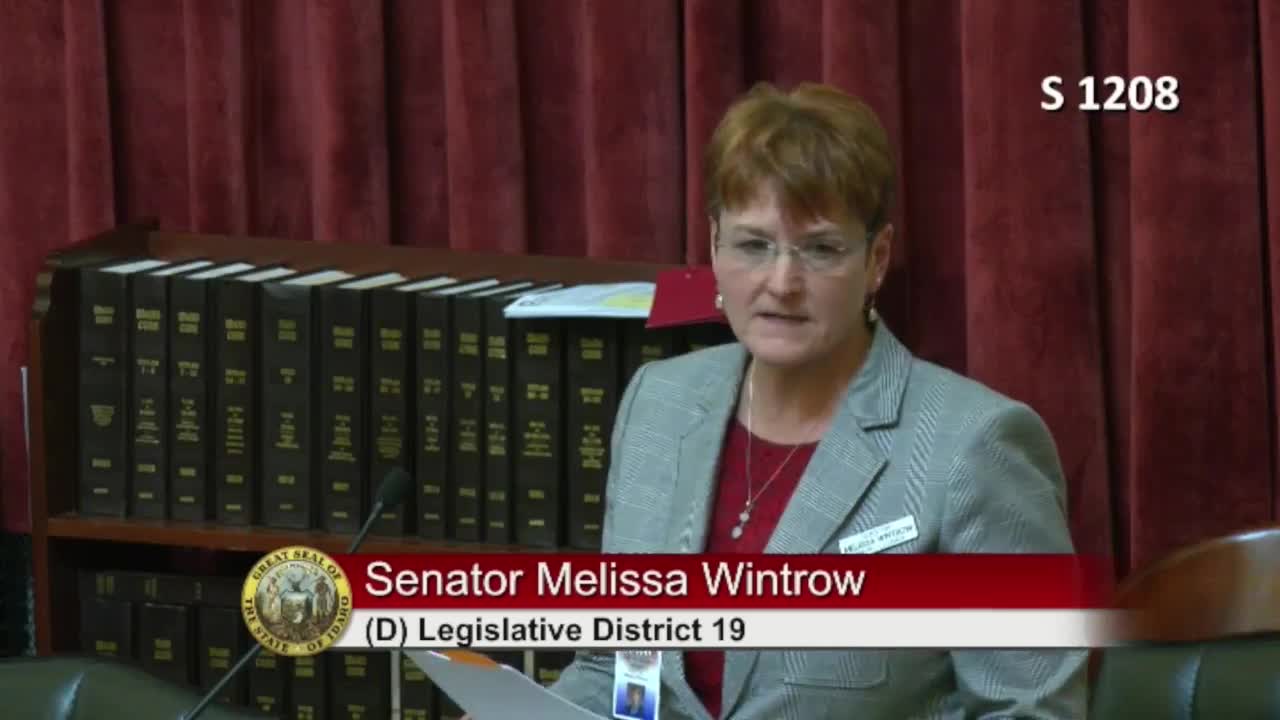
Senator Melissa Wintrow, who opened several of the Health & Welfare appropriations bills, described the approach as a shift toward prevention and building capacity: “The goal for this director is let's put more eggs in the prevention basket because we're going to invest there and it's going to decrease cost in the end,” she said (remarks at 16:998–17:029).
Key elements recorded on the floor included: - Senate Bill 12‑6 (Health & Welfare / SWITC and Child Care): authorizes federal spending authority for Idaho Child Care Program (ICCP) and a multi‑million dollar grant program for childcare capacity; first‑year installments available in FY2026 and federal matching authority included. (passage roll call: 27 ayes, 7 nays) (vote recorded at 16:308–16:325). - Senate Bill 12‑7 (Indirect support services): funds replacement IT servers, reduces a large vehicle request after cross‑agency fleet review, and funds licensing/certification administrative needs (passage roll call: 30 ayes, 3 nays) (vote recorded at 16:792–16:792). - Senate Bill 12‑8 (Child‑welfare enhancements): provides staff for prevention teams, placement coordination, foster‑family clinical support, licensing staff and leased short‑term placement capacity; sponsors stressed the difference in daily cost between prevention (about $1.80/day) and congregate placements (about $385/day) and argued investments will reduce congregate placement counts over time. The Senate approved the bill (28 ayes, 7 nays) (vote recorded at 18:676–18:676).
Senators described significant management changes in the Department of Health and Welfare under its new director and said the department reorganized programs to improve focus and transparency (discussion at 15:492–15:520). Supporters said that while the package is large, the investments target expensive placements and create a more sustainable system by increasing foster capacity and supporting families earlier. Opponents urged close oversight and questioned ongoing costs and the use of federal funds.
All three bills passed the Senate and will move forward to the House or be transmitted as appropriate. Supporters emphasized reporting and legislative oversight going forward.