Get Full Government Meeting Transcripts, Videos, & Alerts Forever!
Get email alerts on the Urban Renewal Districts topic
No spam. Unsubscribe anytime.
House passes bill creating dissolution process for urban renewal districts, lets fire districts opt out
Summary
The Idaho House of Representatives on March 30, 2025 passed House Bill 4 36, which establishes a formal procedure for dissolving urban renewal districts, allows fire districts to opt out of new districts (and opt out of existing ones if there is no indebtedness), and permits a one‑time 20‑year extension of a revenue allocation area; final passage was recorded 57–13.
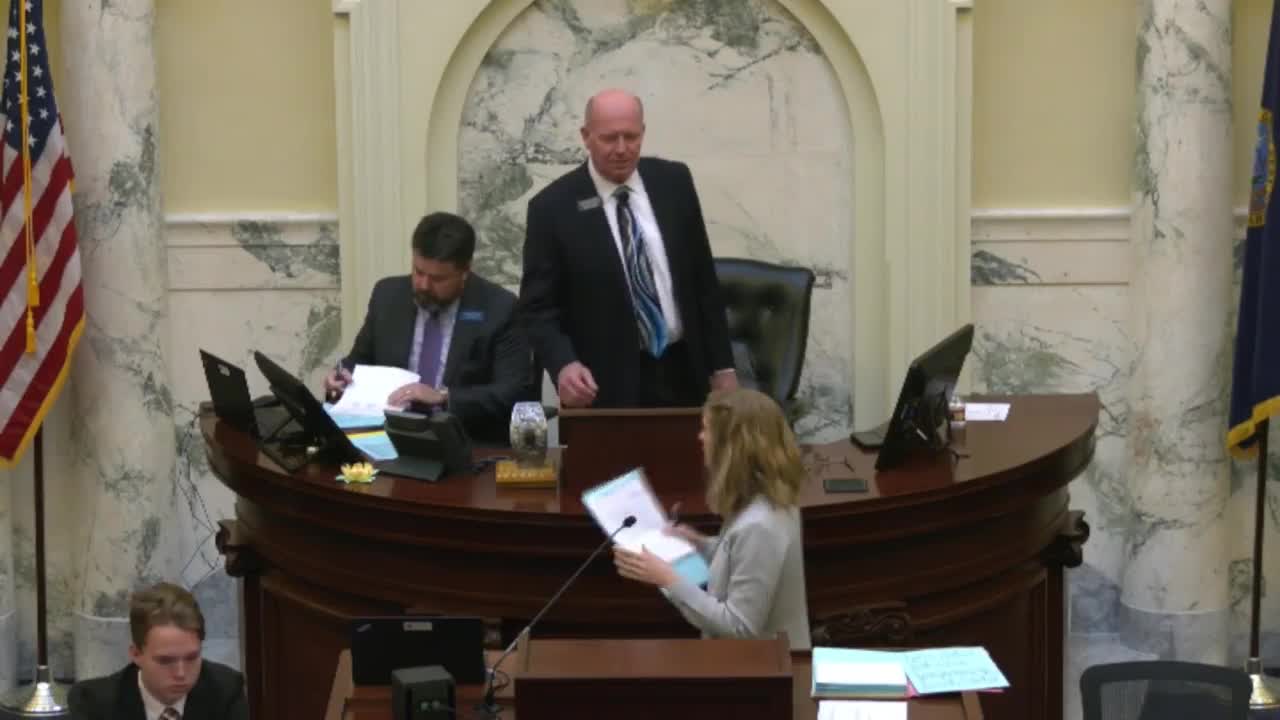
BOISE, Idaho — The Idaho House of Representatives on March 30, 2025 passed House Bill 4 36, a measure that lays out a process for cities to dissolve urban renewal districts, gives fire districts a limited ability to opt out of revenue captured by new urban renewal districts, and allows a one‑time 20‑year extension of an existing revenue allocation area. The measure passed on a roll call later in the day (57 ayes, 13 nays).
The bill creates a stepwise procedure for ending an urban renewal district: a city council must adopt an intent resolution, meet with the urban renewal agency to draft a termination plan, and then adopt an ordinance that sets the detailed winding‑down timeline and accounts for outstanding obligations. Representative, District 22, the bill’s floor presenter, said, “This lays out the process by which you can start that. ... If a city wants to dissolve an Urban Renewal District, they have been given an opportunity and a way in which they can start that process.”
Supporters and opponents framed the bill as a balance between local economic development tools and the funding needs of taxing districts. Proponents argued the measure gives cities a clear path to end districts and protects fire districts from losing incremental property‑tax growth when they must provide services to newly developed areas. “This particular piece of legislation will allow a fire district to opt out of an urban renewal district,” the sponsor said, adding that opt‑out is not allowed if an urban renewal district already has indebtedness tied to incremental revenues.
Opponents including Representative, District 11 said urban renewal remains the primary local tool for financing large infrastructure and economic development projects in many Idaho communities. “Urban renewal is the only local governmental development ability we have in the state of Idaho,” one lawmaker said, arguing that allowing taxing districts to withdraw increment could leave urban renewal agencies without funds to pay bonds and complete projects. Lawmakers from communities that rely heavily on urban renewal for industrial projects — including Twin Falls and the Magic Valley — warned the bill could undercut those efforts.
Floor debate also included requests for clarification that the bill would not erase existing legal obligations. During debate a member reading the bill’s language pointed to the termination‑plan requirements and said the bill “does not create an automatic and or abrupt end date for an urban renewal agency. ... This bill does not change that legal or financial obligation to see those projects through to the end date of that obligation.”
The bill drew sustained floor debate and an initial procedural motion to send it to general orders failed (12 ayes, 56 nays, 2 absent/excused). After extended debate and several members describing how urban renewal has been used in their districts, the House later voted to pass the bill, 57–13. The bill will be transmitted to the Senate for consideration.
Why it matters: Urban renewal districts (also called revenue allocation areas) reallocate incremental property‑tax growth to pay for public infrastructure and development; they do not raise property‑tax rates but divert new increment away from other taxing districts. HB 4 36 changes which taxing entities share in that increment going forward and establishes a local process for ending districts — a change that affects cities, emergency services districts, school districts and other local taxing entities.