Get Full Government Meeting Transcripts, Videos, & Alerts Forever!
Get email alerts on the Immigration Benefits topic
No spam. Unsubscribe anytime.
Senate approves limits on state‑funded nonemergency benefits for people not lawfully present
Summary
House Bill 135 passed the Senate after extended debate over whether state funds should pay for nonemergency services for people not lawfully present; sponsors said the bill preserves emergency care while restricting other state payments.
The Idaho Senate on April 1 passed House Bill 135, which restricts state‑funded nonemergency benefits to persons who cannot demonstrate lawful presence in the United States while preserving emergency‑nature services.
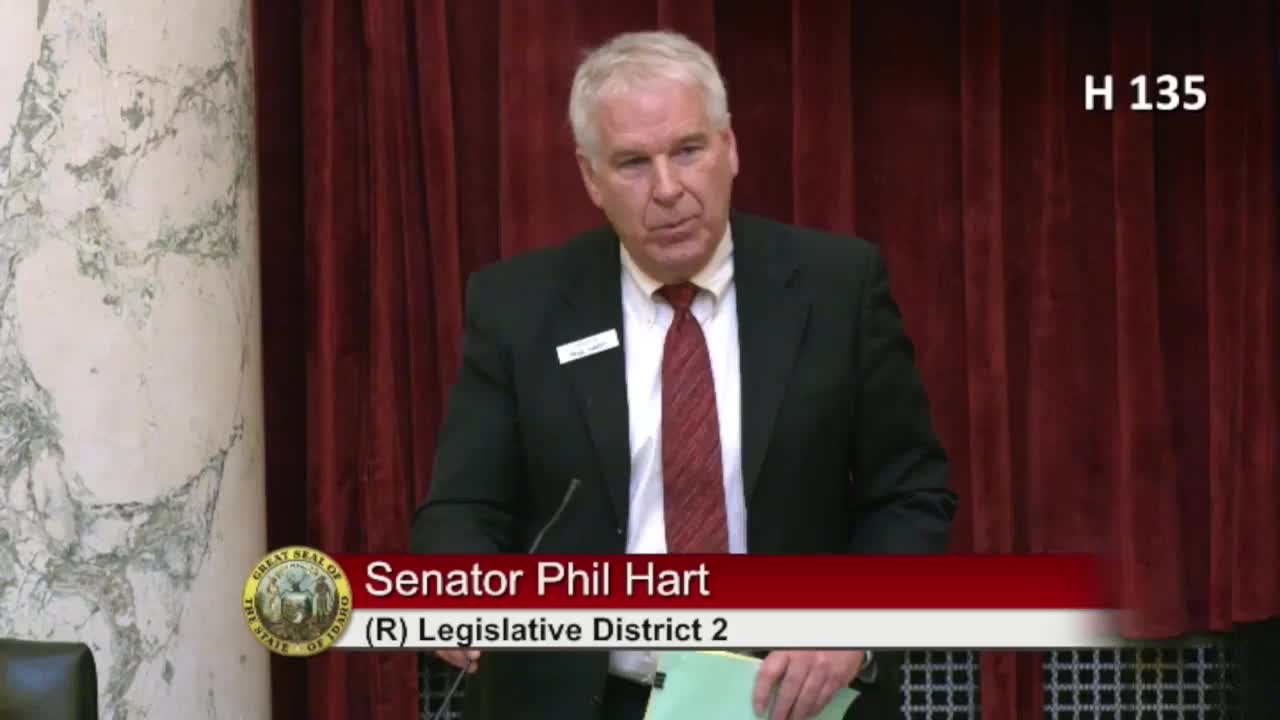
Senator Dan Hart, sponsor, told colleagues the bill would eliminate state payments for services that are not emergency in nature while preserving emergency assistance. “House bill 1 35 would eliminate state benefits that are not of an emergency nature while keeping state benefits which are of emergency nature,” Hart said in his opening remarks (remarks at 4:301–4:336).
Sponsors and supporters said the bill does not prevent people from receiving services from nonprofits or paying for services privately; it changes whether the state pays. Senator Leahy and others argued it’s a matter of fiscal stewardship and legal compliance. Opponents warned of public‑health risks and constitutional concerns, particularly for children born in the United States. Senator Guthrie said denying immunizations could “potentially affect the overall public health of Idaho's entire population” (remarks at 4:517–4:555).
Several senators stressed that the bill as drafted would not deny benefits to U.S.‑citizen children born in Idaho; sponsor Hart and staff said the Department of Health and Welfare had no evidence of widespread state expenditures for the categories targeted by the bill and estimated minimal fiscal impact for most programs (discussion at 4:436–4:496).
On final passage the roll call was 26 ayes and 9 nays; the Senate approved the bill and will return it to the House of Representatives (roll call recorded at 6:111–6:128).