Get Full Government Meeting Transcripts, Videos, & Alerts Forever!
Get email alerts on the Land Use Zoning topic
No spam. Unsubscribe anytime.
Hocking County zoning commission outlines township open houses, flags non-zoning tools for tourism pressures
Summary
A Hocking County Zoning Commission member said the commission will hold township open‑house meetings across the county in early April to gather public input and may recommend non‑zoning regulatory measures to address tourism‑driven growth.
A Hocking County Zoning Commission member said the commission will hold township open‑house meetings across the county in early April to gather public input on growth and land‑use concerns, and that the commission may recommend regulatory actions to the county commissioners before the end of the year.
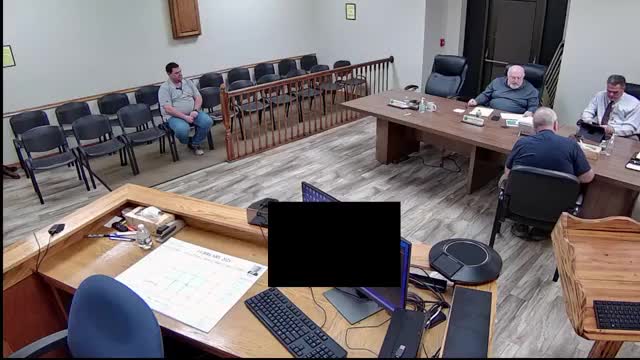
The commission member, speaking at the March 27 meeting streamed on Facebook, said the commission already held its first township meeting and plans sessions on April 1 at Louisville Church of God (16457 State Route 56), April 3 at Marion Township Community Center (30737 Logan Hornsville Road), April 8 at Guyversonville Recreation Center (16194 State Route 6678), April 9 at Ewing Grange (31080 Islesboro Road) and April 10 at Murray City Municipal Building (13964 Locust Street). The meetings will present a slideshow of the commission’s work to date and ask residents to mark priorities on poster boards and sticky notes.
Why it matters: commissioners said tourism is Hocking County’s largest industry and has created development and public‑service strains that existing rules do not fully address. The commission is evaluating measures that can be adopted more quickly than countywide zoning — including property‑maintenance standards, special‑event permits, short‑term‑rental permits, site standards for specific land uses and impact fees — and intends to make recommendations to the county commissioners after the township outreach.
The commission reviewed work completed since conversations began in May 2023. The group released a zoning survey in January 2024, issued a request for proposals in March 2024, and selected American StructurePoint as a consultant in June 2024; that consultant began work in August 2024, the commission member said. The commission also held stakeholder meetings with emergency services, local businesses, realtors, developers, agricultural representatives, township trustees and a short‑term rental owners group provided by the tourism association.
The commission member thanked Hannah Montgomery, the commission’s secretary, saying, "She's been a godsend to us, both with her detailed minutes. She set her Facebook page up." The member said the regional planning office now posts the commission’s PowerPoint and related materials as a PDF on the Hocking County Regional Planning website so residents can review them without PowerPoint software.
Survey results and public input: the commission member said the consultant reported more than 600 survey responses. The presenter summarized percent‑based responses the consultant shared: roughly 16% of respondents said they did not want any zoning; about 20% supported zoning limited to tourist areas; roughly 25% supported a flexible or partial approach; and about 15% wanted minimal zoning. The presenter said the first township meeting drew roughly 67 people counted at the door and an approximate total attendance near 80 when commission members and staff were included.
Officials emphasized existing regulations already in force, citing county sanitary regulations (including a long‑standing prohibition on hog pens within 300 feet of a building of human occupancy), health‑department oversight of wells and septic systems, conveyance and survey standards, driveway and roadside pipe policy, large‑lot development rules, flood‑damage regulations administered under FEMA, and subdivision regulations revised over decades. The presenter told attendees that these regulations have not fully addressed growth pressures tied to tourism.
County coordination and timing: the commission member said staff have met with the county prosecutor’s office, the county bed‑tax administrator, the health department and the county auditor to coordinate possible regulatory responses. Josh Gibbons, the county bed‑tax administrator, was identified by name at the meeting as a contact with whom the commission has discussed tax implications of tourism. The commission member and other participants said some non‑zoning measures could be adopted more quickly than a countywide zoning ordinance and that the commission hopes to present recommendations to the county commissioners by the end of the year, if public outreach and drafting proceed on schedule.
Discussion highlights: meeting participants raised township‑specific differences — for example, the commission noted ATV trails and Wayne National Forest access in some eastern townships that create distinct first‑responder and visitor patterns. Commissioners said poster‑board exercises at township open houses will allow residents to prioritize concerns and that the commission will continue outreach after the scheduled April meetings before finalizing recommendations.
No formal vote or ordinance adoption occurred at the March 27 meeting. The commission scheduled its next regular update for the last Thursday in April and encouraged residents to call the regional planning office with questions.
Ending: The commission urged residents to review the PowerPoint and survey summary on the Hocking County Regional Planning website and to attend one of the township open houses to register priorities directly with commission members.