Get Full Government Meeting Transcripts, Videos, & Alerts Forever!
Get email alerts on the Criminal Justice topic
No spam. Unsubscribe anytime.
Court of Criminal Appeals Hears Challenge to Traffic Stop Video in Valerie Garrett DUI Case
Summary
The Tennessee Court of Criminal Appeals heard argument in State of Tennessee v. Valerie Garrett over whether a traffic stop that led to a DUI arrest should have been suppressed, with defense counsel saying body‑camera video contradicts the officer's testimony and the state urging the court to affirm the trial court's denial of the suppression motion.
The Tennessee Court of Criminal Appeals heard argument in State of Tennessee v. Valerie Garrett over whether a traffic stop that led to a DUI arrest should have been suppressed, with defense counsel saying body‑camera video contradicts the officer's testimony and the state urging the court to affirm the trial court's denial of the suppression motion.
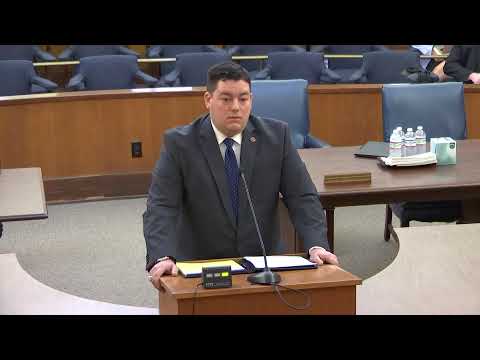
The appeal centers on whether the officer had reasonable suspicion or probable cause to stop Garrett after the officer testified she crossed the centerline twice and the trial court found corroboration in the video. "It's our position that the crossing of the yellow line, we say that just didn't happen," defense attorney Hal Dorsey told the three‑judge panel, arguing the video shows Garrett did not touch or cross the yellow line. Dorsey conceded on the record that Garrett "crossed the segmented line" when making a left turn from Hollywood onto North Parkway, but said that crossing was necessary because of how the intersection is built and therefore did not support reasonable suspicion for the initial stop.
The state, represented by Ronald Coleman, said the trial court properly denied suppression because the officer had probable cause or, at minimum, reasonable suspicion. "Here, the officer testify that I saw the defendant cross this bridal this yellow line twice. The trial court accredited that and then said the video corroborates that," Coleman said, adding that if the video is not clear enough to contradict the officer, the appellate court must defer to the trial court's factual findings.
During oral argument, judges pressed both sides about how to treat the video relative to credited testimony. Judge Bobby Holloway asked whether the court must defer to trial‑court findings if the video leaves uncertainty; Coleman replied that when the evidence is not "clear and unequivocal" against the trial court's findings, the appeals court is bound by those findings. Judge Tom Greenholtz raised whether the human eye can detect matters that video might not show clearly; Dorsey acknowledged that possibility but said the video in this case provides a fairly good look and does not show the crossings the trial court found.
Defense counsel pointed to specific time markers the trial court referenced, saying the court found crossings at approximately 26 and 52 seconds of the video. "I just think the video clearly contradicts that finding," Dorsey said. Coleman answered that even if the appellate court does not parse semantics about whether a tire "touching" the line constitutes a violation, the credited officer testimony plus the video supports the court's order denying suppression. The state also noted the officer told the trial court an additional lane incursion occurred and that the defendant later conceded entering the segmented left‑turn lane.
No decision was announced at the oral-argument hearing. Counsel completed argument and the court proceeded to call the next case. Both sides asked the appeals court to resolve whether the trial court's denial of the suppression motion should be affirmed or reversed.
Background: The underlying case is a DUI prosecution in which the defense seeks suppression of evidence obtained after a traffic stop, arguing the stop lacked lawful justification. The parties discussed during argument whether the relevant traffic statutes (cited on the record as "55‑8‑123" and "55‑8‑115") and the trial court's factual findings support appellate deference when video evidence is ambiguous.
What happens next: The Court of Criminal Appeals will issue a written opinion after considering the arguments and the record; no ruling was made from the bench at the hearing.