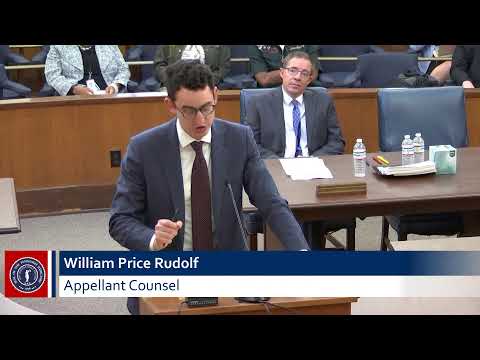
Appellate arguments split over whether trial judge should have given ‘courtesy’ jury instruction in Walker case
Summary
At oral argument, defense counsel said jury questions signaled a likely deadlock and the trial court erred by not giving a courtesy instruction; state attorneys countered the record shows no deadlock and say the original charge already included the pattern instruction.
An appellate court heard competing arguments about whether the trial court in Shelby County erred by failing to give a so‑called courtesy instruction after jurors sent notes asking about premeditation and unanimity.
The defense argued the jury’s notes—including that it was “unsure how to define judgment as it reflects to premeditation” and a later question asking, “If the jurors cannot agree on the first count … must we then all agree on a unanimous not guilty plea before moving to the lesser included offense?”—showed the panel was struggling toward a deadlock and that the trial court should have given a courtesy instruction designed to protect minority jurors from yielding to the majority. “Unanimous jury verdicts are probably at the very top,” defense counsel said, arguing the omission amounted to plain error that could have affected a substantial right.
State counsel Kirby May asked the appellate panel to affirm the convictions and the trial court’s supplemental instruction, saying the trial court had given the standard, pattern courtesy instruction in its original charge and that the jurors’ notes reflected confusion about the deliberative sequence rather than a deadlock. May summarized the State’s position on the evidence and identification, noting the victim, Ms. Kukendahl, “never varied from her testimony or identification of the defendant” and describing the video evidence the State relied on.
Defense counsel asked the court to treat the jurors’ written questions as an indication the jury was deadlocked and to apply the three‑part plain‑error test: that a clear and unequivocal rule was breached, the error affected a substantial right, the error was not the result of a deliberate tactical choice by defense counsel, and the error was necessary to do substantial justice. The panel and counsel discussed whether the record contains evidence that defense counsel made a tactical decision to let deliberations play out (for example, to risk a lesser‑included conviction), and whether that tactical‑decision question is the appellant’s burden on plain‑error review.
State counsel pointed to the trial record and the motion for new trial, saying neither reflected a claim of juror deadlock; the defense did not present testimony from trial counsel on that point in post‑trial proceedings. The State argued that, on the whole, the record shows multiple clarifying questions about how to follow the jury charge and that the trial judge’s supplemental instruction reiterated that the verdict must be unanimous and instructed jurors to continue deliberating.
At argument the parties also referenced Tennessee’s prohibition on Allen (or “dynamite”) charges and the expectation that courts adhere to the language and limits of pattern instructions when addressing a deadlocked jury. Counsel and the court debated whether the jury’s written questions were sufficient on their face to indicate deadlock or merely to show confusion about the sequence for considering lesser included offenses.
No decision was announced during oral argument. The court recessed briefly after the parties’ remarks; appellate judges questioned which party bears the burden on the tactical‑decision factor in the plain‑error test and discussed whether the existing record (including the motion for new trial) places that issue before the court.
AI generated
The text on this page is AI generated. Summaries, highlights, analysis, and video transcripts are all produced from the original source material.
AI can make mistakes, so if you spot one, and we will fix it for everyone.
Note: the source content is unaltered by us. Any content source we link to, be it a video, an audio recording, or a document, is presented exactly as its publisher released it. That publisher is usually a government body, sometimes an individual official or another organisation.