Get Full Government Meeting Transcripts, Videos, & Alerts Forever!
Get email alerts on the Post Conviction Coram Nobis topic
No spam. Unsubscribe anytime.
Petitioner asks Sullivan Court to reopen Christopher David Hodge conviction, cites new impeachment evidence against medical examiner
Summary
In oral argument before the Sullivan Court of Criminal Appeals, petitioner counsel asked the court to find newly discovered evidence that would toll the statute of limitations and justify a hearing, while the State urged affirmance, saying the material is impeachment only and the petition is untimely.
Christopher David Hodge asked the Sullivan Court of Criminal Appeals on Tuesday to allow a new hearing on his decades-old conviction after counsel said newly discovered material impeaches the credibility of the trial medical examiner.
The petition seeks relief under a writ of error coram nobis, arguing that recently located news articles and records about a federal prosecution of a key witness, Dr. O. C. Smith, show that Smith was not a credible expert at the time of Hodge’s trial. "Twenty years later, Mr. Hodge gets with me, and we stumble across evidence, some some articles, newspaper articles and a background check that he was federally prosecuted for faking a, bomb threat," petitioner counsel Candida Harvey told the court. "I guess during the course of the investigation, they found that he had some kind of mental conditions. I guess he craved attention, had a penchant for dishonesty. That's not my words. That's theirs."
Why it matters: The petition is untimely under the applicable statute of limitations, and counsel says the only basis to toll the filing deadline here is proof of actual innocence or newly discovered evidence that would satisfy controlling precedent identified in the record as "Clardy." If the court finds the new material, counsel asked the appellate court to remand and allow subpoenas to let the trial court consider the records.
At argument, the State, represented by Ronald Coleman, told the court the petition should be dismissed. "This court should affirm the dismissal of the petition for writ of vericor of novus because the trial court found 2 bases for dismissal properly," Coleman said, arguing first that the untimely petition did not demonstrate actual innocence and therefore did not toll the limitations period and second that the petition failed on the merits even if tolling were allowed. Coleman said the defendant had confessed at trial and that other evidence — including a ligature (a bedsheet), the medical examiner’s testimony linking the ligature to the cause of death and other circumstantial evidence — supported conviction. "Being able to impeach the medical examiner doesn't establish actual innocence," Coleman said.
Petitioner counsel acknowledged the procedural hurdles but contended the case is different because, she said, Dr. O. C. Smith was "essentially the only witness pointing" to guilt at trial. Harvey argued the federal matter investigating Smith occurred after Hodge’s trial and that Hodge, confined in prison, did not have access to the information earlier. "I think we can credibly conclude that this isn't just a lack of due diligence here," Harvey said, adding that Hodge had pursued multiple post-conviction remedies and other filings over the years.
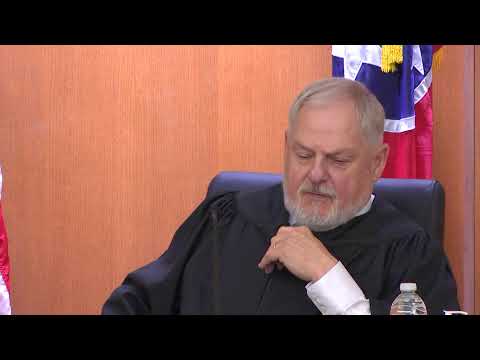
The panel pressed both sides on the contours of the legal standards. One judge, identified in the record as Judge Holloway, asked whether impeachment of a witness alone could amount to the clear-and-convincing proof of actual innocence required to toll time bars under the court's reading of Clardy. "Is it possible that the jury nevertheless still could have found him to be credible as to the nature and cause of the death?" Holloway asked. The judge framed the issue as whether, when the newly alleged impeachment material is considered, any reasonable jury could still have accepted the medical examiner’s testimony.
Counsel for Hodge told the court she sought only the opportunity to subpoena Shelby County records and have the trial court evaluate them. "We just wanted to subpoena these records in the first place, see what they are, put them before the trial court," she said, urging that remand for an evidentiary hearing would resolve whether the material is admissible and material.
The State countered that the allegedly new material was discoverable earlier — Coleman noted newspaper accounts dating to February 2005 — and argued that it is impeachment evidence that would not meet the statutory and precedential standards for a coram nobis petition. Coleman also stressed the trial evidence beyond the medical examiner, including the defendant's own admission that he choked the victim and the presence of a ligature, which he told the panel supported the trial court’s conclusion that the error, if any, was harmless.
The appellate panel questioned whether erasing the medical examiner’s testimony would, on its own, change the result given other trial evidence: the defendant’s admission, the bedsheet ligature, and other circumstantial matters. Harvey replied that without Dr. Smith’s testimony, "there's no evidence of this 4 minutes of choking him. There's simply my client's word that he acted in self defense with some circumstantial evidence."
No final ruling was announced from the bench during the argument. The court recessed for lunch and said it would return at 1:30 p.m.
Votes at a glance: no formal votes or orders were recorded on the transcript; counsel argued whether the petition should be remanded for subpoena and evidentiary hearing and the court questioned the parties on legal standards and admissibility.