Get Full Government Meeting Transcripts, Videos, & Alerts Forever!
Get email alerts on the Septic Inspection Program topic
No spam. Unsubscribe anytime.
Sewage association warns against homeowner self-inspection program for septic systems
Summary
Lee McIntyre, executive director of the Washington On-site Sewage Association, told the Pierce County Council that a proposed homeowner operation and maintenance septic inspection program would be unlikely to protect ground and surface waters and could burden county health staff.
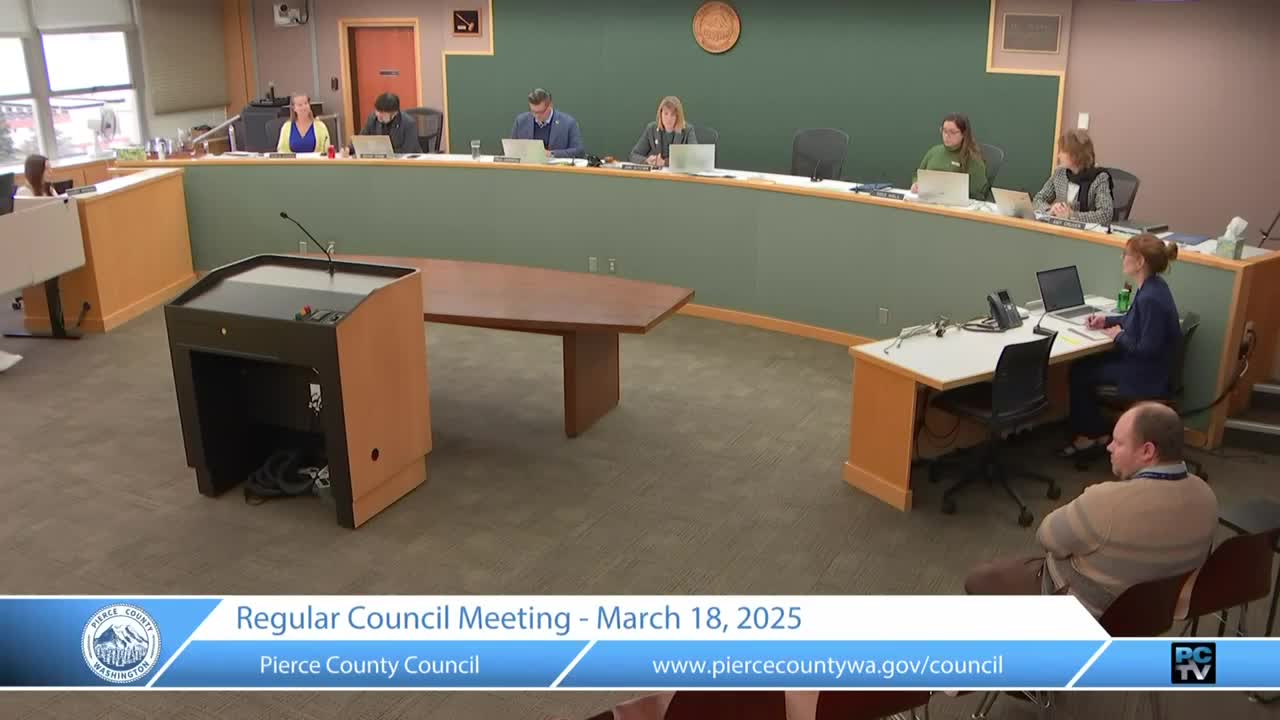
Lee McIntyre, executive director of the Washington On-site Sewage Association, addressed the Pierce County Council during community forum on March 18, 2025, urging caution about a proposed homeowner operation and maintenance inspection program for septic systems.
McIntyre cited Washington Administrative Code WAC 246-272A, saying it mandates protection of public health, limits public exposure to sewage from on-site systems and regulates operation, maintenance and monitoring of on-site sewage systems. He said he did not believe a homeowner inspection program would achieve those goals, particularly with respect to protecting ground and surface waters. "I don't believe that this program will help achieve these goals particularly concerning ground and surface waters," he told the council.
McIntyre also raised concerns about rental properties, saying there has been an ongoing issue with some septic systems serving rental properties not being maintained and that allowing rental property owners to perform their own inspections would not address the problem. He noted county capacity and cost issues and suggested pursuing grant money and incentives to help struggling property owners obtain proper inspections rather than establishing a homeowner-inspector program.
McIntyre praised the Pierce County Health Department's existing operation and maintenance program and said the department has certified roughly 76 service providers to inspect septic systems in the county. He warned that establishing and supervising a homeowner inspector program would create additional work for the health department and could divert resources from the existing program. "There will be a cost in establishing a homeowner inspection program in time and money," he said, adding that homeowner inspectors would likely have many ongoing questions for the health department.
He concluded by urging the council to consider the fiscal and administrative burden of a new program and to prioritize grants or incentives to ensure systems are properly inspected and maintained. There was no formal action connected to these remarks during the meeting.