Get Full Government Meeting Transcripts, Videos, & Alerts Forever!
Get email alerts on the Judicial Appeal Child Sexual Abuse topic
No spam. Unsubscribe anytime.
Appellate panel hears challenge to convictions over hearsay evidence and timing tied to law change
Summary
A three-judge panel of the appellate court heard oral argument in the appeal of Roy Frazier, whose counsel asked the court to reverse and dismiss one count and to reverse the aggravated sexual conduct conviction on sufficiency and hearsay grounds.
A three-judge panel of the appellate court heard oral argument in the appeal of Roy Frazier, whose counsel asked the court to reverse and dismiss one count and to reverse the aggravated sexual conduct conviction on sufficiency and hearsay grounds.
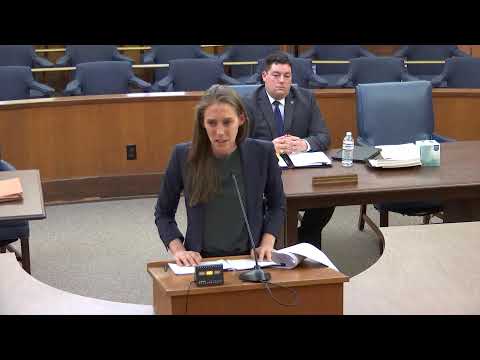
Catherine Oberam, attorney for appellant Roy Frazier, told the panel that the prosecution’s proof on the aggravated sexual battery count “consisted primarily of a hearsay statement made by the victim ... to a DCS investigator,” and that the trial court plainly erred by admitting the statement without an applicable hearsay exception. Oberam told the panel that the investigator, Clarion Harris, testified that the victim said “they made love, which meant touching her privates,” and that there was no further forensic follow-up after that disclosure.
The defense argued that, because the hearsay testimony was the most substantial evidence supporting count 2 and trial counsel did not object at the time, the appellate court should nonetheless correct the error under plain-error review and find the evidence insufficient to sustain conviction. Oberam also challenged the sufficiency of evidence for the aggravated sexual conduct count (count 1), saying the state had not proved the offense occurred after July 1, 2020—the effective date of a statutory change that in the prosecution’s view changed the applicable punishment.
The State, represented at argument by Ronald Coleman, said the defendant waived most hearsay challenges by not objecting at trial and that the record shows tactical reasons for not objecting. Coleman argued the hearsay could have been offered for a non-truth purpose (for example, why certain investigatory steps were taken) and that, in any event, the jury heard the victim’s own trial testimony: “MM’s direct testimony in and of itself, is enough,” Coleman told the panel.
On the date/timing issue, Oberam pointed to gaps in the record: the victim’s forensic interview and trial testimony lacked a specific date for the conduct, the grandmother, Candy Washington, testified she noticed bruising and an odor several days after July 4, 2020, and a Le Bonheur Children’s Hospital visit on July 12, 2020, recorded a diagnosis of contact dermatitis. Oberam argued there was no medical testimony linking the grandmother’s observed bruising or the dermatitis diagnosis to sexual abuse or to a specific timeframe within the indictment period (indicted July 1–Oct. 2, 2020).
The State asked the panel to view the record in the light most favorable to the verdict and said jurors could reasonably infer, using common sense, that the grandmother’s observation of black-and-blue bruising several days after July 4 and the July 12 hospital contact supported a finding the abuse occurred after July 1. The prosecutor also argued that the indictment period selected by the State reflected the charging decision and that, viewing all evidence together, a rational juror could find the date element proved beyond a reasonable doubt.
Panel members pressed both sides on the limits of lay observation and the need for expert proof to tie bruising to timing or to sexual abuse. One judge expressed skepticism about the prosecution’s temporal inference and the practical effect of picking a tight indictive window that increased possible punishment: “So the DA now becomes a medical expert,” the judge said, questioning whether the record supports the date-specific enhancement.
Both sides acknowledged gaps in the record: there was no medical expert who testified at trial to connect the observed bruising to the date of the alleged conduct, and some of the hearsay evidence discussed at argument came through DCS investigator testimony rather than contemporaneous forensic reports introduced at trial. The appellate panel did not rule at argument; the court heard both counsel and signaled a focus on whether any admission was waived, whether plain-error relief is required, and whether the record supports the State’s chosen indictment period.
The argument is part of a direct appeal from jury convictions: one count carrying a life-without-parole sentence and another count carrying a consecutive 20-year term in the trial court’s judgment. The panel took the matter under advisement at the close of oral argument.