Get Full Government Meeting Transcripts, Videos, & Alerts Forever!
Get email alerts on the Bail And Forfeiture topic
No spam. Unsubscribe anytime.
Appeal asks whether missed NCIC entry frees bondsman from forfeiture under Tenn. Code §40-11-139(d)
Summary
During an appeal hearing, attorneys disputed whether the state’s failure to place a defendant on national law‑enforcement databases relieves a bail bondsman of financial liability under Tennessee Code Annotated §40‑11‑139(d).
During an appeal hearing, attorneys disputed whether the state’s failure to place a defendant on national law‑enforcement databases relieves a bail bondsman of financial liability under Tennessee Code Annotated §40‑11‑139(d).
The dispute centers on whether the statutory phrase that a surety is “relieved of any undertaking” applies to the monetary bail obligation when the state does not enter the defendant on NCIC or other available state or federal databases within the statutory period. The issue matters for bonding companies and courts because it affects when a bondsman can avoid payment after a defendant’s failure to appear.
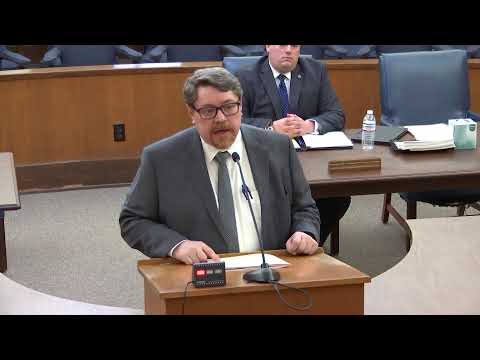
Ronald Coleman, counsel for the state, urged the court to affirm the trial court’s denial of the surety’s request for relief. “This court should affirm the court’s denial, or this court’s order of final forfeiture because the surety failed to provide good cause,” Coleman said, arguing the surety did not carry its burden to prove the statutory prerequisite had been met.
Appellate counsel for the surety, Mr. Mosley, said the appeal challenges the final forfeiture insofar as that forfeiture incorporated denial of the surety’s motion for relief. “I am appealing the final forfeiture insofar as the final forfeiture was the denial of my request for relief,” Mosley said, arguing that the statute’s protections were triggered by the state’s omission and that the bondsman had procedural avenues to seek relief.
Record and timeline provided at argument: the defendant waived a preliminary hearing on Dec. 19, 2022; the surety posted a $7,500 bond in January 2023; a Madison County grand jury returned indictments in July 2023; the defendant failed to appear at a July 10, 2023 arraignment and the court issued process that led to a conditional forfeiture notice to the surety. A final forfeiture hearing was held on Jan. 23, 2024, and the trial court entered a final forfeiture. The surety later filed a motion asking to be relieved of liability, which the trial court denied; the state’s filings and argument say the surety did not show good cause at the time of final forfeiture.
Counsel debated the statutory terms and related case law. Defense counsel and others referenced older authorities (for example, Indemnity Ins. Co. of N. Am. v. Blackwell and other cases cited in argument) about whether the term “undertaking” encompasses the monetary bail obligation. The state argued the settled line of cases places the burden on the surety to prove that the statutory prerequisite is satisfied before relief is available.
The record before the court includes an acknowledgement in the trial‑court record that the defendant’s entry into NCIC occurred on Jan. 31, 2024, after the final forfeiture hearing; counsel for the surety contended that omission triggered subsection (d)’s relief provision. Counsel and the panel also discussed practical questions about what databases the statute requires and whether the statute’s phrase “without limitation” could render compliance impracticable.
At argument, the state pointed to procedural remedies available to a bondsman — including a motion under Rule 59.04 of the Tennessee Rules of Civil Procedure and other post‑forfeiture statutory avenues — and said that, even if an entry was missed, the surety had not met its burden to obtain relief. The state also told the court that, in the trial court, the judge concluded the surety had not produced timely proof that the statutory trigger had occurred.
The appellate panel did not announce a decision at the hearing. The court invited briefing and indicated it could conduct independent research on the statutory language and its scope. A written opinion resolving whether §40‑11‑139(d) bars forfeiture when the state omits a database entry, or whether relief is an affirmative defense a surety must timely prove, will follow the court’s decision.
Less central details discussed at argument included whether the statutory database requirement reaches all states and all tiers of offenses, practical NCIC limitations (for example, interstate or in‑state restrictions), and the interplay between the timing of entries and the 180‑day forfeiture process referenced in circuit‑court practice.