Get Full Government Meeting Transcripts, Videos, & Alerts Forever!
Get email alerts on the Cultural Funding Doors Open topic
No spam. Unsubscribe anytime.
Council adopts change to Doors Open program to speed cultural grants payments
Summary
King County Council voted unanimously to amend the Doors Open implementation plan to allow advanced payments of 2024 one‑time operating support, set a distribution deadline and add reporting requirements for 4Culture.
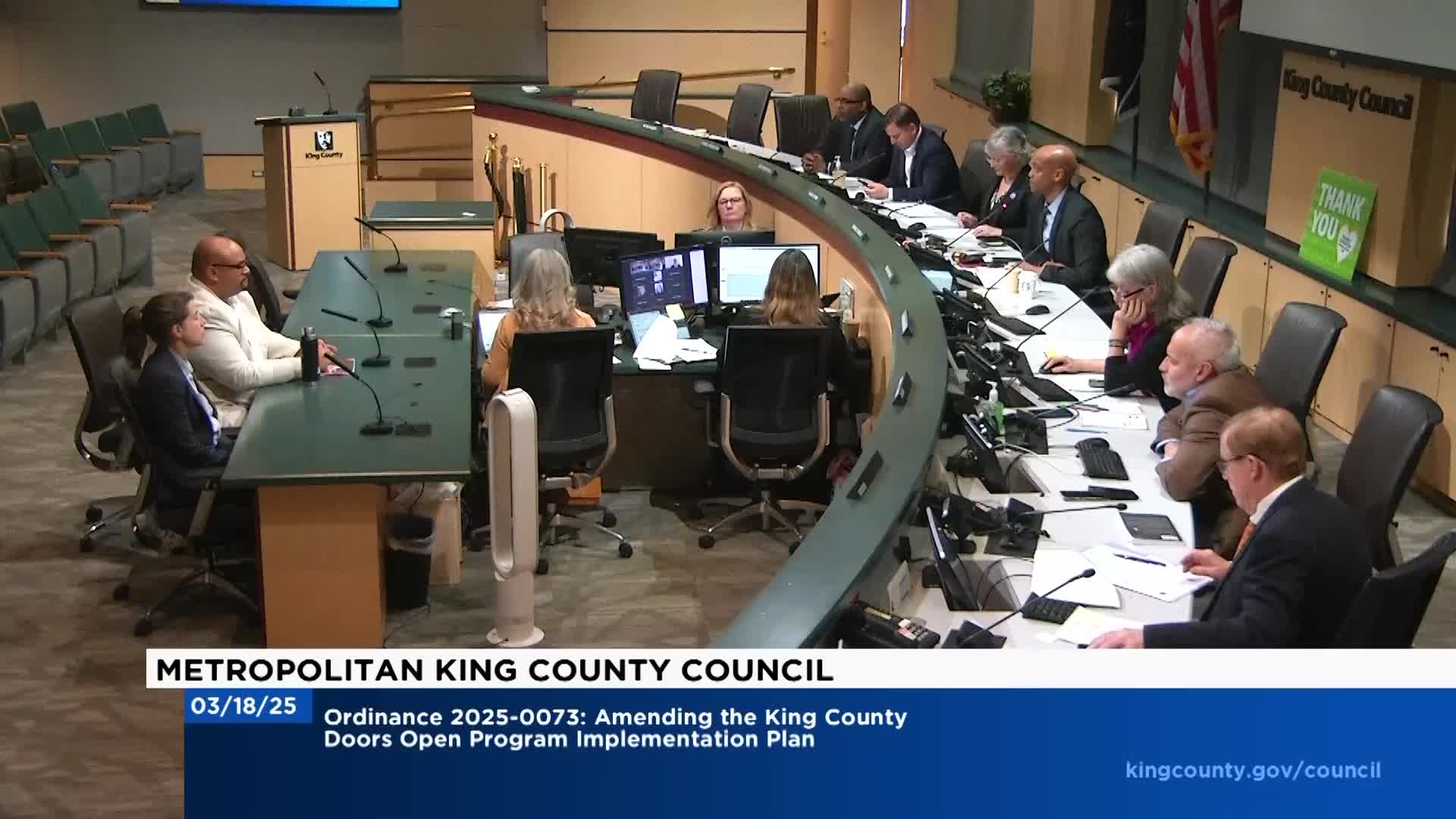
The Metropolitan King County Council on March 18 unanimously adopted an amendment to the Doors Open program implementation plan that allows advanced payments of 2024 one‑time operating support and requires 4Culture to distribute the funds by the end of the second quarter of 2025.
The ordinance, proposed as 20 25‑0 0 7 3, was described to the council by Jean Paul from council staff as establishing a new contract and payment process for the 2024 operating-support proceeds and adding new reporting obligations for 4Culture on contracting and grant awards. Council members voted 9‑0 to adopt the amendment.
Why it matters: Council members and cultural-sector advocates said the accelerated payment process is intended to get emergency operating funds into small and community‑based cultural organizations more quickly, responding to financial pressure after the pandemic and potential state and federal funding cuts.
Council staff summary and debate Jean Paul (council staff) told the council the ordinance ‘‘would amend the Doors Open implementation plan to establish a new contract and payment process for 2024 one‑time operating support. The new process would allow for advanced payments of the 2024 proceeds and require 4Culture to distribute payments by the end of the second quarter of 2025,” and it would create new reporting requirements for 4Culture on contracting and grant awardees and distribution of payments.
Council Member Jeanne Kohl‑Welles Balducci said the change responds to community requests and stressed urgency for smaller organizations: ‘‘the rainy day is now,’’ she said, recounting meetings where organizations reported unexpectedly large awards relative to their base budgets and said getting funds sooner would be transformational.
Public comment and outside support Manny Kowaling, executive director of Inspire Washington, testified in favor during the public hearing, thanking the council and Council Member Balducci for the amendment and saying local cultural organizations face an ‘‘urgent time’’ with possible state and federal funding reductions. Brian Carter, executive director of 4Culture, testified to the council that 4Culture supports the amendment and is prepared to implement the advanced‑payment process.
Vote and immediate effect Council Member Von Reichbauer put the item before the council for action and the roll call recorded ayes from Council Members Balducci, Varone, Dembowski, Dunn, Mosqueda, Perry, Quinn, Von Reichbauer and Chair Zahilay. The final tally printed in the meeting record was 9 ayes, 0 nos; the ordinance was adopted as proposed ordinance 20 25‑0 0 7 3. The ordinance sets an administrative deadline for 4Culture to distribute the 2024 proceeds by the end of the second quarter of 2025 and requires reporting back to council on contracting and grant awardees.
What the ordinance changes (as stated at the hearing) - Allows advanced payments of 2024 one‑time operating support proceeds to awardees. - Requires 4Culture to distribute the payments by the end of Q2 2025. - Adds new reporting requirements to document contracting and disbursement of funds.
Ending: Council members urged continued oversight and community outreach as the program moves into implementation. Council and 4Culture staff said they will continue monitoring distribution to ensure funds reach small and community‑based organizations quickly.