Get Full Government Meeting Transcripts, Videos, & Alerts Forever!
Get email alerts on the Solid Waste topic
No spam. Unsubscribe anytime.
Transfer-station workers, haulers say new weekend closures are disrupting service and morale
Summary
More than a dozen King County solid waste employees told the County Council they are seeing longer hauler wait times, diverted recycling, and falling morale after the county reduced landfill availability on weekends and began a five-day haul schedule.
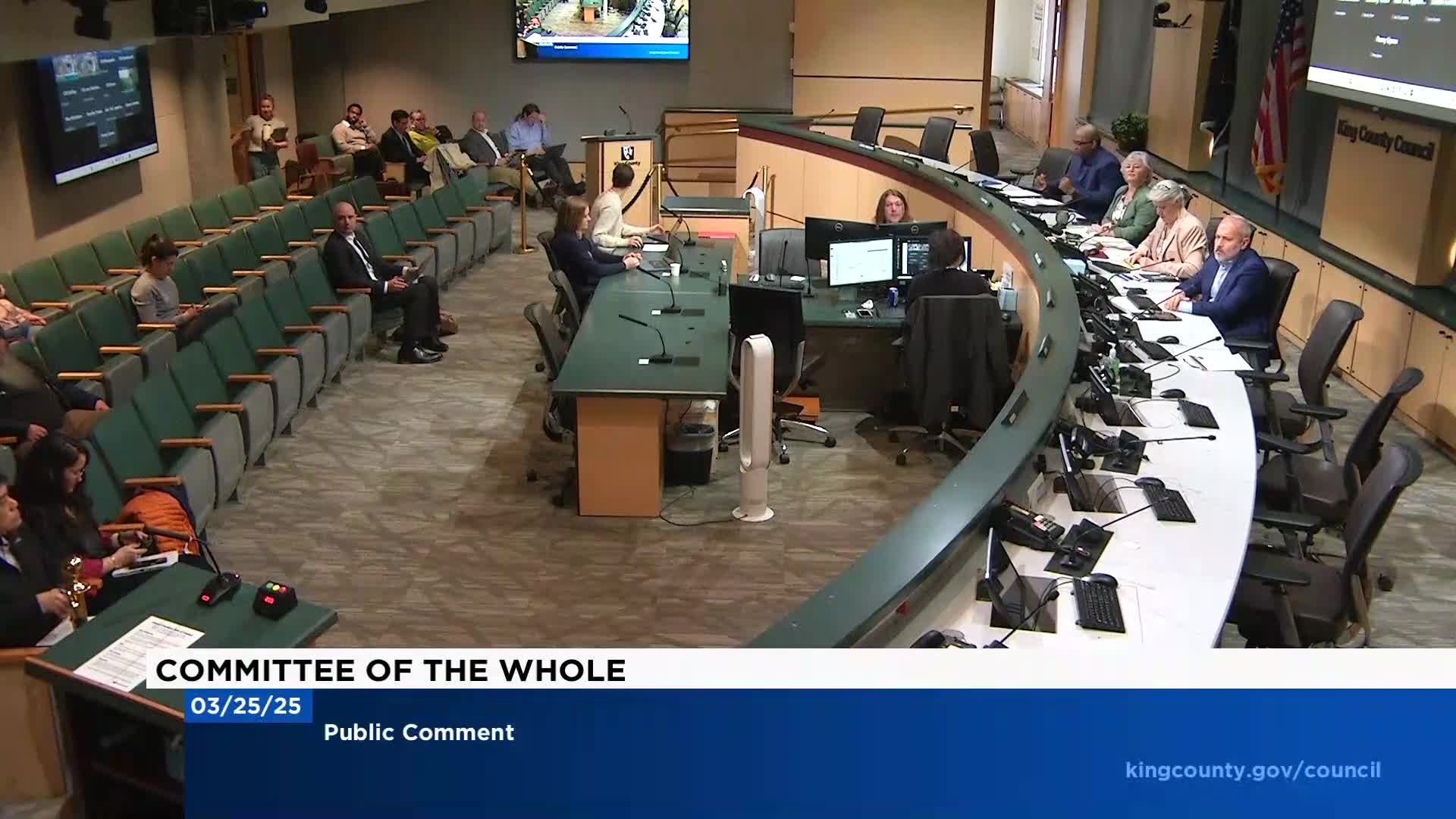
More than a dozen King County transfer-station workers told the County Council on March 25 that recent schedule changes — including closing the county landfill on weekends and expanding a five‑day hauling plan — have caused long truck queues, curtailed recycling options and damaged worker morale.
The employees, speaking during the committee's public-comment period, described multi-hour waits for commercial haulers, repeated preemptive station closures and recycling commodities being pushed into the landfill because trailers and hauling capacity were unavailable. “I've been in solid waste as a transportation operator for 26 years,” said Alex Nagy, a transfer-station transportation operator, describing what he called “a very, very difficult… adjustment for us.”
Workers told the council that some haulers waited two to four hours to dump, that several stations were closed to commercial traffic on the same days, and that limited trailer movement left empty trailers at transfer stations even while commercial customers were turned away. “We're the face to the solid waste division,” said Elaine Ross, a scale operator. “We're the only human contact a lot of them are getting… We're being thrown to the wolves.”
Employees said the closures and hourly operational changes strained long-standing relationships with private hauling firms, increased wear on haulers’ routes when trucks had to travel farther to find open facilities, and led to recycling commodities such as cardboard and mattresses being placed in the landfill because there was no capacity to process them separately. Several speakers said supervisors had threatened staff and that morale has deteriorated.
Chair Claudia Balducci thanked the speakers and committed to scheduling a departmental briefing to bring the committee up to date on the transfer‑station scheduling and operational changes. Balducci said the committee would seek a briefing at the next meeting, pending agenda scheduling. Council Member Teresa Mosqueda and others pressed for answers about cost savings versus operational and environmental costs, and for documentation about the impact on customers and recycling outcomes.
The employees called for clearer communication from central office to scale houses and transfer-station staff about which stations are open and why; they asked for restoration of more regular staffing levels; and they urged the county to restore recycling trailers and avoid sending recyclable commodities to landfill when avoidable.
The council did not take formal action on the transfer‑station operations during the March 25 meeting. Chair Balducci said staff would present a briefing at a future committee meeting so members could ask questions and consider next steps.