Get Full Government Meeting Transcripts, Videos, & Alerts Forever!
Get email alerts on the Human Services Workforce topic
No spam. Unsubscribe anytime.
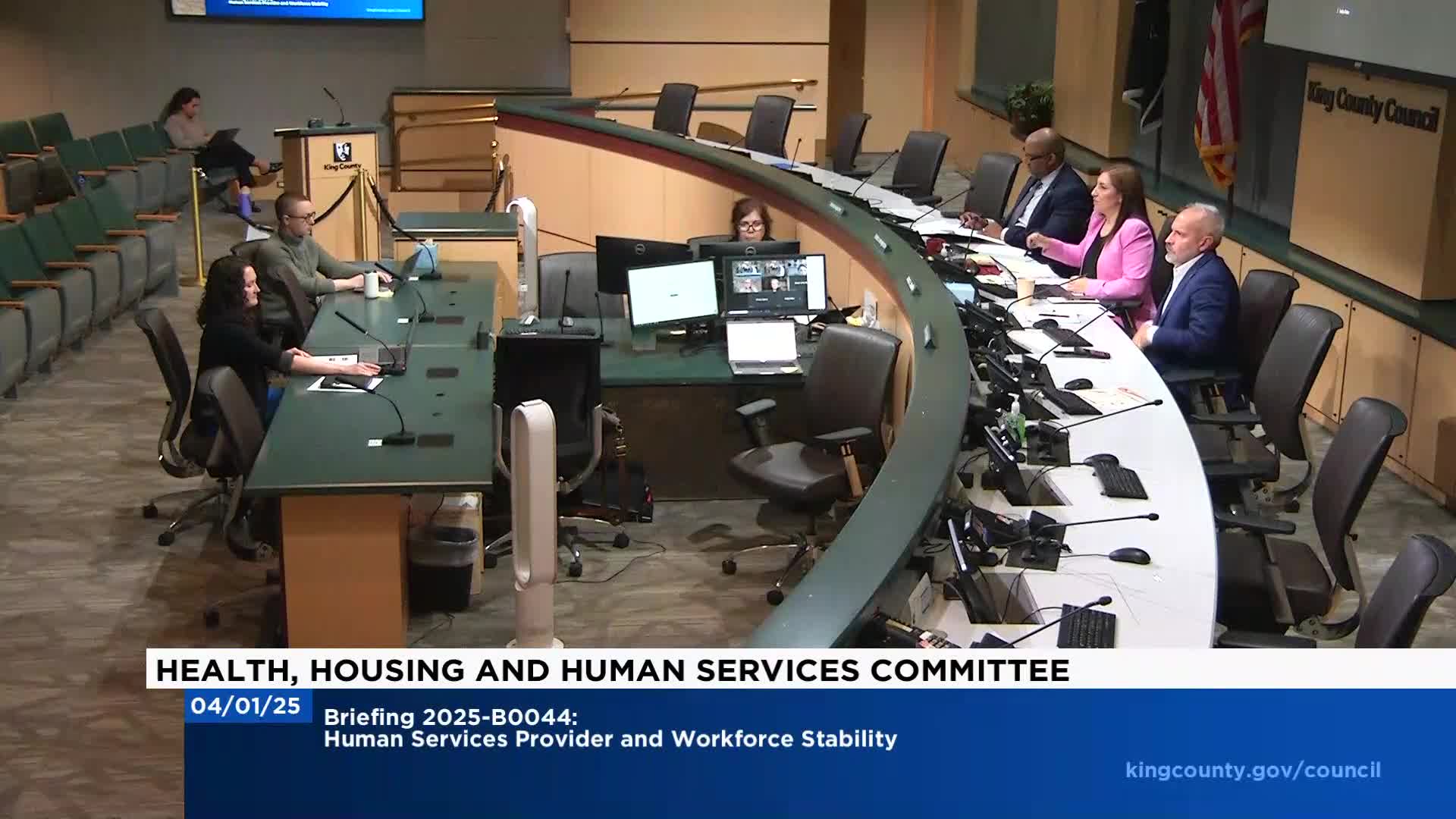
King County partners point to wage boosts, inflation adjustments to stabilize human services workforce
Summary
County officials, researchers and labor-management partners told a committee on April 1 that targeted wage increases, annual inflation adjustments and labor‑management partnerships are reducing turnover but that larger, sustained investments are needed to close historic pay gaps in the human services sector.
King County officials, labor representatives and researchers told the county’s Housing, Health and Human Services Committee on April 1 that investments in wages and contract inflation adjustments are beginning to reduce turnover in nonprofit human services organizations, but that a substantial, multi‑year funding effort will be required to close long‑standing pay gaps and preserve service capacity.
DCHS Director Kelly Reiter summarized the county’s "sustainable funding vision": budget for annual inflation; promote and fund living wages; and pay services at their full cost. She described recent workforce investments in the Best Starts for Kids and Veterans, Seniors & Human Services levies and the department’s strategy to prioritize inflation adjustments when unanticipated revenues appear.
"We can only achieve our needed results for the community through a robust and representative human services workforce," Reiter told the committee. She emphasized that DCHS contracts with more than 500 organizations and has been working to incorporate inflation adjustments into implementation plans for several levies and initiatives.
Lauren Fay of Downtown Emergency Service Center (DESC) and Lindsay Grad of SEIU 1199 Northwest described a decade of work to raise wages and reduce vacancies. Fay said DESC tracked wages against regional nonprofit benchmarks beginning in 2016; entry-level wages at DESC rose from about $16.32 in 2019 to about $30.50 at the end of 2024. Fay said vacancy and turnover rates peaked during the COVID years but fell sharply after local investments such as the City of Seattle’s payroll tax and other contract adjustments.
"Inflation adjustments to our contracts have been a huge, huge component to this," Fay said. She warned that renewed federal uncertainty could make the sector fragile again and urged continued local commitment to inflation adjustments.
Jennifer Romich, a professor at the University of Washington School of Social Work who led a 2023 wage‑equity study, summarized the research findings: nonprofit human services workers in King County face substantial wage gaps compared with workers in non‑care industries. Romich said the study found a roughly 30% wage gap between human services workers and comparable non‑care workers; closing that gap would require raises on the order of 40% or more, depending on the baseline used. The report recommended immediate real (net of inflation) pay increases and structural contracting changes to address long‑term inequities.
SEIU's Grad and DESC’s Fay described a three‑way labor‑management‑county partnership to set wage goals and track progress. Grad said the structural approach — embedding inflation adjustments and benchmarks directly into contracting and bargaining — has improved recruitment and retention and reduces service risk for clients.
DCHS also described a set of workforce programs: the Best Starts for Kids child care wage boost pilot that will support about 1,400 child care providers beginning in April, a Veterans, Seniors and Human Services levy workforce stabilization strategy due this fall, and workforce investments made through the Behavioral Health and Recovery programs. Reiter said DCHS is prioritizing funding for inflation adjustments in implementation plans and will use unanticipated local revenues first to stabilize existing contracts rather than create new programs.
Committee members asked how county and state revenue proposals might sustain the gains. Reiter and SEIU urged state and county progressive revenue measures and noted pending state bills, including one (House Bill 1858) that would alter document recording fee exemptions to increase housing and homelessness funds. Council members signaled support for continued state lobbying and said they would press for revenue tools to insulate local services from federal volatility.
Ending: The committee asked staff and partners to continue reporting on workforce stabilization results, coordinate state advocacy, and include inflation and wage priorities in upcoming budget discussions.