Get Full Government Meeting Transcripts, Videos, & Alerts Forever!
Get email alerts on the Language Access Termination topic
No spam. Unsubscribe anytime.
Parents’ language-access dispute raised during termination argument; panel questioned waiver and colloquy
Summary
In a termination appeal, the court examined whether a Spanish‑speaking mother knowingly waived an interpreter and whether the trial judge should have performed a statutory colloquy to ensure any waiver was knowing and voluntary before relying on testimony for credibility findings.
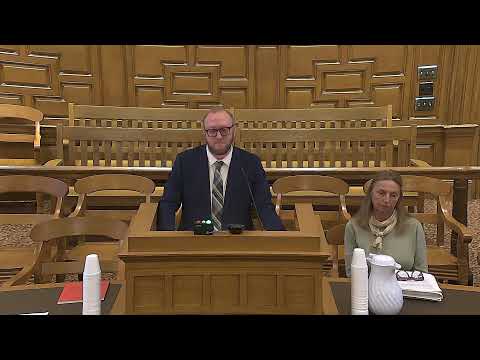
The panel heard argument in Department of Children and Families & Others v. Mother, docket 24P705 (partially impounded), focusing on whether the trial judge erred by failing to conduct an on-the-record colloquy when the mother—identified as a native Spanish speaker at trial—electively testified in English with an interpreter on standby.
Appellant counsel Anna Maria Gioia argued the record shows the mother repeatedly needed interpretation, that the interpreter sometimes rendered testimony imperfectly, and that the trial judge relied on the mother’s contested testimony when making credibility findings. Gioia urged the court to apply statutory protections for language‑access and to require an explicit, on‑the‑record colloquy to confirm a knowing, voluntary waiver of interpreter assistance rather than ad hoc, intermittent use.
DCF counsel Emily Swanson and children’s counsel (Lisonbee Lowe) countered that trial counsel did not preserve the colloquy objection in the trial court and that the mother repeatedly affirmed she wished to proceed in English. DCF argued the record contains multiple indicia of English proficiency: the mother testified in English over two days, social‑worker reports noted English communication without major issue, and the judge repeatedly warned the mother and obtained affirmative responses that she understood the proceedings.
The panel questioned whether the mother’s choice to testify in English—when an interpreter was available—was an invited error or created an appellate issue by estoppel, and whether statutory or due‑process protections require a stronger on-the-record colloquy (the parties and counsel cited decisions the transcript identified as Adoption of OLLI/Adoption of Jacob and other juvenile‑court colloquy decisions). The justices also asked whether the absence of a formal colloquy prejudiced the mother given the judge’s credibility findings.
The panel took argument under advisement.