Get Full Government Meeting Transcripts, Videos, & Alerts Forever!
Get email alerts on the Indemnification Ethics Proceedings topic
No spam. Unsubscribe anytime.
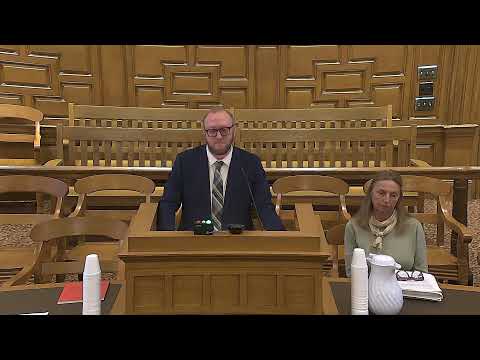
Appeals court hears former state police major’s bid to require indemnification for ethics proceedings
Summary
Major Susan Anderson’s appeal asks whether the state must provide defense and indemnity for an ethics‑commission action that followed civil‑rights litigation, invoking Massachusetts indemnification statute language and prior SJC decisions about duty to defend.
Major Susan Anderson’s appeal, docket 24P552, presented claims that the Department of State Police unlawfully refused to provide defense and indemnification for an ethics-commission proceeding that followed federal civil-rights litigation and an attorney-general inquiry.
Attorney for Major Anderson argued the statutory framework that governs indemnification of state police employees (cited at argument as chapter 258, section 9a and related provisions) imposes a duty to defend pending suits and that prior Massachusetts decisions (discussed at argument as Mameron and Pinchot—counsel’s cited authorities) require the Commonwealth to provide counsel or indemnify when claims arise from acts within the scope of employment unless willful, wanton, or malicious conduct is established. Counsel told the panel that Anderson sought indemnification and a defense after the ethics commission issued an order to show cause and that a written request was sent to the colonel.
Department of State Police counsel responded that the statutory language and controlling precedent were narrower and that the ethics-commission proceeding was not the type of civil action that triggers a duty to defend or indemnify under the statute. The State Police argued Triplet and related SJC guidance constrain indemnity obligations and that the statutory scheme and legislative history show the indemnity provisions are limited to certain civil actions such as intentional-tort or civil-rights suits, not administrative ethics proceedings.
The justices asked whether the ethics proceeding “arose out of” the same incident as the civil-rights suits and probed what the statute’s plain language requires: whether an administrative ethics action is a covered “action” for indemnification or whether the statute’s enumerated categories govern. Counsel for Anderson pointed to the sequence of events—the federal civil-rights suits, an attorney-general review, and the ethics referral—and argued the ethics action was factually predicated on the same incidents and so required defense under Mameron/Pinchot. State counsel emphasized statutory text differences between sections and the SJC’s reading in Triplet.
The panel took the case under advisement.