Get Full Government Meeting Transcripts, Videos, & Alerts Forever!
Get email alerts on the Community Preservation Act Appropriation topic
No spam. Unsubscribe anytime.
City council committee hears $38.15 million Community Preservation Act funding slate; no final vote taken
Summary
Boston City Council Committee on the Community Preservation Act Chair Enrique Pepin presided over an April 1 hearing on a mayoral message requesting the approval of an appropriation order for $38,148,052 in fiscal year 2025 Community Preservation Act revenues to fund projects recommended by the City of Boston Community Preservation Committee.
Boston City Council Committee on the Community Preservation Act Chair Enrique Pepin presided over an April 1 hearing on a mayoral message requesting the approval of an appropriation order for $38,148,052 in fiscal year 2025 Community Preservation Act revenues to fund projects recommended by the City of Boston Community Preservation Committee.
The hearing featured a presentation from Nadine Brown, director of the Community Preservation Office, who described the FY25 funding round and the administration's slate. "CPA funds are strictly reserved for capital projects and cannot be used for maintenance, operations, or programming," Brown said, summarizing statutory limits and allowable uses under Chapter 44B. Brown told the committee the CPC recommended allocating roughly 50% of the available funds to affordable housing, 25% to historic preservation and 25% to open space and recreation.
Why it matters: the appropriation would direct dedicated local CPA revenues to capital projects across Boston neighborhoods, with the recommended slate prioritizing housing and projects in lower‑income and higher‑need census tracts. Brown said the slate includes 52 projects totaling about $38 million; 44 of those projects are recommended for full funding this round.
Key details from the presentation included the program's scale and recent activity. Brown said CPA has funded more than 345 projects citywide and that the FY25 awards, if approved, would bring total CPA awards in Boston to more than $230 million covering nearly 397 projects since voters adopted CPA in 2016. She described an equity analysis the city used for project selection and said the CPC held eight public meetings and about 14 hours of discussion before making recommendations.
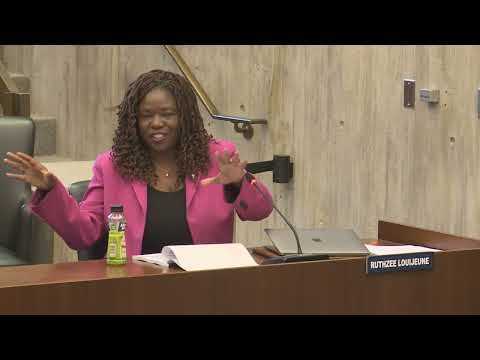
Councilors at the hearing praised the CPA team's outreach and the slate's neighborhood spread. Councilor Flynn thanked staff for their community engagement and for helping applicants navigate the process, saying staff "work with residents. You listen, and you're very respectful to the public." Council President Ruthzee Louijeune highlighted that about 50% of recommended funding targets affordable housing and that 65% of recommended projects are located in lower‑AMI neighborhoods.
Committee members and city staff also discussed program mechanics and next steps. Brown outlined FY26 application timelines: staff outreach through the spring and summer, an eligibility determination form due August 29 at 5 p.m., formal applications in October, and committee review through mid‑February. She reiterated that CPA grants are 15‑year capital grants, that recipients must meet statutory eligibility under Chapter 44B, and that CPA grants cannot be used for recurring operations or programming.
Public testimony focused on specific recommended projects and neighborhood needs. Speakers included representatives from historic churches and neighborhood organizations, project managers from the Boston Housing Authority and Trust for Public Land, and advocates for playground, park, archival digitization and senior‑housing site improvements. Testimony described anticipated benefits of recommended projects (for example, playground safety improvements at Hurley K–8, outdoor garden and raised beds at 150 River Street in Mattapan, shade structures for Camp Harborview and McKinney Park, and restoration work at several historic houses of worship).
No final council vote or formal disposition of the appropriation order was recorded at the hearing. Chair Enrique Pepin adjourned the session after questions and public testimony. The council committee received the presentation and public testimony for the record and staff indicated they will return with the appropriation for the council's consideration; the transcript contains no vote or formal approval taken at that meeting.
The committee hearing and the CPA office materials note that applicants not recommended this round were invited to meet staff, make adjustments, and reapply; Brown said reapplication in the next funding cycle is common. The presentation and testimony emphasized outreach and language access efforts, and Brown said the office provides materials in 11 languages and holds interpreted information sessions.
The committee will carry the record of the hearing forward as it considers the mayoral message. If the council votes on the appropriation, the official vote and any amendments will be reflected in the council docket and minutes.