Get Full Government Meeting Transcripts, Videos, & Alerts Forever!
Get email alerts on the Sexual Offense Sufficiency topic
No spam. Unsubscribe anytime.
Panel hears challenge to sufficiency of testimony for sex-offense penetration element
Summary
Appeals court considered whether testimony by a 14-year-old—using nontechnical terms such as "front private" and "cookie"—was sufficient as a matter of law to establish the penetration element of a sexual-offense charge.
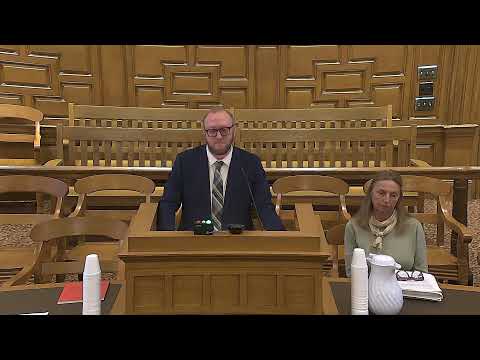
The panel heard Commonwealth v. Hector Heredia Alamo, docket 24P354 (partially impounded). Counsel for the defense argued the testimony was too general to prove the statutory penetration element required for the indicted sexual offense, while the Commonwealth maintained circumstantial evidence and the victim’s descriptions were sufficient.
Defense counsel argued that the victim’s language—she said the defendant “licked her front private” and also stated “[he] did not put his finger in my front private”—required the jury to make an inferential leap about what the declarant meant by “front private” and whether that term carried the biological specificity needed to support a conviction for penetration. Counsel warned that the transcript contained language that asked the jury to infer penetration from general terms and pressed that under a due‑process/sufficiency standard the Commonwealth had not proven the required element beyond a reasonable doubt.
Assistant District Attorney Lee Baker and other Commonwealth counsel relied on Massachusetts precedent (cases the transcript cited as Manas and King) holding that victims—particularly young victims—need not use clinical anatomical vocabulary and that a jury may rely on common-sense inferences from a witness’s account. The prosecutor told the panel the record contained multiple direct and circumstantial items: the victim’s repeated references, a social-history pattern (comments about underwear and access), and analogous precedent where nontechnical descriptions were held sufficient.
Justice Walsh and the panel pressed whether the record had alternative explanations and whether the jury’s acquittal on a separate charge suggested jurors had doubts about penetration on the other count. Counsel for the Commonwealth pointed to case law accepting nontechnical testimony in similar contexts and emphasized circumstantial indicators (comments about underwear, the victim’s description, and corroborating testimony) as sufficient.
The court took the matter under advisement.