Get Full Government Meeting Transcripts, Videos, & Alerts Forever!
Get email alerts on the School Transportation topic
No spam. Unsubscribe anytime.
Committee approves $600,000 pilot for student transportation routing software; districts must report savings
Summary
The Joint Finance‑Appropriations Committee approved a one‑time $600,000 pilot to fund student transportation routing software for up to 400 buses, with participating districts required to report cost and savings data to the legislature after use.
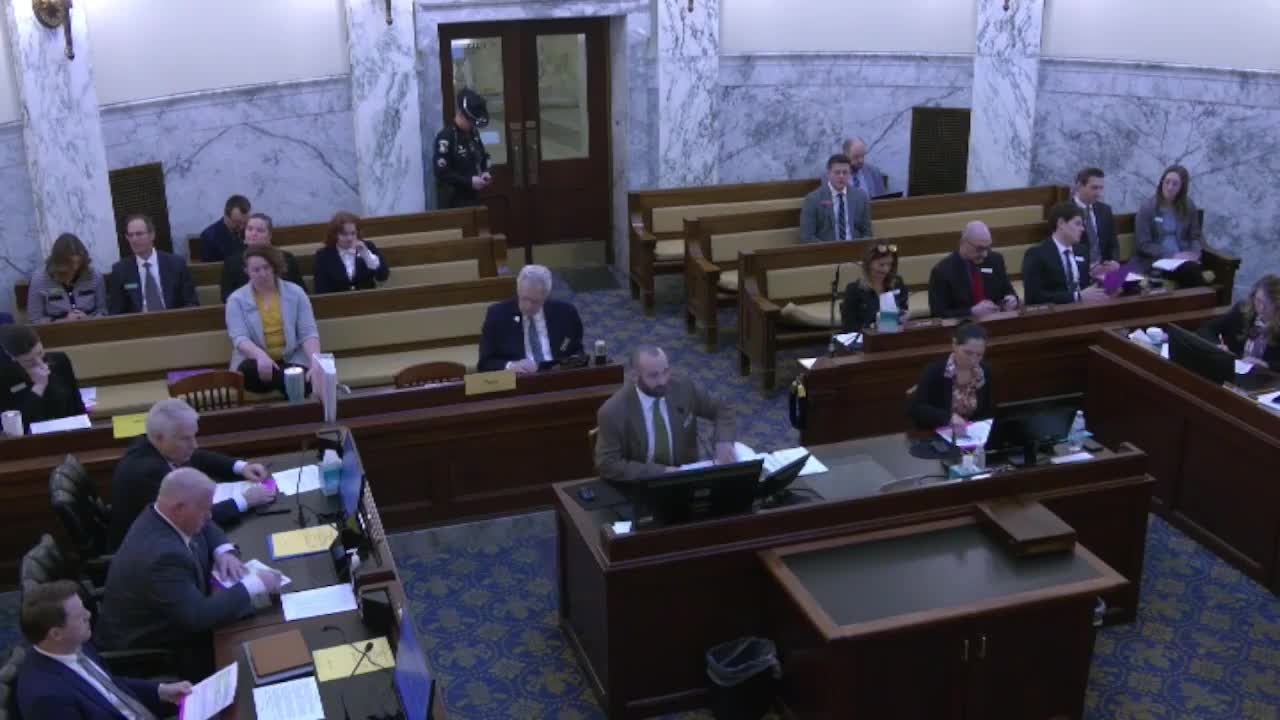
Jared Tetro, budget and policy analyst with the Legislative Services Office, briefed the committee on a proposal to pilot student transportation routing software under the public schools central services division.
The committee approved a one‑time $600,000 general‑fund appropriation for FY2026 to support a routing‑software pilot. Senator Woodward moved the funding motion; Representative Petzke seconded. Committee members noted the request had been reduced substantially from the agency's original request: the department initially sought approximately $5 million and more recently a $2.2 million figure had been considered. The $600,000 pilot equates to an implementation model priced at $1,500 per bus, which the committee said funds approximately 400 buses.
Committee staff said the Department of Education surveyed districts and charters; staff reported roughly 70 districts and charters responded to the survey and that 43 respondents indicated interest in participating. Under the accepted language, participating districts and charters must track necessary data to demonstrate program effectiveness, including costs and savings. If contracts and implementation occur in July/August, staff said districts would have roughly four months of data by the start of the next legislative session and the department will provide a fuller report after one full year of implemented service.
Discussion centered on whether four months of data would suffice to judge effectiveness. Representative Petzke said the pilot will provide early reporting next year and the legislature can evaluate whether to fund an expanded effort in a later session; other members said economies of scale could make a statewide contract more cost‑effective in the long run.
The motion received recorded committee votes: the recorded breakdown was Senate 8 ayes and 2 nays; House 7 ayes and 3 nays, for a committee total of 15 ayes and 5 nays. The committee issued a due‑pass recommendation and accepted the language requiring districts to report the pilot's results.