Get Full Government Meeting Transcripts, Videos, & Alerts Forever!
Get email alerts on the Behavioral Health Budget And Policy topic
No spam. Unsubscribe anytime.
JFAC approves behavioral‑health supplementals and directs review of the CANS assessment; language limits DEI‑related appropriations
Summary
JFAC approved multiple behavioral‑health supplementals and FY2026 enhancements, moved the Center of Excellence funding to one‑time while reducing nine FTPs, and adopted language directing the Department of Health and Welfare to explore alternatives to the CANS assessment and review related SOGI questions.
The Joint Finance‑Appropriations Committee approved multiple supplementals and enhancement items affecting behavioral health, psychiatric hospitalization and substance‑use services and adopted language directing review of the CANS (Child and Adolescent Needs and Strengths) assessment and restrictions on appropriations tied to diversity, equity and inclusion topics.
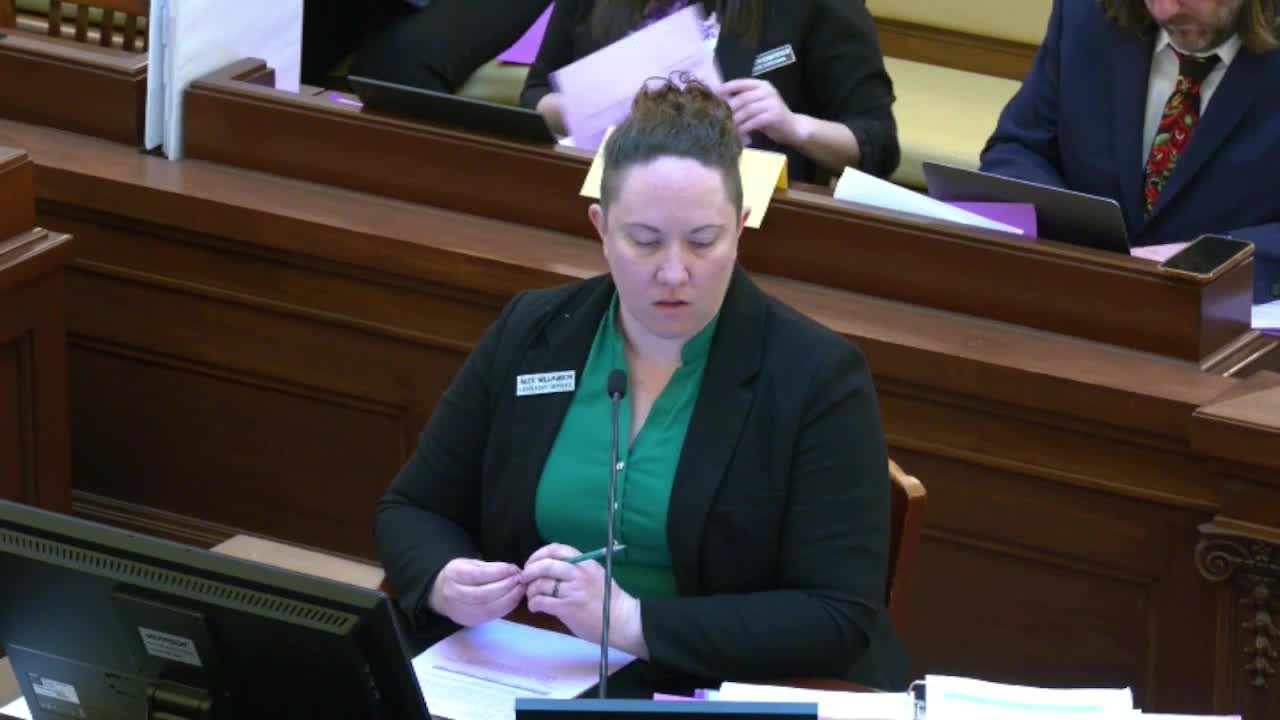
Alex Williamson, budget and policy analyst with Legislative Services, walked the committee through a series of supplemental and enhancement items rolled into the behavioral health bill. Items approved by the committee included: a FY2025 one‑time federal appropriation of $6,743,800 for Idaho Behavioral Health Plan contract implementation; a FY2025 one‑time general fund addition of $2,663,500 for civil commitment expenditures and community hospitalization (psychiatric hospitalization division); forecast and fund‑shift adjustments for State Hospital West and State Hospital South that moved amounts between federal, dedicated and general funds for accounting reasons tied to managed care operations; and an FY2026 enhancement request of $261,400 federal for Idaho Behavioral Health Plan grant increases.
On workforce and program structure, the committee approved reducing nine FTPs tied to the Center of Excellence and reclassifying the Center of Excellence funding from ongoing to one‑time ($6,319,700 moved to one‑time), a change committee members said is intended to allow review and further evaluation of the program. Senator Cook explained the Center of Excellence adjustment and said the committee “wanted to pull it out, look at it, look it over and see what we've got there.”
The committee also approved an indirect support services request for the Department of Health and Welfare that included $851,600 for SQL Server replacement, $1,032,800 for replacement items, and $1,834,300 for Office of Information Technology hardware (total added funding in the motion was $3,718,700 across general and federal funds). The committee removed vehicle replacements from the immediate request and asked for a report on the fleet.
Representative Tanner introduced and the committee approved language directing the Department of Health and Welfare to report on alternatives to the CANS assessment and to examine whether SOGI (sexual orientation and gender identity)‑related questions are included. Tanner characterized the language as a request to “provide a report exploring alternatives” rather than an immediate program change. Senator Wintrow and others cautioned about unintended effects and urged engagement with parents and families who use the tool, noting stakeholder concerns about how the instrument is applied.
Additional behavioral health language included transfer‑limitation exemptions for divisions and standard conditions, limitations and restrictions language. The committee approved the package of numbers and the language on roll call votes and will forward the behavioral health items to the next stage of the budget process.