Get Full Government Meeting Transcripts, Videos, & Alerts Forever!
Get email alerts on the State Budget Fy2026 topic
No spam. Unsubscribe anytime.
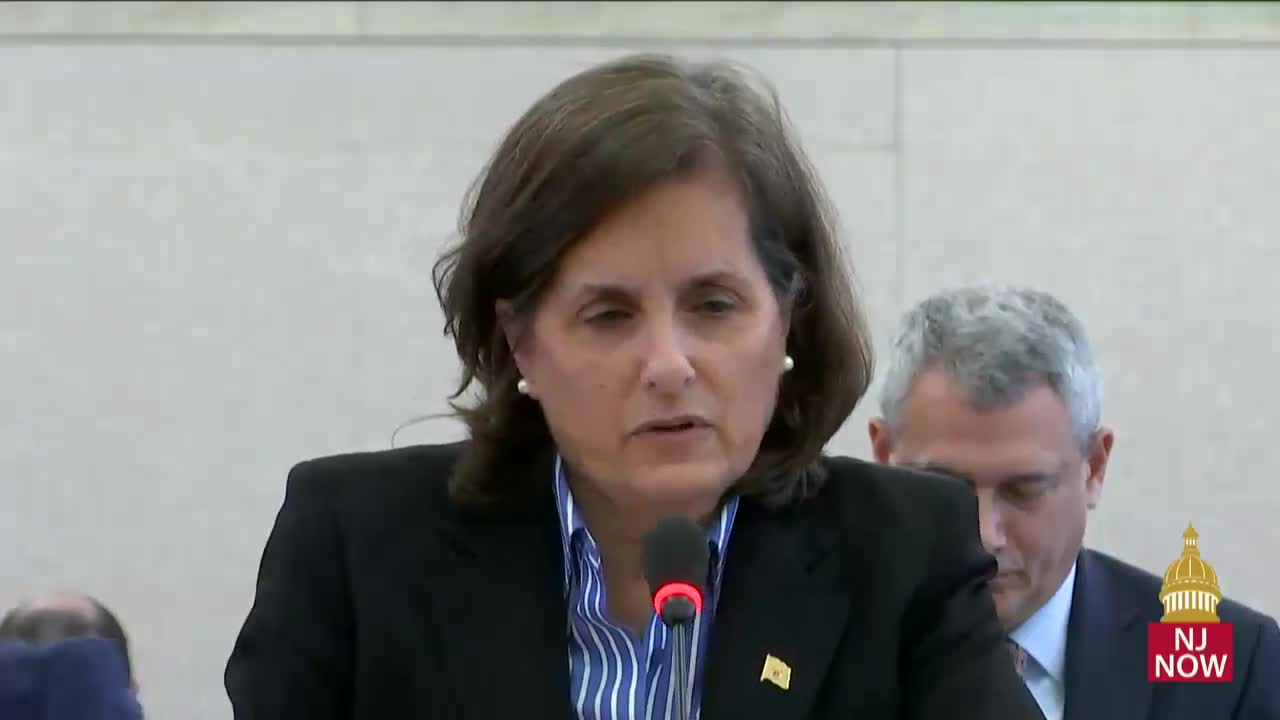
Treasurer Elizabeth Marmello presents FY2026 budget, warns of possible $10 billion Medicaid hit
Summary
State Treasurer Elizabeth Marmello told the Senate Budget Committee that Governor Murphy's proposed FY2026 budget focuses on school aid, pensions and property tax relief but faces uncertainty from possible federal Medicaid cuts and other revenue risks.
Treasurer Elizabeth Marmello presented Governor Phil Murphy's proposed fiscal year 2026 budget to the New Jersey Senate Budget Committee, saying the administration is proposing $58.05 billion in appropriations and projecting $56.8 billion in state revenues while holding a $6.3 billion surplus.
Marmello, who told the committee this is her ninth and final budget as state treasurer, warned that proposed federal changes to Medicaid ‘‘could reduce funding to the state by nearly $10 billion and endanger health care for some 700,000 New Jerseyans.’’ She also said New Jersey Family Care covers roughly 1.8 million residents and that the state draws down tens of billions in federal program funds that are vulnerable to changes in Washington.
The governor’s proposal would continue several priorities Marmello highlighted: a record $12.1 billion for K–12 state aid, a proposed $1.27 billion for preschool aid, and a proposed $7.2 billion actuarially determined pension payment for FY2026 — the fifth consecutive full actuarial contribution, the treasurer said. The budget also proposes $4.3 billion in direct property tax relief, including $2.4 billion for the Anchor program, $239 million for the Senior Freeze program and $600 million for the Stay NJ program. Treasury said the new single property-tax relief application (PAS1) is available online to simplify access.
Marmello described the revenue forecast as cautiously optimistic but uncertain. Total FY2026 revenues are projected to grow by $1.9 billion (3.5%) from revised FY2025 figures. Key revenue changes include a gross income tax estimate rising to $21.1 billion, sales tax to $14.5 billion, and the corporate business tax falling to $4.2 billion. The proposed corporate transit fee is forecast in the budget to raise $868 million in FY2026, with $815 million allocated to New Jersey Transit after a 6% constitutional open-space dedication adjustment, the treasurer told the committee.
To narrow the structural gap, the administration proposed several tax and fee changes. Marmello listed expansions of the sales tax base to certain services and items (digital streaming, interior design, participatory sports and others), increases to cigarette and vaping taxes, higher alcohol excise taxes, adjustments to gaming tax rates, a revision to the realty transfer fee structure for higher-value properties, and a new excise on drone sales and some specialty items. The treasurer said some proposed changes also include targeted exemptions, such as for certain baby products and sunscreen.
Committee members pressed Marmello on the risks those proposals pose and on the administration’s reliance on revenue enhancements. Senator Joseph Testa raised concerns about a set of individually named line items in the governor’s proposal drawn from the property-tax relief fund and questioned whether those allocations complied with the state constitution’s requirement that certain income tax revenues be appropriated pursuant to a formula. Marmello said Treasury had received the senator’s correspondence and would respond after review.
Several senators probed the budget’s structural outlook. Senator Scanlon and others warned the state faces a multi-billion-dollar structural imbalance once one-time resources and prior-year adjustments are removed. Marmello disputed larger structural-deficit estimates and noted the state is leaving the next administration with a significantly larger surplus and lower outstanding bonded debt than when the governor took office; Treasury staff provided figures showing reductions in bonded debt and other adjustments.
Health-care costs within the State Health Benefits Program (SHBP) drew sustained attention. Marmello urged committee members that plan design, collective bargaining and the legislature control the authority to change benefit design; she said Treasury and plan actuaries expect double-digit premium increases and that the local-government section of SHBP could face rate increases ‘‘well above 20%’’ for plan year 2026. She described plan-design committees and the Legislature as the mechanisms for implementing major benefit changes.
Marmello and her staff told senators they will return to the committee with updated revenue data after the April filing season and will provide more detail on specific proposals when requested. Several committee members asked Treasury to provide breakdowns that were not in the presentation — for example, a requested split of how much revenue would come from increased realty transfer fees in specified price bands and detailed lists and legal requests supporting individually named line items. Treasury agreed to supply those follow-ups.
The treasurer said the administration proposed nearly $2 billion in appropriation reductions and capped much new discretionary spending to preserve fiscal flexibility given federal uncertainty. Marmello closed by saying Treasury will continue to brief the committee as federal notices and program decisions arrive and as other cabinet officials testify in coming weeks.