Get Full Government Meeting Transcripts, Videos, & Alerts Forever!
Get email alerts on the Hospital Settlement topic
No spam. Unsubscribe anytime.
Council committee approves $890,813 settlement with former Nashville General CEO Joseph Webb
Summary
The Metro Nashville Budget & Finance Committee approved a settlement to resolve retirement-related claims by former Nashville General CEO Dr. Joseph Webb for $890,813.26, drawing questions from council members about board decisions, legal exposure and hospital finances.
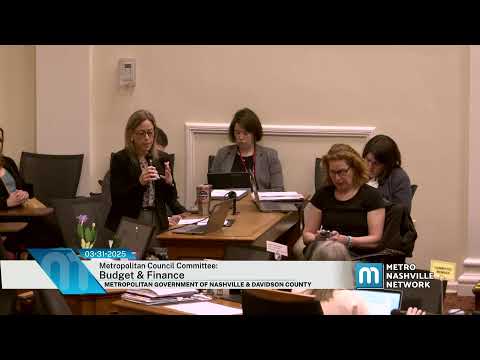
The Metro Nashville Budget & Finance Committee voted to authorize the Department of Law to settle the claims of Dr. Joseph Webb against the Metropolitan Government and the Metropolitan Hospital Authority for $890,813.26, with the amount to be paid from the judgment and losses fund. The motion carried with eight votes in favor and one abstention.
Committee members and staff debated the legal risk and municipal cost before the vote. Wally Dietz, Metro legal director, said negotiations began last fall and that the city faced “significant exposure” in litigation because hospital authority board minutes from 2020 indicated a board-approved retroactive retirement package. Dietz told the committee that an outside expert recommended making the retirement package retroactive to 2015, which amplified the amount owed once compounded at 5 percent interest. “This is a lot of money in anybody’s standard,” Dietz said, adding that the negotiated agreement included Dr. Webb’s early departure (March 14) and a full release of claims, which he said provided additional value to Metro.
Councilmember Johnston expressed discomfort with the size of the payment and questioned why taxpayers should be on the hook for a board decision made without available funds. “It’s really a bad feeling to be on the hook for this amount of money…because the hospital authority is not the one that’s writing the check,” Johnston said. A member of the public, Steve Wrighton, also urged caution, saying he did not think the settlement was “in the best interest of the taxpayers of the city.”
Finance staff described the broader fiscal backdrop as the committee debated the hospital’s supplemental request. Amanda Deaton Ware of the Department of Finance said the $10 million supplemental appropriation approved earlier in the meeting was intended to maintain operations through June 30, 2025, fund a contracted financial consultant to address audit findings and support cash flow while certain state revenues were delayed. “The funding for the supplemental is necessary to continue the operations at their current level through 06/30/2025,” Deaton Ware said.
Legal staff said the Webb claim was not frivolous and that litigation would likely have progressed to trial, possibly producing a higher award plus interest and attorney fees. Dietz described three elements that justified settlement: the core retirement claim; agreement on an expedited departure date to avoid an acrimonious transition; and a complete release of claims. He said that at least three board members from the period in question would likely testify in support of Webb’s claim, increasing Metro’s exposure.
After questions and statements from multiple council members, the committee approved the settlement as presented. The record shows the committee also discussed the hospital’s ongoing financial needs and the relationship between Metro and the hospital authority, but the settlement vote addressed only the Webb claim specified in the resolution.
The committee’s approval authorizes payment from the judgment and losses fund; the settlement agreement also requires Dr. Webb to provide a full release of claims and to end his service on the date specified in the agreement. No trial or appeal took place because the parties reached the settlement now approved by the committee.