Get Full Government Meeting Transcripts, Videos, & Alerts Forever!
Get email alerts on the Pharmacy Reimbursement topic
No spam. Unsubscribe anytime.
Montana pharmacists push PBM reform bill to stop low reimbursements; insurers and PBMs warn of higher premiums
Summary
Representative Marta Bertoglio told the Senate Judiciary Committee HB 740 would set minimum reimbursements and bar certain PBM fee practices to shore up independent and rural pharmacies facing closures in Montana.
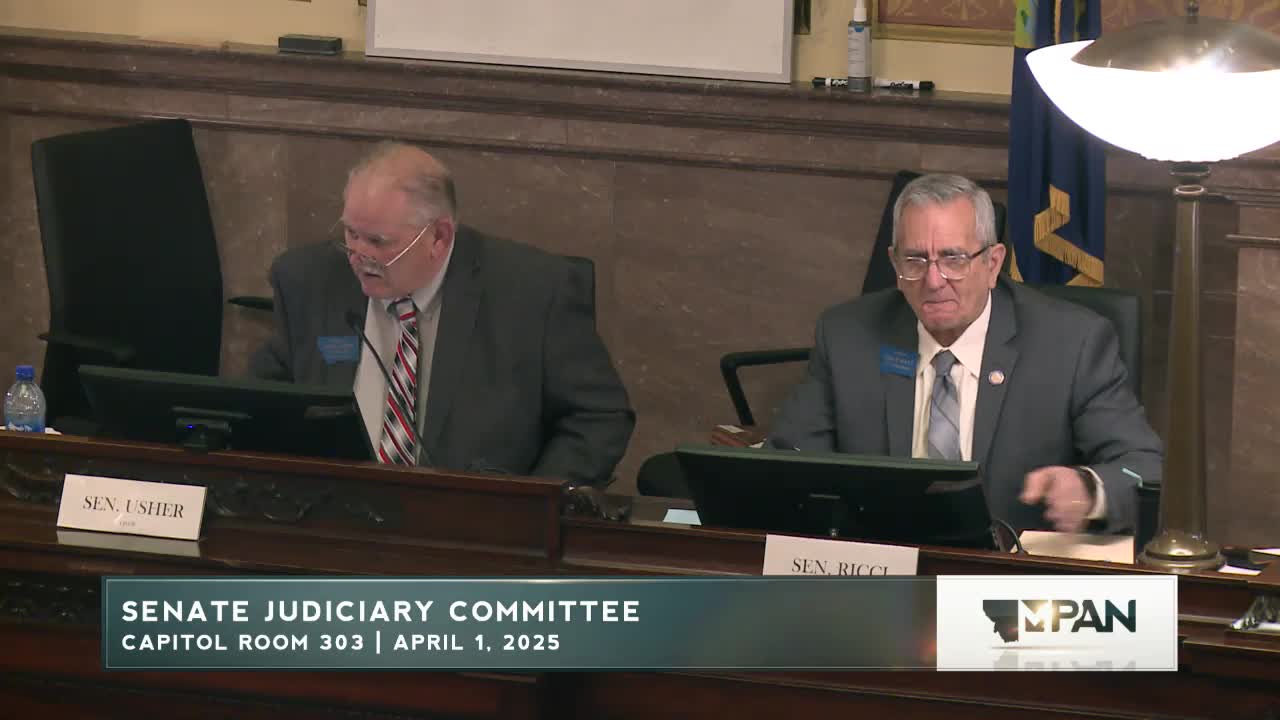
Representative Marta Bertoglio opened the Senate Judiciary hearing on House Bill 740, a multi‑part proposal to change how pharmacy benefit managers (PBMs) reimburse pharmacies and to bar certain PBM fee practices.
Bertoglio told the committee the bill’s aim is to prevent pharmacy closures and maintain access to medications in rural Montana by setting NAIDAC (national average acquisition cost)‑based reimbursements, raising dispensing fees toward Medicaid levels and prohibiting clawbacks, virtual‑card fees, and other practices proponents called “spread pricing” or “effective rate contracting.” She brought handouts showing independent pharmacies’ closures and pricing analyses and asked the committee for a due pass.
Proponents included numerous community pharmacists, owners of rural and critical‑access pharmacies, nonprofit clinics and pharmacy associations. Witnesses testified that independent pharmacies are paid below acquisition cost, that multiple pharmacies had closed (witnesses cited losing 10 independent pharmacies in 2024 and other local closures), and that PBM practices force patients into mail‑order and PBM‑owned pharmacies. Several community pharmacists described patients forced to use insurer‑owned specialty pharmacies for temperature‑sensitive drugs or experiencing lengthy phone interactions and delivery issues with mail‑order providers.
Opponents included Blue Cross Blue Shield of Montana, PBM trade associations, and several insurers and PBM representatives. Blue Cross told the committee the bill would increase plan costs and estimated an illustrative $17.5 million annual cost that would raise premiums for families and employers; PBM representatives warned that increased dispensing fees and mandatory minimums would be passed to consumers through higher premiums or copay structures. AHIP warned of ERISA preemption issues for self‑insured plans governed by federal law.
Committee members asked about fiscal notes, the scope of entities affected and possible amendments narrowly protecting independent pharmacies; sponsors and testimony indicated negotiations and amendment work were ongoing. The transcript records robust testimony and cross‑examination but no committee vote in the provided excerpts.