Get Full Government Meeting Transcripts, Videos, & Alerts Forever!
Get email alerts on the Digital Privacy topic
No spam. Unsubscribe anytime.
Montana bill would add ‘digitally fabricated’ images to privacy offenses to target sextortion and extortion
Summary
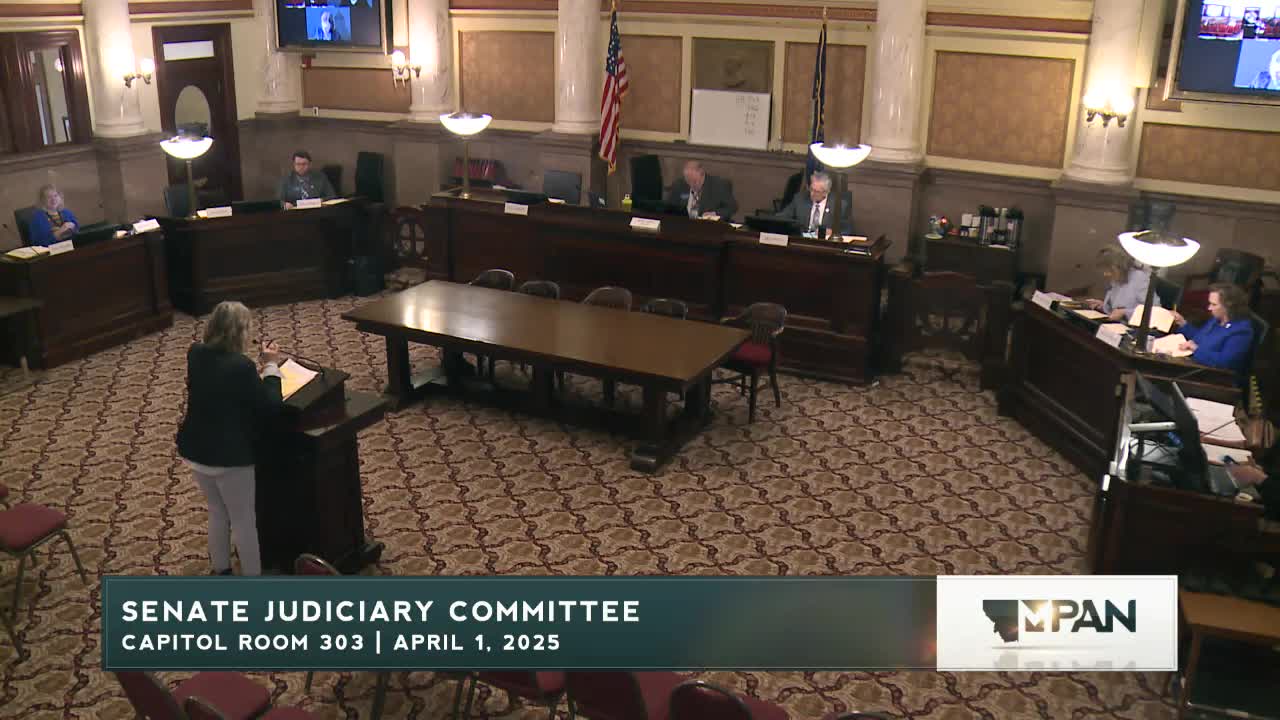
Sponsor Rep. Joe Konauer told the Senate Judiciary Committee HB 514 would expand state privacy-and-communications offenses to cover fabricated or digitally manipulated images used to intimidate, extort or harass. Supporters said the measure fills gaps used against school-age victims; opponents raised procedural and enforcement questions.
Representative Joe Konauer introduced House Bill 514 to the Senate Judiciary Committee as an update to Montana’s privacy-and-communications statutes to capture fabricated digital images and new forms of online extortion.
Konauer told the committee the measure would add language to make it an offense to “publish or distribute or disclose…digitally fabricated or electronic photographs, pictures, images, and films of an identified person” when done with the intent to “terrify, intimidate, threaten, harass, or injure, or to obtain money or other valuable consideration.” He said the change was meant to protect school-age children from an increase in fabricated media and sextortion and to modernize the statute.
Proponents included Brian Thompson, who spoke for the Montana County Attorneys Association and the Montana Sheriffs and Peace Officers Association, and urged a do-pass, calling the policy appropriate for new technology. Public commenter Anna Shchemelinin described online exploitation she said had contributed to two local teen suicides and urged passage. The Department of Corrections’ chief financial officer, Natalie Smitham, identified herself as available for technical questions but did not take a position on record.
Questions from senators focused on prevalence, prosecutorial pathways and juvenile handling. Konauer and Brian Smith of the Public Defender’s Office agreed youth cases generally proceed in youth court and that distinguishing intent is central when an image was originally shared consensually. Smith told the committee the office had not run searches for alternate charges and said the fiscal note contained limited data.
Konauer said he would coordinate the bill’s definition of “digitally fabricated” with the Attorney General’s office and with other bills being considered, and he asked for a do-pass or do-concur recommendation.
The committee closed the hearing with no recorded vote in the transcript.