Get Full Government Meeting Transcripts, Videos, & Alerts Forever!
Get email alerts on the Education Enrollment Eligibility topic
No spam. Unsubscribe anytime.
Senate committee advances bill allowing schools to require immigration documentation and charge tuition during appeal
Summary
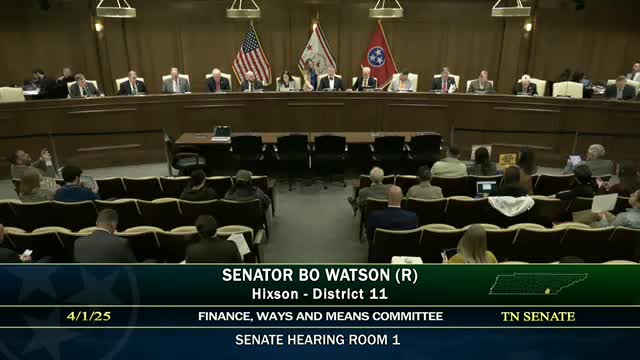
The Senate Finance, Ways and Means Committee voted 7-4 to advance a bill that would let local education agencies require documentation of citizenship or legal status for enrollment in English-language-learner (ELL) programs and permit charging tuition if families cannot provide documentation after an expedited appeal process.
The Senate Finance, Ways and Means Committee on April 1 recommended Senate Bill 836 as amended for passage to the calendar committee, advancing legislation that would allow local education agencies (LEAs) and public charter schools to require documentation of U.S. citizenship or lawful immigration status for student enrollment and to charge tuition if families cannot produce acceptable documentation after an appeal.
Sponsor Jeremy Watson, Chairman of the Senate Education committee, told the Finance committee that the bill sets out documentation requirements and an appeal process: “There is a 21 day period, for the appeal. During that 21 days, the student is allowed to enroll in the school,” Watson said, describing an expedited hearing that determines whether the documentation meets the bill’s criteria. He added that if the appeal is denied, “the student may be charged tuition,” and that tuition must be paid in full before enrollment if the family elects to pay.
The bill is permissive, the sponsor said: local districts “may elect to charge tuition” rather than being required to do so. Watson also said the bill contemplates standard registration documents already in use in many districts, referencing model registration forms that request birth certificates, passports, visas or I-94s.
The measure drew sustained questions from multiple senators about costs, administration and civil-rights implications. Senator Yarbrough challenged the sponsor’s use of ELL spending as a proxy for undocumented enrollment, saying data show a large share of ELL students are U.S. citizens. “If the gentleman is correct, that there is a really low number of undocumented then the financial implications would may be different but we don't know that,” Yarbrough said. He and others warned that converting schools into bodies that must review immigration documents could be costly and administratively complex.
Senator Lamar raised concerns about families facing hardships obtaining birth certificates and asked whether school staff would be required to involve federal immigration authorities; Watson replied that “the legislation doesn't speak to that” and said such procedures would be established in rules the Department of Education would promulgate. Several members asked about compliance with FERPA and whether districts would be compensated for additional verification work; the sponsor said many systems already request birth certificates and that the registration process “is already in place.”
Committee discussion also addressed procedural safeguards in the bill: if documentation is absent the student may be enrolled during the 21-day appeal; if later determined ineligible the student can be charged tuition and disenrolled only if the family declines to pay. The bill also assigns the State Department of Education responsibility for expedited appeals.
The committee adopted an amendment (Amendment 69-47) that removes redundant language in section 1(b) after consultation with the Attorney General’s office. Chairman Watson moved the bill as amended; the motion carried on a roll-call vote recorded in the transcript as seven ayes and four noes. The committee clerk recorded the no votes cast by Senators Hale, Lamar, Wally and Yarbrough; aye votes were recorded for Senators Hensley, Johnson, Powers, Rose, Stevens, Yager and the chair.
The bill’s fiscal impacts were discussed in the committee as largely tied to administration and potential enrollment shifts; members repeatedly asked for clarity on implementation rules the Department of Education would write.
Looking ahead, the bill now goes to the calendar committee. If enacted, the Department of Education would draft rules to implement the documentation review, the expedited appeal process and the circumstances under which tuition may be charged.