Get Full Government Meeting Transcripts, Videos, & Alerts Forever!
Get email alerts on the Medicaid Pas Expansion topic
No spam. Unsubscribe anytime.
Committee debates expanding governor authority to move Medicaid populations into provider‑led PAS program; bill fails to meet threshold
Summary
House Bill 18‑82 would have allowed the governor, with ALC approval, to move defined Medicaid populations into the state PAS program to pursue utilization and cost savings; the amended bill clarifies governor authority and preserves 340B practice. The measure failed to reach the required 11‑vote threshold.
House Bill 18‑82, presented to the Public Health, Welfare and Labor Committee, proposed to let the governor (with Legislative Council/ALC approval) move specified Medicaid populations into the state’s provider‑led PAS program as a means to pursue utilization controls and potential savings.
The amendment the sponsor presented — which DHS helped draft — clarified two points: it would allow the governor to add a population not otherwise excluded from the PAS if the governor so chooses (subject to ALC approval), and it removed language that could inadvertently change how 340B‑priced drugs were handled for providers in the PAS program, preserving current 340B practice. Elizabeth Pittman of DHS described the amendment for the committee: “This amendment does two things. One, it clarifies that… the governor may add a population… The second removes language around 340B drugs so current practice may continue.”
Committee discussion ranged widely. DHS and Medicaid staff explained that PAS can produce savings and that the money follows the patient — moving a population into PAS would move the existing Medicaid dollars that pay for that population. Staff and witnesses described the PAS program as a provider‑led alternative to third‑party managed care, intended to preserve in‑state provider control over care coordination while seeking savings. Representative Lademan and others said they were concerned that shifting populations without additional funding could dilute funds for existing PAS populations such as those with developmental disabilities; DHS responded that long‑term care populations remain exempt and that funds would “follow the patient.” Melissa Weatherton, Medicaid specialty populations lead, described how a traumatic brain injury waiver could be housed under PAS without sending patients to human development centers or behavioral‑health inpatient facilities.
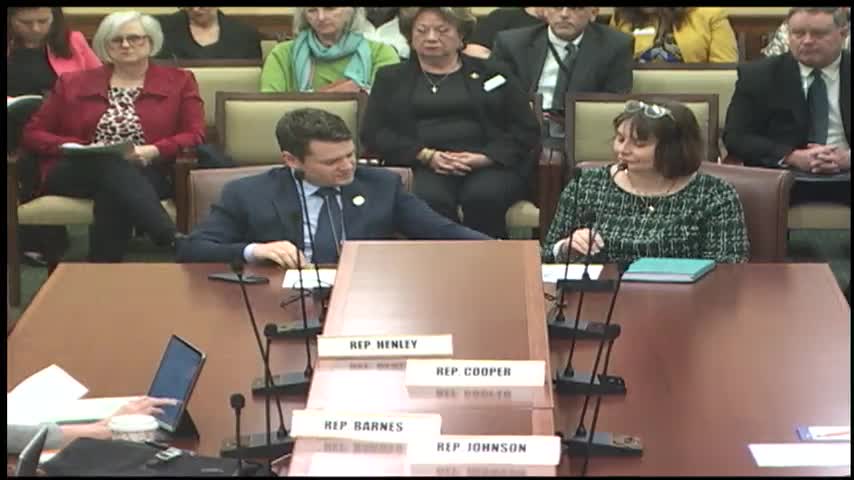
After debate the sponsor moved that HB 18‑82 do pass as amended. The chair called a roll; the chair later announced the bill received eight yes votes and did not meet the 11‑vote threshold required to advance, so the motion failed. Several members said they supported further study or more specific guardrails before moving populations into PAS.
Committee members who opposed or expressed caution cited concerns about preserving funds for disabled populations, ensuring sufficient oversight and guardrails, and requiring detailed implementation plans before authorizing transfers. Supporters emphasized that PAS offers a state‑based, provider‑led approach intended to produce savings without turning to third‑party out‑of‑state managed‑care companies.
Because the motion failed on a procedural threshold, the committee did not adopt HB 18‑82; members said the topic could return later with more specificity or during the interim.