Get Full Government Meeting Transcripts, Videos, & Alerts Forever!
Get email alerts on the Domestic Violence topic
No spam. Unsubscribe anytime.
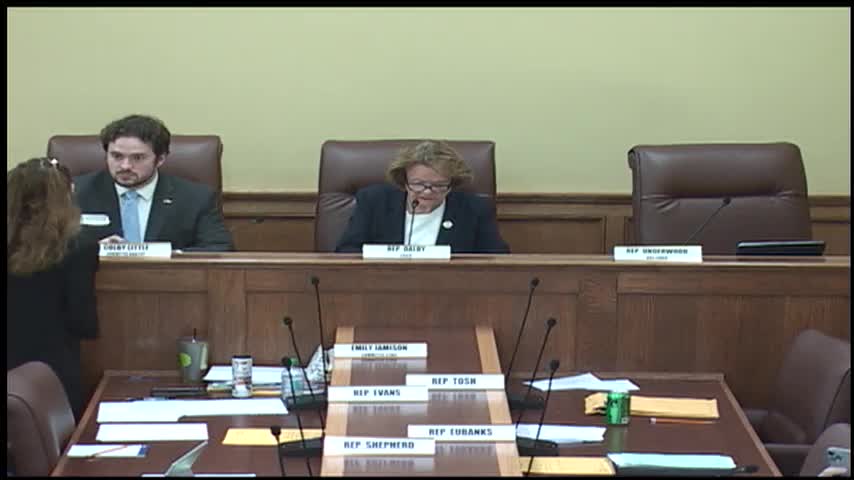
Lawmakers debate using prior uncharged conduct to enhance domestic battery penalties; sponsor pulls bill for more work
Summary
A proposed change to allow proof of prior uncharged domestic violence to enhance a current domestic-battery charge drew sustained committee questions about evidence, prejudice and legal limits, and the sponsor withdrew the bill for revision.
Representative Kinden Underwood proposed changing how repeat domestic abuse is treated for sentencing by allowing prior conduct (not necessarily prior convictions) to be proved beyond a reasonable doubt and used to enhance a current domestic-battery charge.
Prosecutors and a witness described cases in which victims delayed reporting repeated violence and investigators later found photographic, video and recorded evidence showing multiple prior incidents. Prosecutor Joshua Robinson told the committee that victims often delay reporting and that evidence of prior uncharged violence can show the seriousness and pattern of an offender’s conduct.
Several committee members pushed back. Representative Clowney raised concerns about statutes of limitations and the risk of trying old conduct that is harder to prove. Representative Gasaway, Representative Gazzaway and others warned that permitting proof of prior uncharged acts “in the case in chief” risks creating a trial-within-a-trial: jurors would have to decide both the current charge and older alleged incidents, which could be highly prejudicial. Representative Clowney also asked about the possibility that acquitted conduct could be used to enhance sentences, noting potential double-jeopardy or fairness concerns.
After extensive questions and concerns about evidentiary prejudice, statute-of-limitations logic and trial procedure, Representative Underwood told the committee he would pull the bill to consult with colleagues, prosecutors and the prosecutor general’s office. The chair allowed the sponsor to withdraw the bill so the author could refine the language.
Outcome Representative Underwood withdrew HB1765 from consideration in this session to seek further language revisions and stakeholder consultation; the bill was not voted on in committee.
What remained unresolved - How to limit the time window (look-back period) for uncharged conduct used to enhance sentencing. - Whether proof of prior uncharged acts should be admitted in the case-in-chief or deferred to sentencing to reduce prejudice. - How to protect against using acquitted conduct to enhance penalties.