Get Full Government Meeting Transcripts, Videos, & Alerts Forever!
Get email alerts on the Child Protection topic
No spam. Unsubscribe anytime.
Committee approves bill raising mandatory minimums for offenders in positions of trust over children
Summary
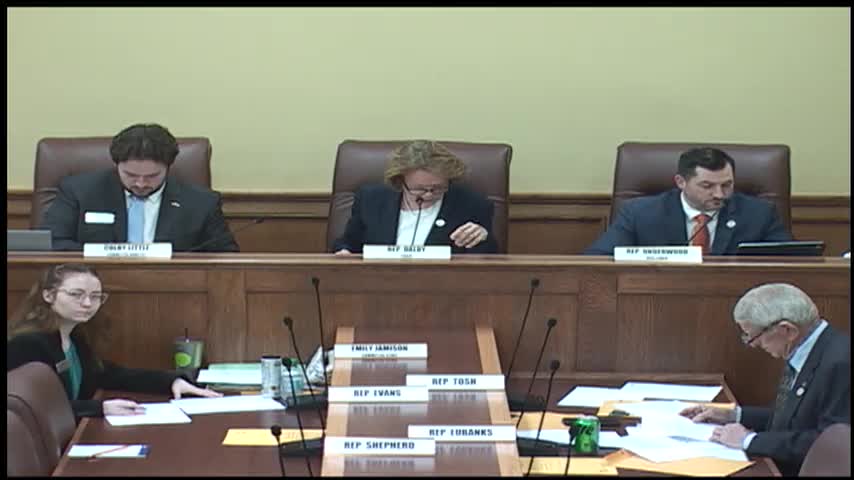
The House Judiciary Committee voted to pass HB1865, a bill increasing mandatory minimum sentences for people who abuse positions of trust or authority over children, after a debate over removing judicial discretion.
Representative Dan Vaught described HB1865 as an effort to increase penalties for people who abuse positions of trust over children, saying the law aims to strengthen sentences for the most severe offenses.
The attorney general’s office told the committee it supports the bill, describing the term “position of trust or authority” as a phrase already used across the criminal code and supported by case law. Representative Vaught recounted local cases he said motivated the bill, including sexual assault and fatal child abuse, and said the measure was designed to make penalties “so stiff that somebody thinks before they take another child in their hand and beat them to death.”
Representative Jasmine Collins (Representative Collins in transcript) questioned whether the bill’s mandatory minimums would remove needed judicial discretion. Collins noted that a Class Y felony currently carries a sentencing range of roughly 10 to 40 years and a Class A felony 6 to 30 years; HB1865 would set mandatory minimums of 30 years for a Class Y and 17 years for a Class A in qualifying cases, she said. Collins warned that earlier mandatory-minimum laws had increased prison populations and removed discretion that courts historically exercise to consider mitigating circumstances.
Representative Vaught replied the mandatory minimums were intentional and intended to match the seriousness of the conduct; he said he did not want serious offenders to “get by with 10 years” for heinous acts. The AG’s office representative emphasized that protections for children and enhanced penalties for abuse by persons in authority are longstanding prosecutorial priorities.
After closing remarks from the sponsor, the committee adopted a motion to pass the bill by voice vote; the transcript records the chair announcing, “Aye’s have it. Congratulations, you have passed your bill.”
What the bill does (as described in committee) - Elevates and prescribes mandatory minimum prison terms in certain cases where an offender holds a “position of trust or authority” over a child. The sponsor and AG’s representative said the statutory phrase has established use in criminal law; committee discussion referenced existing ranges for Class Y and Class A felonies before the bill’s proposed mandatory minimums.
Lawmakers’ concerns - Several members raised concerns about removing judicial discretion and the potential for increased prison populations. Representative Collins warned of the difficulty mandatory minimums created in the 1990s and that sentencing discretion is sometimes necessary to account for countervailing circumstances.
Next steps HB1865 passed the House Judiciary Committee by voice vote and will proceed to the House floor for further consideration.